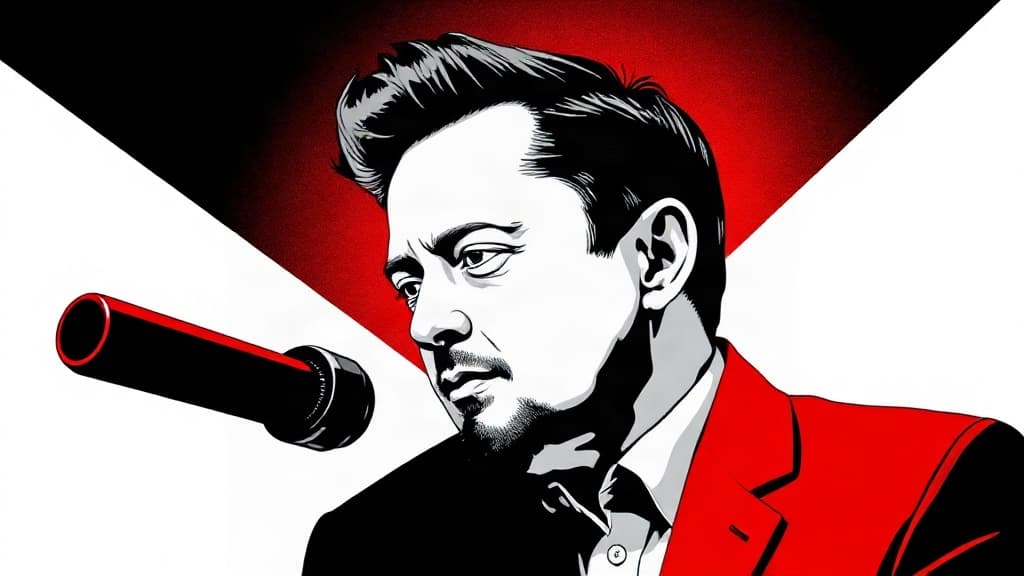
Wisconsin prosecutors won't bring election bribery charges against Elon Musk over a social media post offering $1 million checks during a 2025 state Supreme Court race — a decision that affirms Americans can participate in the political process without prosecutors weaponizing clumsy phrasing into a crime.
La Crosse County District Attorney Tim Gruenke, a Democrat appointed as special prosecutor, announced Tuesday that no jury would convict Musk. The case centered on a post Musk made days before the April 2025 election saying he would hand two $1 million checks to attendees at a Green Bay event open only to those who had voted. Less than 24 hours later, Musk replaced the post with a corrected version: attendance was limited to people who signed his petition against activist judges, and the money went to advocates for that petition.
Gruenke's statement cut through the noise: "Either way the first post is perceived, in the end nobody was paid anything of value for voting or promising to vote." He added that even if a jury believed the original post amounted to a bribe, they wouldn't convict after considering Musk's intent, the corrected post, and the fact that no one ever received payment for voting. Strip away the famous name and the dollar signs, Gruenke said, and "it is a simple case of a poorly worded statement that was corrected and brought into compliance with the law."
That didn't stop the institutional machinery from trying. The bipartisan Wisconsin Elections Commission referred two complaints for prosecution in July, claiming Musk likely broke the law. Wisconsin's Democratic attorney general sued to block Musk from handing over the checks — and lost in state court. Musk's attorneys argued all along that the giveaways were protected free speech under both the Wisconsin and U.S. constitutions.
The left's playbook here was straightforward: when you can't win at the ballot box, try to criminalize your opponent's political engagement. Musk backed Republican Brad Schimel in the race, pouring at least $20 million into the effort. Schimel lost to Democrat Susan Crawford by 10 points. Total spending on the race topped $100 million, making it the most expensive judicial election in American history. The voters had their say. That wasn't enough — prosecutors had to try their hand too.
Both the Press Democrat and the AP ran the same Scott Bauer copy, with no meaningful framing difference. Neither outlet pressed hard on the underlying question: why was a Democrat-appointed prosecutor chasing a corrected social media post when no one was ever paid for a vote?
The open question is whether this becomes a template. Federal and state authorities have shown increasing willingness to blur the line between political activism and criminal conduct. Musk walked free because a Democrat prosecutor couldn't find a jury to buy it. Next time, the bar for prosecution may be lower — and the chilling effect on speech that much colder.