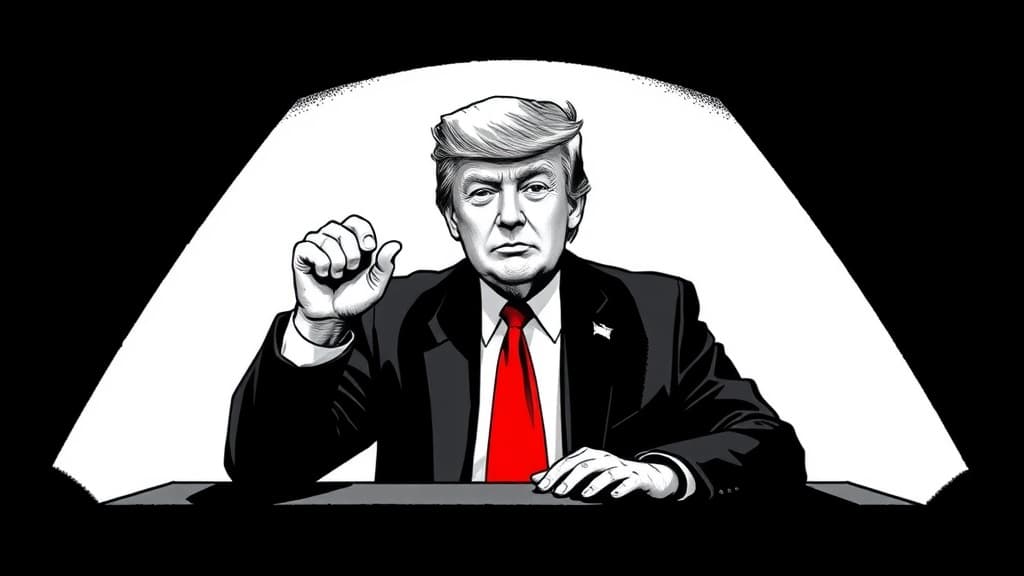
President Trump said Friday he will not sign the first major bipartisan bill to clear this Congress — a housing package — until the Senate passes his voter ID and citizenship verification measure, but the bill becomes law at midnight anyway, whether he signs it or not.
The standoff matters because it exposes the rift between a president demanding election integrity and a Senate that won't deliver it — while a housing bill that both parties cheered sits in limbo, stripped of its signing ceremony and political momentum. Working Americans still can't afford homes, and this bill, whatever its merits, was the only thing the uniparty managed to pass together this session.
The 21st Century ROAD to Housing Act passed both chambers in late June with overwhelming bipartisan support — a rarity in a divided legislature. The bill modernizes federal building standards, encourages renovation of older homes, offers grant funding to communities that build more housing, pushes local governments to reform restrictive zoning, and notably bans private equity firms from buying up single-family homes. Critics say it doesn't go far enough but call it a first step. It is the first major housing legislation in more than three decades, according to the New York Times.
Trump had other priorities. "I will not sign the Housing Bill, which has been fully approved by Congress and sent to the White House, in PROTEST over the fact that the United States Senate is not capable of passing THE SAVE AMERICA ACT," he wrote on Truth Social. The SAVE Act would require photo voter ID, proof of citizenship to register, and ban mail-in ballots with limited exceptions for military, disabled, and ill voters.
The Senate doesn't have the votes. Republican leaders have told Trump as much. Senate Majority Leader John Thune said last month Republicans lack the votes to eliminate the filibuster and ram the SAVE Act through, CNBC reported. Trump demanded the filibuster's end anyway: "The Dumocrats will TERMINATE THE FILIBUSTER, if and when they ever get the chance to do so, in their very first hour," he wrote.
Critics of the SAVE Act, including the Brennan Center for Justice, estimate up to 21 million citizens lack ready access to the documents the law would require — passports, birth certificates, or military ID. Roughly half of Americans don't have a passport, and millions of women whose married names don't match their birth certificates would face extra hurdles, the group said.
Trump's refusal to sign is symbolic. Under the Constitution, a bill passed by both chambers becomes law after 10 days without the president's signature, provided he doesn't veto it. Trump didn't mention a veto, and if he did, Congress likely has the two-thirds majority to override it, UPI reported. The White House referred questions to his Truth Social post.
The political damage is real regardless. Trump canceled a planned signing ceremony at the Capitol last month and has called the housing bill "a yawn" compared to the SAVE Act. He previously issued a proclamation calling it "comprehensive and consequential," the Times noted. He has also called the affordability crisis a "hoax" and a "con job" — words Democrats are already using against him heading into the midterms.
Princeton historian Julian Zelizer told the Washington Post that the housing bill was exactly the kind of bipartisan achievement both parties wanted to campaign on. "That's not the signal that the administration is sending."
The question now: does a symbolic protest over a stalled election bill outweigh the political cost of dismissing the one thing both parties actually delivered for voters who can't afford a home?