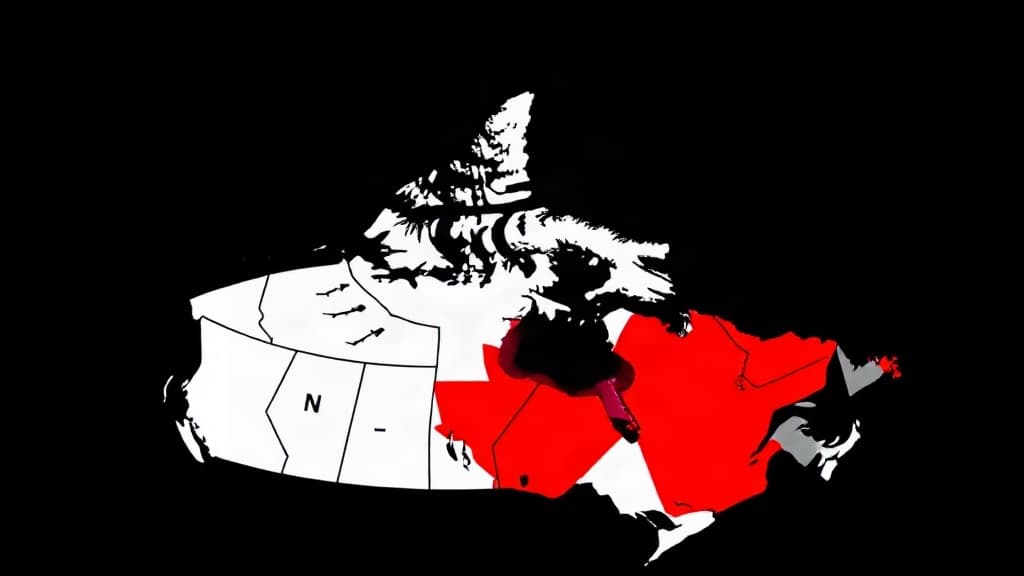
President Trump threatened to block Canadian jet maker Bombardier from selling aircraft in the United States unless it moves manufacturing stateside — drawing a line for American aerospace workers just as Canada's retaliatory tariffs on $20 billion in U.S. goods took effect Tuesday.
The stakes are straightforward: for decades, foreign firms have treated the American consumer market like a slot machine that never stops paying out, while keeping their factories and payrolls on the other side of the border. Trump's ultimatum puts that arrangement on notice.
"NO MORE SELLING BOMBARDIER IN THE UNITED STATES!" Trump posted Monday on Truth Social. "If they want our Market, they must build here, and stop treating America like a 'piggybank.'"
The broadside came hours before Canada's counter-tariffs — ranging from 15% to 50% on American steel, aluminum, dairy, appliances, clothing, and farm equipment — kicked in at 12:01 a.m. Tuesday. Ottawa is matching Washington's earlier 50% tariffs on $20 billion in Canadian goods dollar for dollar. CBS News noted the levies could hit manufacturers in Michigan and Indiana and dairy producers in Wisconsin and Vermont particularly hard.
The Quebec-based plane maker pushed back. Bombardier said it already has sites in nine U.S. states plus Washington, D.C., manufactures wings in Texas and flight-control components in California, and works with roughly 2,800 American companies across 47 states. The company says it employs more than 3,000 U.S. workers and spends over $2.5 billion annually with American suppliers. Flavio Volpe, president of Canadian manufacturing trade group APMA, noted on X that Bombardier uses U.S.-made GE and Honeywell jet engines. Thousands of Bombardier aircraft already operate in domestic airline fleets, according to the Guardian.
So the picture is messier than the headlines let on. Bombardier has real American skin in the game. But the core of Trump's demand — that production, not just supply-chain spending, belong on U.S. soil — is a direct challenge to the old trade consensus.
Trade talks collapsed August 21 after both sides accused each other of tacking on last-minute demands. Canadian Prime Minister Mark Carney said the U.S. "asked too much and offered too little" and pressed for control over Canada's trade deals with other countries — a condition Carney called a threat to Canadian sovereignty. Carney also claimed U.S. negotiators made threats regarding French language protections and Quebec culture. U.S. Trade Representative Jamieson Greer pushed back, telling CBC those protections were "not something where we push hard, or condition, or red-line."
The establishment press frame is predictable. The Philadelphia Inquirer called Trump's Bombardier threat an "escalation" in a "tit-for-tat trade feud." AP News framed the story around whether Canada, as a "smaller U.S. ally," can "withstand Trump's economic pressure" — casting the dispute as David-versus-Goliath rather than two nations fighting over whose workers get the factory jobs. The Guardian buried the Bombardier employment figures deep and led with "intensifying tensions."
What they won't tell you: Canada's provinces have already restricted or banned U.S. alcohol sales, and the Distilled Spirits Council says American spirits exports to Canada fell more than 70% year over year. Ottawa was already punching before these tariffs landed.
RBC Economics says the Canadian measures are unlikely to dent U.S. growth overall. A Reuters poll cited by the Guardian found just 20% of Americans approve of Trump's tariffs on Canadian goods. But approval ratings and GDP aggregates don't capture what matters to the worker in Wichita or the dairy farmer in Vermont — whether anyone in Washington is willing to fight for their livelihood.
The open question isn't whether Trump can force Bombardier to build here. It's whether disrupting supply chains that already employ thousands of Americans is the lever to do it — or whether the real fight is somewhere else entirely.