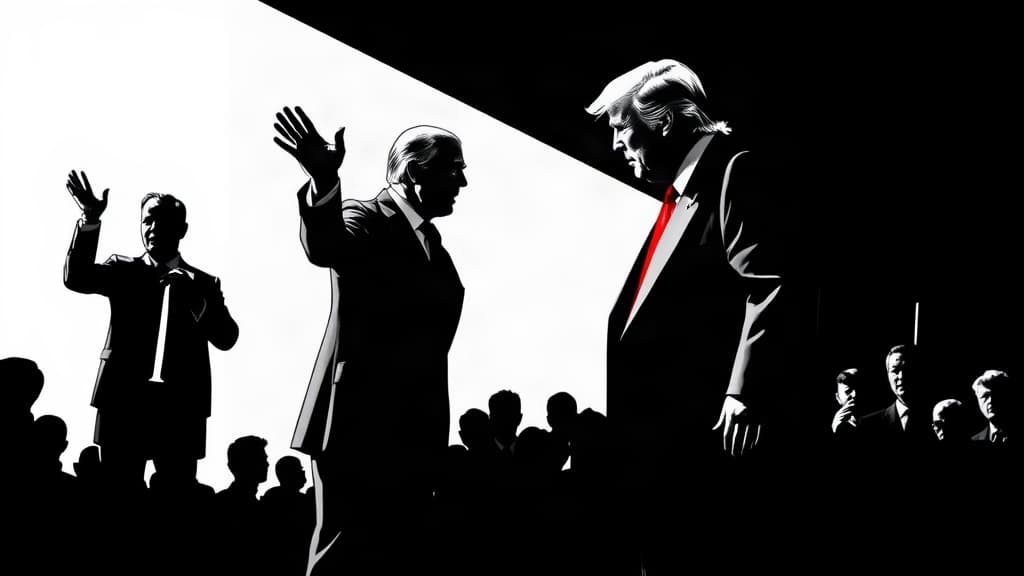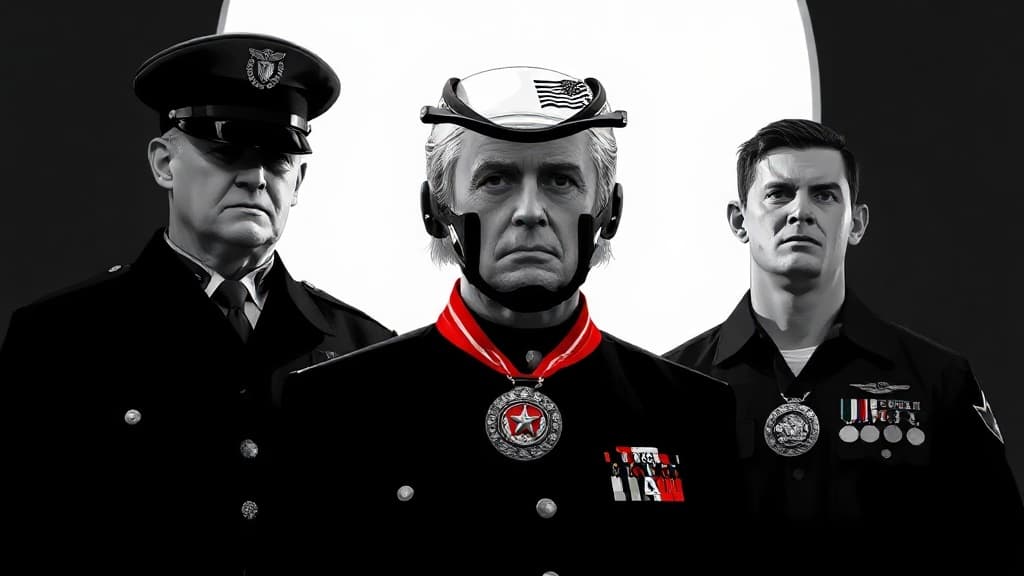
President Trump awarded the Medal of Honor to two Marines and one Army soldier at the White House Thursday — giving an 88-year-old Vietnam veteran who waited nearly six decades for recognition the nation's highest military decoration, while the bureaucracy that delayed him goes unquestioned.
The ceremony honored men who bled and fought when their country called, but it also laid bare how the system that sends soldiers into harm's way can't even manage the paperwork to recognize them. Major James Capers, Jr. was recommended for the Medal of Honor in 1967. His commanding officer was killed before the paperwork was signed. The nation let him wait 59 years.
Capers, the first Black Marine to join Force Reconnaissance, led a nine-man patrol on a four-day reconnaissance mission near Phu Loc in April 1967. On the final day, his team was ambushed by a claymore mine and came under withering enemy fire. Capers suffered 17 shrapnel wounds and was shot twice. According to the White House account, he took a shot of morphine and asserted command of the firefight, directing his team to an extraction site. When the rescue helicopter struggled under the weight of the entire team, Capers tried to deplane so his men could escape. They physically held him back. Trump helped the elderly Marine walk to the stage to receive his medal.
"The nation kept you waiting far too long," Trump told Capers. "So I say to you, congratulations."
Colonel John W. Ripley received the Medal of Honor posthumously for his actions on April 2, 1972, during the Easter Offensive — the largest North Vietnamese ground invasion of the Vietnam War. Serving as Senior Marine Advisor to a South Vietnamese battalion, Ripley single-handedly moved 500 pounds of explosives beneath the bridge at Dong Ha, climbing hand over hand along steel beams over rushing water while completely exposed to enemy fire. He made five such trips over three hours, then detonated the charges, destroying the bridge and halting the enemy advance. He had previously received the Navy Cross. Ripley died in 2008 of unknown causes, weeks before a ceremony planned in his honor. Congress only passed legislation authorizing the Medal of Honor this past March.
Retired Army Major Nicholas Dockery received the Medal of Honor for his actions in Kapisa Province, Afghanistan, on October 2, 2012. When some 150 Taliban fighters ambushed his platoon, Dockery raced across open ground under machine gun and RPG fire to rally his scattered team. Over four hours of urban combat, he risked his life repeatedly to evacuate three wounded soldiers. He was the last man off the battlefield. No one in his platoon was lost that day.
The CBS News coverage noted attendees including Defense Secretary Pete Hegseth, UN Ambassador Mike Waltz, and Senator Lindsey Graham — the same Graham who has spent decades pushing for the kind of foreign interventions that put men like Dockery in Kapisa Province in the first place. The New York Post highlighted Trump's remark to Ripley's family — "You have extremely good genetics" — but buried the institutional failure that left Capers waiting generations for his medal.
Three men answered their country's call with extraordinary courage. Two fought in a war the establishment now admits was a mistake. One fought in Afghanistan, where the U.S. spent 20 years and thousands of lives only to watch the Taliban return to power. The valor is real. The question that lingers is whether the people doing the sending deserve the same trust as the men they sent.