The Supreme Court just told every state prison guard in America that violating an inmate's religious beliefs carries no personal price. In a 6-3 ruling Tuesday, the court blocked Damon Landor, a devout Rastafarian, from suing the Louisiana prison officials who handcuffed him to a chair and shaved his head bald over his religious objections.
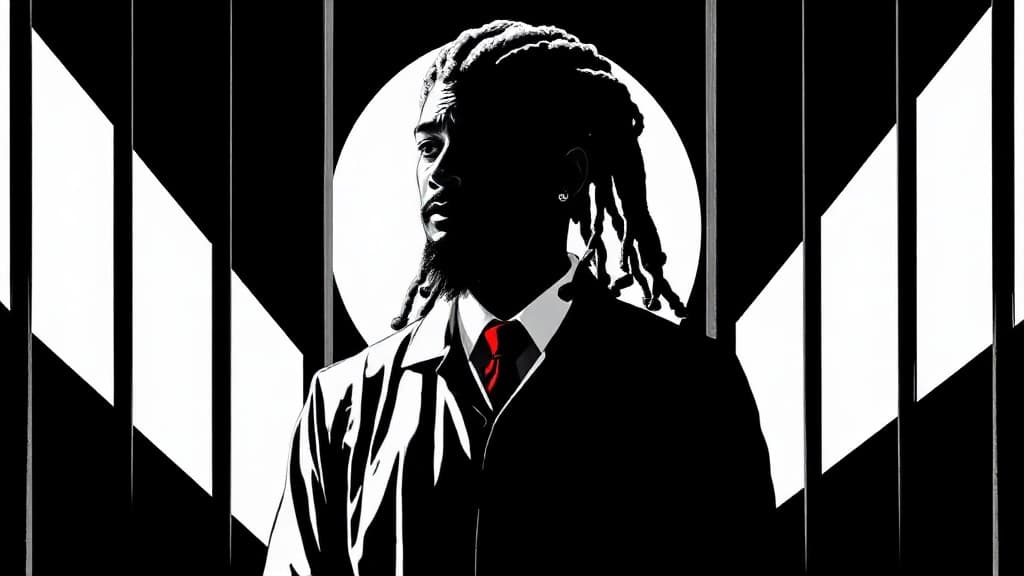
The First Amendment is supposed to protect every American's right to exercise their faith — not just the faiths the establishment finds fashionable. Landor's religion requires him to let his hair grow uncut. He hadn't cut it in 20 years; his dreadlocks reached his knees. When he entered the Louisiana prison system in 2020 serving a five-month drug sentence, he carried a copy of a binding Fifth Circuit Court of Appeals ruling that said cutting a Rastafarian's dreadlocks violated federal law. At his first two prison stops, officials respected that. Then he was transferred to Raymond Laborde Correctional Center for the final three weeks of his term. A guard took his copy of the court ruling and threw it in the trash. The warden ordered guards to cut his hair. Two guards held him down while a third shaved him to the scalp. "When I was strapped down and shaved, it felt like I was raped," Landor said in a statement, as reported by ABC.
Justice Neil Gorsuch, writing for the conservative majority, said the Religious Land Use and Institutionalized Persons Act of 2000 — the federal law designed to protect incarcerated people from religious discrimination — does not permit lawsuits for monetary damages against individual officials. The only way the suit could proceed, Gorsuch wrote, would be if the officials had consented to face liability, which they had not. The chief justice and justices Thomas, Alito, Kavanaugh, and Barrett joined him.
The three liberal justices — Sotomayor, Kagan, and Ketanji Brown Jackson — dissented. Jackson wrote that the ruling effectively eviscerates the provision allowing prisoners to bring suits, leaving inmates like Landor "who suffer violations of their religious freedom in state prisons — no matter how blatant — will often be left remediless."
NBC News framed the decision as the conservative majority "departing from its regular support for religious claims," noting that recent high-profile religious liberty wins "tended to involve conservative Christians." The Guardian called it a "landmark case" and emphasized the physical violation. The New York Post noted that "no one defended what happened to Landor" — not even the state of Louisiana, which told the court it has since changed its grooming policy.
Here is the rub: In 2020, this same court allowed monetary damages under a sister statute, the Religious Freedom Restoration Act, in a case where Muslim Americans sued FBI agents for putting them on the no-fly list after they refused to become informants. The Trump administration, which had argued against the plaintiffs in that earlier case, backed Landor this time. The court still said no. A right without a remedy is no right at all. If government agents can trash a court order, hold a man down, and forcibly strip him of a religious observance — and face zero financial liability — what exactly is RLUIPA protecting?