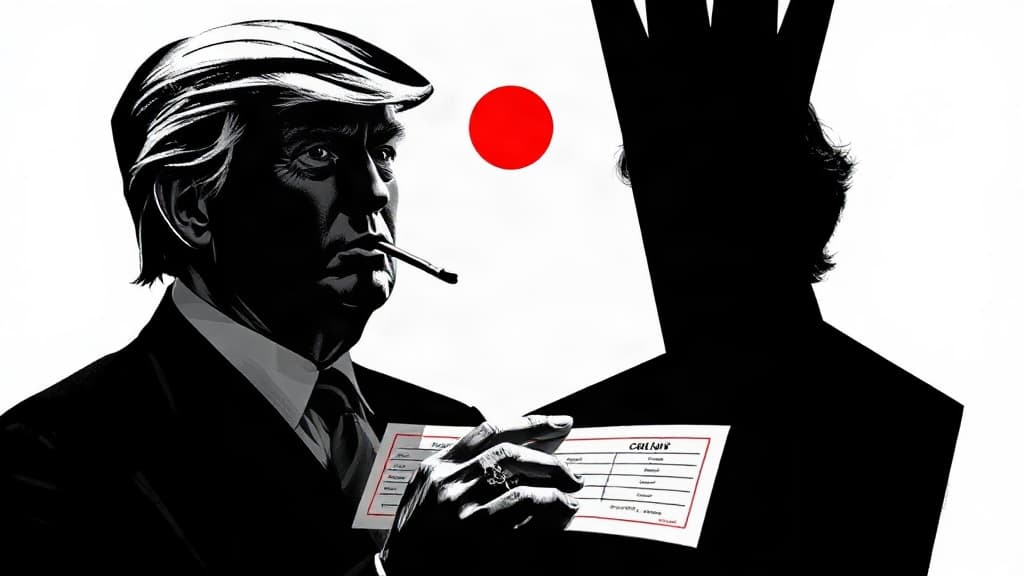
Jack Smith's special counsel office seized nearly 5,000 personal checks written by ordinary Americans who donated to Donald Trump and swept up communications between dozens of journalists and Trump officials — treating private political participation and press contacts as criminal evidence in the kind of dragnet the Founders wrote the Fourth Amendment to stop.
The scope of Smith's surveillance became public just ahead of Tuesday's Senate Judiciary Committee hearing, where the former special counsel sat defiant. Whistleblower disclosures to Chairman Chuck Grassley revealed that Smith's investigators subpoenaed the National Archives for material associated with 87 White House phones, according to The Gateway Pundit. What came back included records of communications involving nearly 50 journalists — Fox News, CNN, CBS News including "60 Minutes," NBC News, CNBC, the Wall Street Journal, Washington Post, Bloomberg, Los Angeles Times, New York Magazine, Reuters, the Associated Press, NPR, The Federalist, and the Washington Times. The records also contained roughly 5,000 personal checks from Americans who donated to Trump's campaign.
Grassley didn't mince words. "Mr. Smith's operation was a partisan weapon that broke the rules, lied to the court, and engaged in bad faith throughout his operation," the Iowa Republican said, calling it a "corrupt operation" that "undermined the rule of law and threatened our very political institutions." Grassley also noted that Smith's team left a classified facility open — causing a security violation — while prosecuting Trump for allegedly mishandling classified information.
Smith was unapologetic. "I made those decisions without regard to President Trump's political association, activities, beliefs, or candidacy in the 2024 presidential election," he testified. "Our investigation developed proof beyond a reasonable doubt that President Trump engaged in serious crimes against our nation." He vowed he "will not be silenced by continued threats of prosecution."
The Orange County Register reported that Smith also faces scrutiny for secretly obtaining phone records — "toll records" showing date, time, and duration of calls — of Republican members of Congress who were in contact with Trump. Smith has called that "common practice" and necessary to understand the "scope of the conspiracy." In January, Smith insisted: "My office didn't spy on anyone." Rep. Jim Jordan referred Smith to the Justice Department in July for potential prosecution over allegedly lying about the records collection at a prior hearing.
Breitbart reported that Smith's office bent its own purchasing rules to acquire forensic video software just days before indicting Trump in the 2020 election case.
Both cases Smith brought — 41 felony counts total — collapsed. A Florida federal judge threw out the Mar-a-Lago classified documents case, ruling Smith was illegally appointed. The 2020 election case died after Trump returned to the White House. Ranking Democrat Dick Durbin defended Smith, calling January 6 a day "when this cathedral of democracy was overrun by violent insurrectionists at the direction of the president" and dismissing criticism as "a smokescreen."
The establishment press framed the hearing around Smith's defiance. The Atlanta Journal-Constitution led with Smith's vow not to be "silenced." Buried: the fact that his office collected the personal financial records of thousands of Americans whose only act was writing a check to a political campaign, and swept up the communications of journalists across every major newsroom in Washington. The question before the country isn't whether Smith feels silenced — it's whether the machinery of federal prosecution can be turned against citizens for exercising their First Amendment rights, and who will be held accountable when it is.