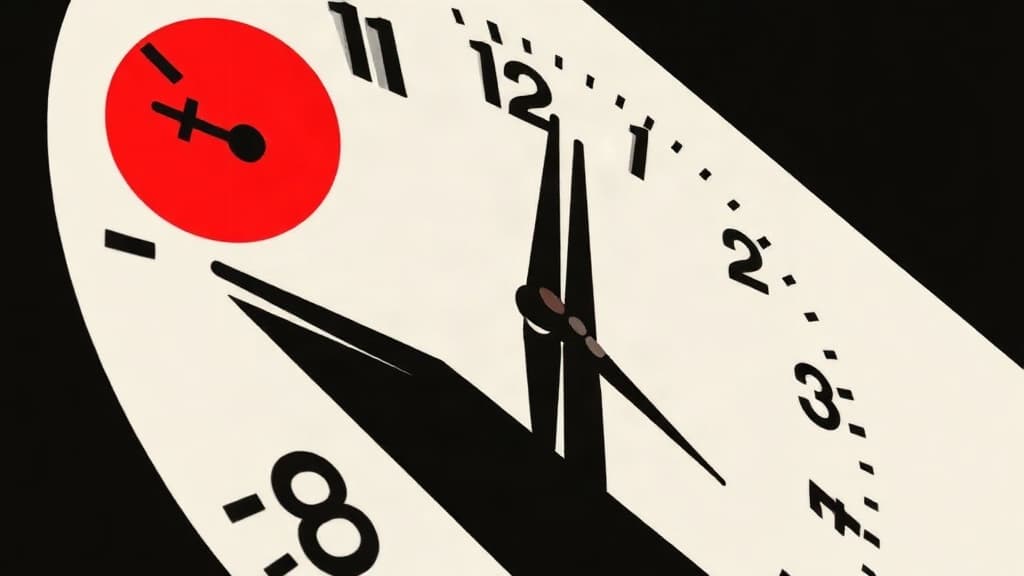
Americans will lose an hour of evening daylight and disrupt their sleep schedules again this November because the Senate couldn't be bothered to vote on a bill the House passed with 308 votes.
The Sunshine Protection Act of 2025, which would make daylight saving time permanent and end the twice-yearly clock change, passed the House 308-117 on July 14, 2026, according to the Augusta Chronicle. The Senate received it the next day and referred it to the Commerce, Science and Transportation Committee, where it has sat ever since. No vote, no markup, no explanation.
Georgia residents — and everyone else in states that observe the switch — will turn clocks back one hour at 2 a.m. on Sunday, Nov. 1, 2026. Smartphones will handle it automatically. The microwave and the truck dashboard will not.
This is bipartisan failure in its clearest form. Ending the clock change is one of the few things practically every American agrees on. The Lewiston Morning Tribune noted that few people are happy about changing clocks twice a year — people are "cranky and out of sorts" for weeks, and just as they adjust, it's time to switch back. The House managed to move legislation with a veto-proof margin. The Senate response: nothing.
The current system dates back to federal law that dictates when states must switch. States can opt out of daylight saving time entirely — Arizona and Hawaii already do — but they cannot choose to stay on daylight saving time year-round without congressional approval. That's the permission slip the Sunshine Protection Act would grant.
Under the bill's current form, states like Georgia that observe daylight saving time would remain on it permanently, shifting an hour of daylight from morning to evening during winter months, per the Augusta Chronicle. States already exempt would stay exempt.
The Senate Commerce Committee has offered no public timeline for action. The committee is chaired by Sen. Ted Cruz of Texas. Its members have not explained why a bill with 308 House votes deserves to languish.
So Americans get another "fall back" on Nov. 1, another groggy week of adjustment, and another reminder that the Swamp can find time and money for everything except the simple things. The House did its job. The question now is whether 308 votes means anything in a Senate that answers to no one.