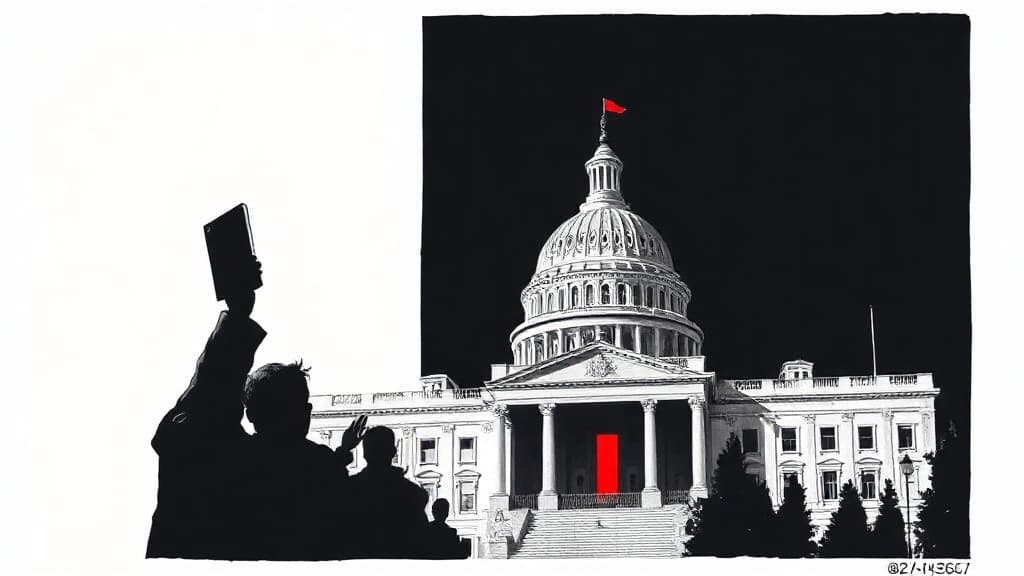
The House voted 358-32 on Tuesday to send the so-called "21st Century Road to Housing Act" to President Trump's desk, and if you're a working American still priced out of homeownership, don't hold your breath — the bipartisan swamp just cut itself a nice piece of business, not you.
The bill, which the Senate passed 85-5 on Monday, is being hailed as the most sweeping federal housing package in a generation. It streamlines environmental reviews, reduces federal regulations, and encourages modular and manufactured housing. Trump is expected to sign it Wednesday at the Capitol. What it does not do is meaningfully crack down on the Wall Street firms that helped create the crisis.
Here's the tell: the original Senate provision that would have required investors to sell newly constructed homes within seven years was stripped from the final package, according to the Orange County Register. What survived was a ban on large institutional investors who already own 350 or more single-family homes from buying additional properties. That sounds tough until you look at the numbers. CBS News reported that the Urban Institute found large institutional investors account for just 3% of single-family rentals — less than half a percent of total single-family housing stock. Redfin chief economist Daryl Fairweather put it bluntly: "A lot of people think that if we get rid of private equity, there will be all these houses available for sale for first-time homebuyers. But that's not going to happen."
So the provision that could have actually forced divestment got killed in negotiations, and what remains is a symbolic gesture that leaves the big players largely untouched. Follow the money: the manufactured housing industry, meanwhile, just secured a massive victory. The bill eliminates a five-decade federal requirement that manufactured homes be built on a permanent chassis with wheels — a change CNN highlighted as reducing costs and opening up new zoning areas for factory-built homes. Developers also win big from the streamlined environmental reviews and reduced regulatory barriers.
The bipartisan quartet that brokered the deal — Republican Tim Scott and Democrat Elizabeth Warren in the Senate, Republican French Hill and Democrat Maxine Waters in the House — all took victory laps. Waters noted the median age of a first-time homebuyer is now 40 and rents have soared 47% since COVID. Hill called it "measurable, accountable changes." Warren insisted bipartisan legislation "doesn't have to be the weakest, most milquetoast agreement."
But when both parties agree 358-32, that's usually where the public gets sold out. The Economic Report of the President in April identified a shortage of 10 million homes. This bill throws money at block grants, financing expansions, and renter protections — while the corporate landlords who bought up neighborhoods during the post-2008 fire sale keep their portfolios intact. The White House proclamation called it "the most comprehensive and consequential housing legislation in the history of our country." That's a low bar, and a lot of words for a bill that leaves the structural problem — a decade-long supply deficit — fundamentally unaddressed.
The real question isn't whether Congress can agree. It's who agreed to what, and what got traded away behind closed doors to get 358 votes. The seven-year sell-off provision didn't vanish on its own. Somebody killed it. And whoever did isn't talking.