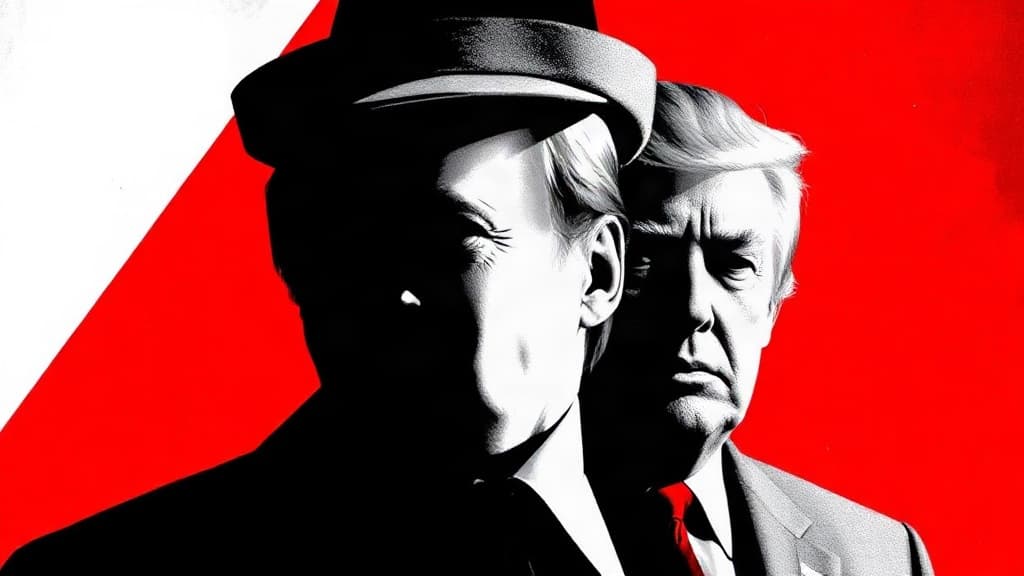
The Justice Department has tapped Los Angeles federal prosecutor Bill Essayli to lead the criminal investigation into the FBI's 2022 raid on Donald Trump's Mar-a-Lago home — the first serious look at whether armed agents and prosecutors broke the law searching a former president's residence over a documents dispute.
For four years, Americans have asked who greenlit the unprecedented siege on Mar-a-Lago and whether federal agents violated the law executing it. Now someone is finally assigned to answer. But the same institutional forces that spent years stalling that question are already circling.
The investigation had been going nowhere. The Guardian reported that a broad criminal probe into whether Obama and Biden administration officials violated Trump's rights stalled in the U.S. attorney's office for the Southern District of Florida. Jason Reding Quiñones, the U.S. attorney overseeing that office, resigned earlier this month, and other prosecutors working the case have also left. Essayli is being sent in to jump-start it.
According to the New York Times, Essayli "will focus narrowly on the question of whether agents and prosecutors broke the law four years ago when they searched Mar-a-Lago." Politico first reported the assignment; Bloomberg Law confirmed it.
The raid — which Trump has called a "siege" — sent FBI agents into a former president's Palm Beach estate. Trump has called special counsel Jack Smith, who led the classified documents case, a "sick son of a bitch." The question for ordinary Americans: Who signed off, what was the pretext, and how high does the chain go?
The two outlets covering this split sharply on framing. The Guardian described Essayli as a "staunch ally" and "Trump loyalist" and called the Mar-a-Lago raid one of "Trump's obsessions." The New York Post reported the appointment more straightforwardly, noting Trump praised Essayli as "one of the best, EVER!" The framing gap matters: The Guardian wants readers focused on Essayli's loyalty; the actual question is whether federal agents broke the law.
Essayli's own legal standing is under fire. A federal judge ruled he was "unlawfully serving" as head of the U.S. attorney's office in Los Angeles, finding the Justice Department repeatedly changed his job title to keep him in charge past a 120-day legal limit without Senate confirmation. Essayli was appointed "interim" U.S. attorney in April 2025 and was never formally nominated. The Trump administration kept him in the top position with a "first assistant" title. The judge barred him from supervising two specific criminal cases but left the underlying charges intact and paused the ruling while the DOJ appeals. On Nov. 16, the judge refused to pause the disqualification order ahead of a Nov. 23 effective date.
So the man now tasked with investigating potential DOJ misconduct is himself the subject of a court ruling that the DOJ skirted the law to keep him in power.
Essayli's record beyond Mar-a-Lago is contested. The Guardian reported that his office aggressively prosecuted protesters and residents for alleged crimes against immigration officers — but that as of mid-September, the majority of more than 100 cases ended in dismissals, acquittals, or misdemeanor pleas. He also tried to force California election officials to set aside roughly 20,000 ballots tied to suspected noncitizen voters, an effort blocked by the courts. The Post reported Trump's framing of that fight: "He caught a massive number of Illegal Votes, 20,000, but potentially Hundreds of Thousands, and maybe even Millions, and the Court has just ruled against it." The Guardian framed the same effort as Essayli "spreading misinformation" and risking disenfranchisement.
Before leading the U.S. attorney's office, Essayli was a Republican state lawmaker who opposed "woke" California policies and fought to roll back trans rights legislation.
The Mar-a-Lago investigation now rests with a prosecutor whose own appointment a federal judge has called unlawful, assigned to scrutinize an agency that spent years resisting exactly this kind of scrutiny. The question isn't just whether agents broke the law in Palm Beach. It's whether anyone in Washington has the standing and the will to say so.