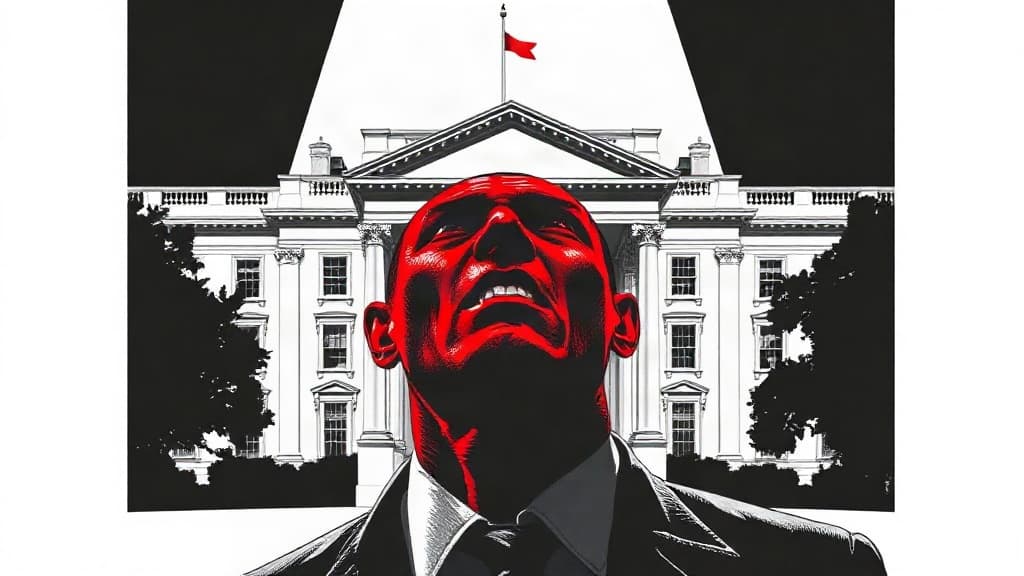
Dana White had every reason to take the job, and every reason to walk — he chose the door, and that choice tells you more about who's honest in Trump's orbit than any press release ever could.
The UFC CEO publicly turned down the White House press secretary gig from the Brady Briefing Room podium on Monday, telling reporters: "I have zero political aspirations." When CNN's Kaitlan Collins pressed whether the refusal was final, White was careful but clear: "I don't tell the president no to anything. I didn't say no. I literally, every media outlet was calling me, and I didn't want to be disrespectful and say anything until he said something first."
The job has been vacant since Katie Zacharia exited after just five days in October. Trump floated White's name on Truth Social on November 7 — "I am pleased to announce that the Great Dana White, a violent Fighter and Warrior, has been offered the job of Press Secretary of the United States. Dana, please take the job!" — and the press ran it as real news. At the briefing, Trump conceded he was "sort of kidding" and that the idea came during "a very bad press day." But the spectacle of dragging White to the podium to decline publicly raises its own question: if it was a joke, why the formal rebuttal?
Essentially Sports and GIVEMESPORT both framed the exchange as lighthearted banter between old friends. Fox News and Rolling Stone didn't touch the White story at all — Fox was busy covering Trump's amnesty trial balloon, and Rolling Stone was chasing Jimmy Kimmel's latest clap-back. Only Europe Says offered the contrast that matters.
Consider Jensen Huang. The Nvidia CEO went from a man Trump had literally never heard of — "What the hell is Nvidia?" — to a late-night phone companion and policy whisperer inside of six months. Commerce Secretary Howard Lutnick gave Huang a standing invitation: "Whenever you need access to the president, the administration, you call us." Huang took it. He helped craft Trump's AI policy, lobbied to expand chip exports to China, and allegedly derailed plans to regulate powerful AI systems. He accompanied Trump on trips to the UAE, Saudi Arabia, the UK, and China.
Now Huang is under investigation by his own $4.5 trillion company, and U.S. intelligence believes he was honeytrapped by a suspected Chinese spy named Alice Huang. The New York Times reported Trump was briefed on the intelligence roughly a year ago and did nothing. A former CIA officer told Europe Says the relationship may have pushed Huang to lobby harder on Beijing's behalf.
That's what going inside the tent looks like. Access becomes influence, influence becomes leverage, and leverage becomes vulnerability.
White has supported Trump for years — spoke at conventions, vouched for him with younger audiences, showed up at fights and inaugurations. But he kept his own empire, his own payroll, his own platform. When the president dangled a West Wing title, White said thanks but no thanks.
The establishment always wants populist figures inside the building, where they can be managed, quoted, and eventually blamed. Staying outside means keeping your name, your credibility, and your options. White understood that. Huang didn't.
The open question is who else in Trump's orbit will make the same calculation — and who's already too deep inside to walk back out.