Rep. Tim Burchett says he will move to block New York Democratic Socialist Darializa Avila Chevalier from being seated in Congress if she wins her Nov. 3 election — because anyone who treats the American flag as a napkin has no business swearing an oath to the Constitution.
The stakes are plain: if a chamber meant to represent the people can't draw a line at open contempt for the nation's banner, what exactly does the oath of office mean? Burchett, a Tennessee Republican, told the New York Post he will use a simple-majority vote when the new Congress convenes in January to prevent Chevalier from taking her seat before she is sworn in. He said he will make the motion regardless of whether Republicans hold the majority or fall into the minority.
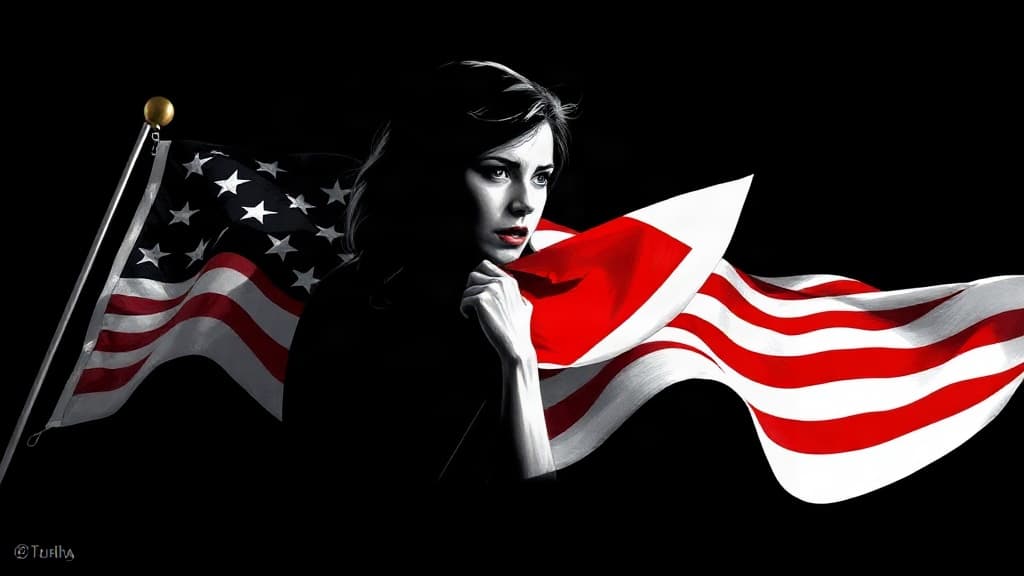
Chevalier made the remark in a December 2019 post on X, since deleted: "I forgot to get napkins so I just wiped my hand on the American flag behind me." She later said she regretted it. The 32-year-old socialist upset five-term Rep. Adriano Espaillat in the primary for the 13th Congressional District, covering northern Manhattan and the western Bronx, after an endorsement from New York Mayor Zohran Mamdani. She faces Republican Jomo M. Williams in the general election.
Chevalier's radical pedigree runs deeper than one bad tweet. According to Breitbart, she co-founded a group that once described itself as "fighting for the total eradication of Western civilization" and maintained a deleted account that hyped communism and Marxism. Asked whether she is a communist, she said, "I'm not. I'm a democratic socialist."
For Burchett, the flag is not an abstraction. His father was a World War II Marine. His maternal uncle, Roy Hicks, was wounded shortly after D-Day battling German forces in the Normandy hedgerows. Burchett keeps the 48-star flag that covered Hicks' coffin in his Knoxville office.
"I'm looking at a 48-star flag that hung on my uncle's casket and [he] died fighting the Nazis, and then see somebody going to get elected to Congress in New York who said they use that flag for a napkin," Burchett told the Post. "I thought, man, that same dadgum flag hung on my uncle's casket. It's the same flag that men and women fought and died for to free the slaves, and that's what they're using as a napkin."
He added: "If we vote to seat them, is one Democrat going to say no? I'm not going to vote to seat those people. Are they gonna say anything? Democrats died for this country as well as Republicans did."
Burchett's gambit faces long odds — and not just the partisan math. The Constitution makes each chamber the judge of its members' elections and qualifications, but the Supreme Court ruled in 1969 that the House exceeded its authority when it excluded Rep. Adam Clayton Powell, who had been duly elected and met the constitutional qualifications for office. GOP operative John Feehery, a former senior House leadership aide, told Breitbart the chamber could not function under such a standard: "If we refused to seat folks in Congress who said things that we strongly disagreed with, nobody in the House would be seated."
Dr. Jeffery Jenkins, a political scientist at USC, told the Post that contested elections "can muck up the legislative process and take time away from real governing," though he acknowledged the last decade may have created a "new normal" that includes turning back to strategies parties used a century ago.
Breitbart framed the story around Chevalier's radical associations and the constitutional mechanism; the Post leaned into the partisan clash ahead and the procedural risks. Neither outlet pressed the core question Burchett raised: if reverence for the flag and the republic it represents isn't a baseline for federal office, what is?
The Founders gathered in taverns under British rule and pledged their lives, fortunes, and sacred honor to build a nation. Now a candidate who once wiped her hands on that nation's symbol wants a seat in the body that governs it. The House will have to decide whether that matters.