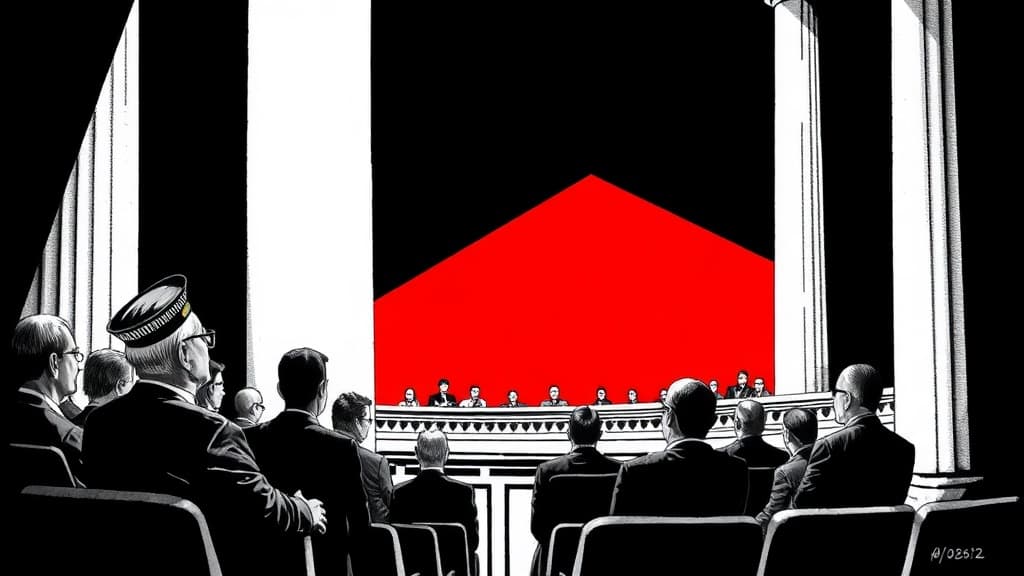
The Senate voted 86-12 on Tuesday to advance sweeping sanctions against Russia, with Ukrainian President Volodymyr Zelenskyy watching from the gallery — a bipartisan show of force for economic warfare overseas that this Congress can never seem to muster for anything that helps Americans at home.
When it's spending American leverage and deepening commitments abroad, 86 senators find common ground without breaking a sweat. When it's the budget, the border, or the cost of living? Silence. The sanctions bill, negotiated for more than a year by the late Sen. Lindsey Graham and Sen. Richard Blumenthal, D-Conn., would penalize countries that continue buying Russian oil, gas, and other exports — escalating U.S. economic involvement in a war with no defined endgame and no stated exit.
Zelenskyy was in Washington for Graham's funeral. He made the most of the trip. Before the vote, he met with senators and told them Ukraine is "winning the war now," according to Sen. Jim Justice, R-W.Va. Then he took a seat in the Senate gallery and waved down at the floor as the roll was called.
"It was an honor to be present as the votes were counted," Zelenskyy wrote on X. "This is the first step toward implementing Lindsey's plans, and certainly a step toward peace."
Peace through sanctions is the pitch. Sen. Todd Young, R-Ind., called the bill a "keystone" in the effort to "handicap the Russian economy and drive Russian President Vladimir Putin to the negotiating table." Sen. Jeanne Shaheen, D-N.H., went broader: "We are defending not just their country but the rest of Europe from an increasingly aggressive Russia."
That's the familiar line — America must underwrite Europe's defense, again, with no defined cost and no exit strategy. What it costs the American driver at the pump or the taxpayer at the filing window goes unasked.
The bill's momentum, per Blumenthal, comes from three sources: the claim that Ukraine is "turning the tide," the careful negotiation, and sentiment around Graham's sudden death. Graham and Blumenthal announced a White House deal on the legislation July 10. Graham died the next day, likely from an aortic tear. Blumenthal said Graham called it a "big effing deal" in their last conversation. "It's a significant part of his legacy," Blumenthal said.
Zelenskyy also met with President Trump earlier in the day to discuss ways the U.S. could help in the war. What was discussed, and what commitments were made, wasn't disclosed.
Neither source names the 12 senators who voted no. Neither mentions a price tag. Neither asks what another round of sanctions — on top of the hundreds already imposed — will actually accomplish that the others haven't.
Eighty-six senators can agree on economic warfare in an afternoon. The question they won't answer: what's the bill for the Americans paying for all of it?