New photos confirm Donald Trump's name has been stripped from the Kennedy Center's facade — but the real question is why working Americans are still footing the bill for a failing monument to coastal taste.
CNN and NBC are treating a signage dispute like it's Watergate. The breathless coverage focuses on what's behind the tarp, whether Trump's ego is being spared, and the heroic efforts of activist groups fighting to expose bare marble. What neither outlet pauses to ask: why does this building get a single dime of federal money in the first place?
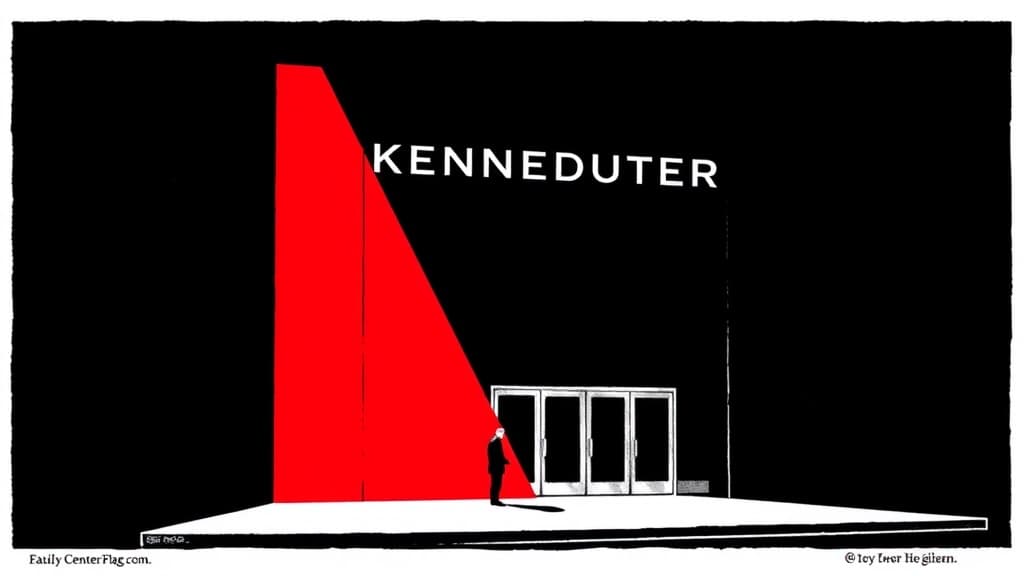
The facts are straightforward. A federal judge ruled May 29 that Trump's handpicked board had no authority to unilaterally rename the building. U.S. District Judge Christopher Cooper wrote plainly: "Congress gave the Kennedy Center its name, and only Congress can change it." The name came down overnight June 13. A tarp has covered the bare facade ever since — nearly ten days and counting.
Photos obtained by the activist group "Hands Off the Arts" and first reported by the Washington Post provide the first visual confirmation of the removal. The group's co-founder, Mallory Miller — a former Kennedy Center dance programming manager — told CNN the tarp exists because "the president does not want you to see them and that's exactly why they're important!" She told NBC that "Trump thought he could come in and take this crown jewel of arts and culture" and that "people power" made the difference.
Both outlets framed the tarp as a deliberate cover-up to protect Trump. Miller called it intentional. The Kennedy Center didn't respond to NBC's request for comment on why scaffolding and tarps remain. Fair enough — the question deserves an answer.
But here's what the coverage buries. CNN reported deep in its story that the Kennedy Center faces a "difficult financial picture" — plummeting ticket sales, artist withdrawals, political controversies, and a diminished staff. A federal judge is demanding the center continue operating during renovations, and the institution just asked for more time to comply with lawsuit deadlines because it can't manage a full programming schedule.
An elite arts venue that can't sell tickets, can't keep staff, and can't meet court deadlines — yet still collects federal funding. That's the story. Congress named the building in 1964 as a memorial to a slain president. In the decades since, it's become a cathedral to the tastes of the people who already have everything, subsidized by the people who don't.
The constitutional question is settled: only Congress can rename what Congress named. The real open question is when Congress will stop asking a factory worker in Ohio to chip in for an opera house in Washington that can't even fill its seats.