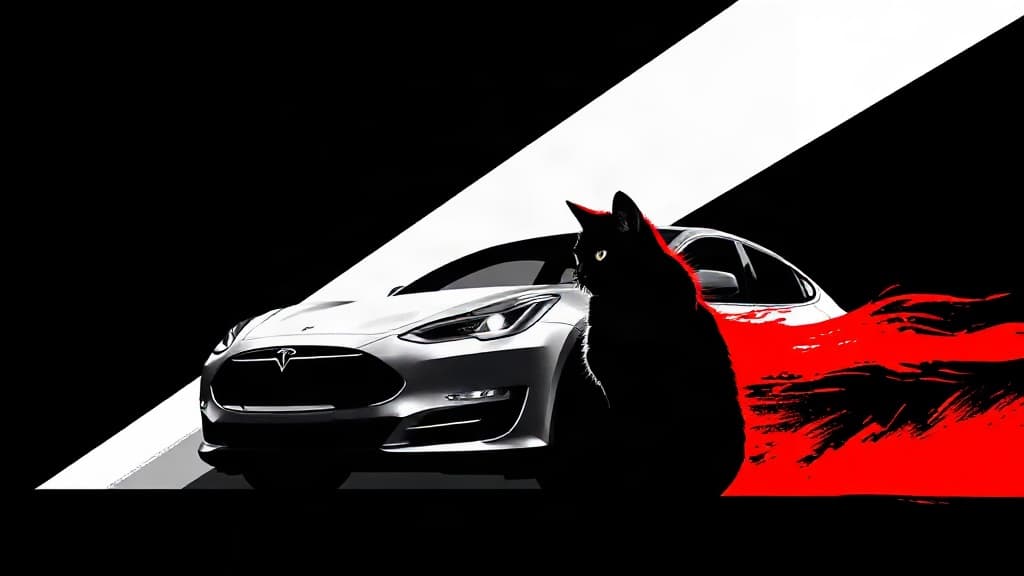
Elon Musk says Tesla is working to keep its robotaxis from hitting cats at night — and the tech press is mocking him for it, even though their preferred LiDAR alternative already killed one.
The story here isn't feline safety. It's about a press corps so committed to the anti-Musk narrative that it buries the one fact that actually matters: the LiDAR-based competitor those same outlets champion struck and killed a house cat last year. When the referee has a vendetta, the public loses.
Musk announced Saturday that Tesla is expanding robotaxi operating hours in Austin from 10 p.m. to 11 p.m. and said the biggest technical hurdle is nighttime pet detection. "The main thing we're trying to solve is making sure that we don't run over pets when they're hard to see at night," Musk wrote on X. "Literally trying to avoid grey kittens on grey tarmac in the dark." He pointed to AI-assisted photon count analysis as the fix: "Visual spectrum cameras can see very well in the dark when AI is doing the photon count analysis."
Business Insider reported the straight facts — the expansion, the technical challenge, even the detail that a Tesla Model Y in Austin robotaxi service struck a dog last September that ran off apparently uninjured. But The Verge? Their headline was pure snark: "Someone should tell Elon about these really cool technologies called radar and lidar." The piece framed Musk as stubbornly refusing to use technology that could "easily solve" the problem, claiming he "explicitly said that his Robotaxis can't run at night because it's dark."
He didn't say that. He said they're solving low-light pet detection. But more importantly, The Verge conveniently omitted what Business Insider reported: Waymo — the LiDAR-using industry leader The Verge implicitly champions — struck and killed a 9-year-old tabby cat named KitKat in a late-night incident that prompted neighborhood tributes. LiDAR didn't save KitKat. That fact didn't fit the narrative.
Meanwhile, the National Highway Traffic Safety Administration is investigating Tesla's camera-based system and whether it's adequate in poor visibility. Whether that investigation is legitimate safety oversight or regulatory harassment of a company that bypassed the establishment's preferred technology stack is a question worth asking.
Musk has owned cats himself — one named Schrödinger, who he said never liked him back. "One day she disappeared," he once said. The man has skin in this particular game.
The tech press wants you to believe Musk is either incompetent or arrogant for sticking with cameras. What they don't want you to notice is that the alternative they prefer has a body count of its own — and that the only reason we know about it is because a straight-news outlet reported it while the snark merchants looked the other way.