British comedian John Oliver just discovered that American police are tapping into private business cameras in real time — but his HBO segment conveniently skips who opened the door, and who keeps widening it.
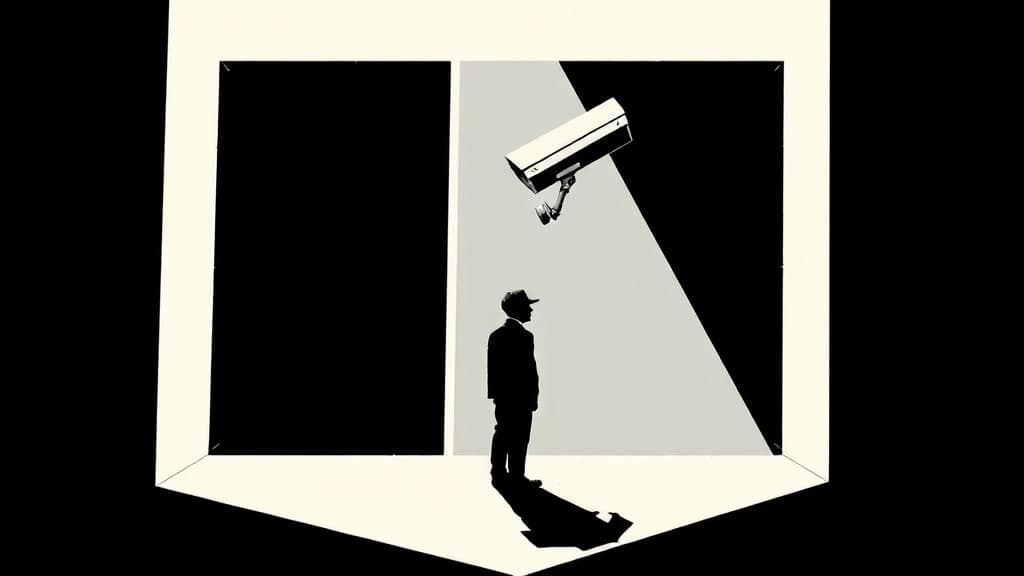
Oliver's "Last Week Tonight" turned its attention to Rialto, California, where police can access over 150 livestreams from private businesses through Fusus, a company that gives departments fast access to privately owned cameras. His team filed public records requests and received a 30,413-page PDF showing police accessed cameras at fast food joints — including a two-hour session monitoring five cameras inside a Chick-fil-A and hundreds of hours watching a Days Inn pool camera. "Technology is amazing, but it does feel like turning on the panopticon should be a bit harder than that," Oliver said, per HuffPost. The department insisted some hits involved wider-area monitoring or cameras left on in the background. Oliver wasn't reassured.
But here's what Oliver didn't tell his audience: the surveillance state isn't something that happened to Americans — it's something they're voting for. In San Francisco, a new poll from the advocacy group GrowSF found 72% of voters support police using drones and live cameras for active investigations, SFGATE reported. Sixty-eight percent back drones monitoring high drug-use areas. Sixty-four percent want cameras running "at all times" on open-air drug markets.
This is the same San Francisco that passed some of the country's most restrictive surveillance laws in 2019. Voters rolled those restrictions back in 2024 by approving Proposition E, 54% to 46%. The ACLU and the SF Democratic Party opposed the measure. They lost. Since Prop E passed, SFPD bought drones with funding from billionaire Ripple co-founder Chris Larsen and started posting arrest footage on social media.
And who's pushing the polling that says the public wants more surveillance? GrowSF, founded in 2020 by tech workers, has received funding from Larsen, billionaire venture capitalist Michael Moritz, and Y Combinator CEO Gary Tan. The group touts helping recall progressive District Attorney Chesa Boudin and defeating Supervisor Dean Preston. Billionaire tech money built the tools, then funded the political infrastructure to make sure police can use them.
Oliver framed the issue as cops being "weird" — spying on Wienerschnitzel grills and hotel pools. That's easy comedy. The harder story is that voters in one of America's most progressive cities voluntarily surrendered their own surveillance restrictions, and billionaire donors made sure the door stayed open. The panopticon didn't get turned on by accident. Americans are hitting the switch themselves, and the people selling the technology have the political operation to keep it running.
The question isn't whether police surveillance is creepy. It's whether anyone in power — left or right — has any interest in turning it off.