D.C. just quietly paid an undisclosed "significant" settlement to a resident police handcuffed for playing a Star Wars song on his phone — and taxpayers will never know how much their government spent to make a First Amendment violation disappear.
When the state can detain you for playing music on a public street, then cut a secret check to make the lawsuit go away, the Constitution isn't protecting you. Your tax dollars are protecting them.
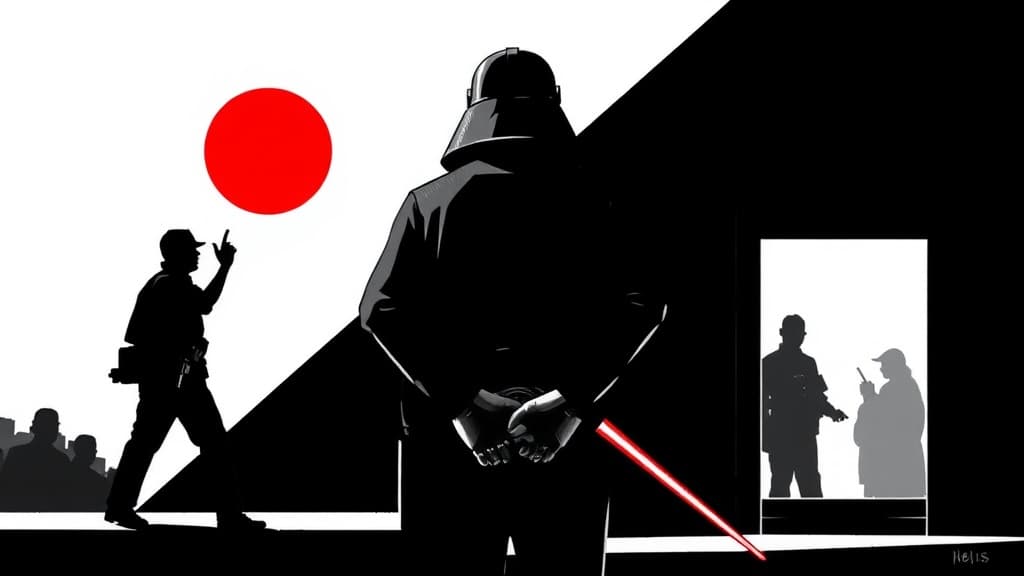
Sam O'Hara, a D.C. artist, followed an Ohio National Guard patrol on Sept. 11, 2025, playing "The Imperial March" — Darth Vader's theme — from his phone. It was protest against the Trump administration's federal law enforcement surge in the capital. One Guardsman summoned Metropolitan Police. Officers handcuffed O'Hara and held him for 15 to 20 minutes before releasing him without charges. No crime. No interference. Just a song the state didn't like.
O'Hara sued last October, claiming violations of his First and Fourth Amendment rights. "The law might have tolerated government conduct of this sort a long time ago in a galaxy far, far away. But in the here and now, the First Amendment bars government officials from shutting down peaceful protests," the suit stated.
This week, D.C. settled. Court filings say O'Hara will drop claims against the district and four officers within three business days of payment. The ACLU of D.C., representing O'Hara, called the payout "a significant amount" he "is pleased with" but refused to disclose the dollar figure, citing his privacy. The D.C. Attorney General's office declined to comment.
So the public — whose money pays the settlement, whose officers did the detaining, whose rights are equally at risk — gets locked out. The officers face no public discipline. The settlement terms stay buried. The institutional machinery hums along unchanged.
The settlement doesn't even resolve the whole case. O'Hara's claims against Ohio National Guard Sgt. Devon Beck remain active. Beck's lawyers want those claims dismissed, arguing he was performing "assigned duty" and that the encounter was "not an accidental encounter or a one-time disagreement on a public sidewalk." In other words: he was just following orders. That defense has a dark history, and it should alarm every American who believes the Constitution limits what government agents can do to citizens on a public street.
The backdrop matters. Trump issued an executive order declaring a crime emergency in D.C. in August 2025. Within weeks, hundreds of Guard troops and federal agents were patrolling the city. The Boston Globe noted the surge "inflamed tensions with residents of the heavily Democratic district." But this isn't a partisan story — it's a power story. When the federal government floods a city with troops and a man gets handcuffed for a movie soundtrack, every American should care, regardless of party.
Both outlets that covered this ran the same AP wire story. Neither pressed the secret dollar amount. Neither asked why officers who violated constitutional rights face no apparent consequences. The press treated a secret government payout for civil rights violations as a one-day item.
The question isn't whether O'Hara deserved compensation — he did. The question is why the state gets to violate your rights, make you whole with your neighbors' money, and tell no one the price. Until settlements like this come with transparency and accountability, the next citizen playing the wrong song can expect the same treatment — and the same quiet payoff afterward.