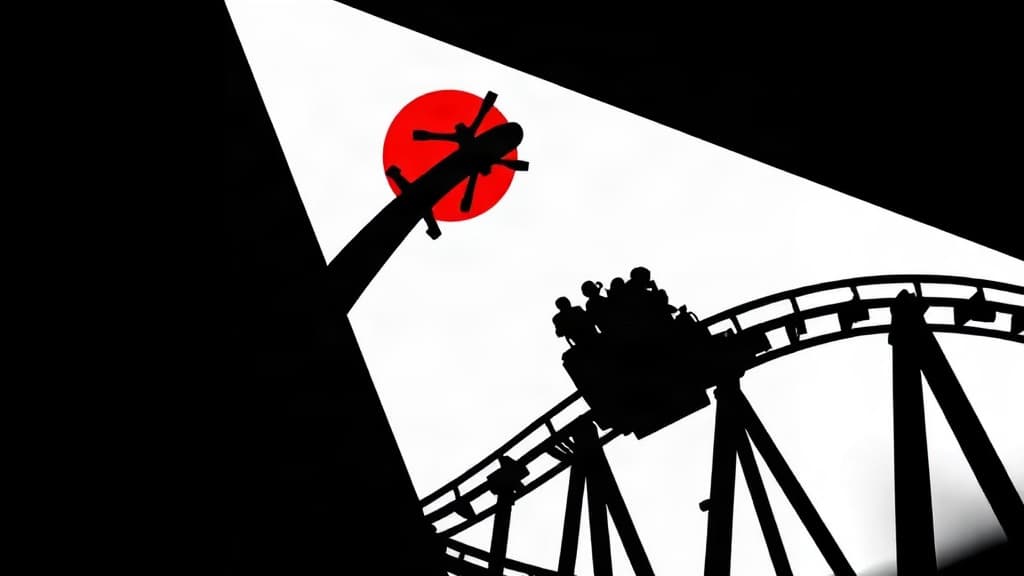
Six Flags Magic Mountain permanently shuttered its X2 roller coaster Tuesday after more than 100 people came forward claiming the ride gave them traumatic brain injuries — including a 25-year-old woman who still can't breathe on her own and at least two riders who died.
The Valencia park kept X2 running for nearly two decades while riders were hauled off to emergency surgery. The ride was finally shuttered July 12 after two women suffered catastrophic brain hemorrhages within six days of each other this summer. It will now never reopen. For the families already destroyed, the decision comes far too late.
The scope of alleged harm is staggering. Attorneys Gary Dordick and Christopher Bulone filed three new civil lawsuits this month against Six Flags and the ride's manufacturer, calling X2 "defective" and accusing the park of failing to adequately warn riders of the risk of head and brain injuries, according to court documents. More than 100 people have come forward claiming injury.
Pamela Guillen rode X2 on her daughter's 16th birthday. "Everything went blank. My next memory is waking up in the hospital about two weeks later," Guillen recalled, according to ABC7 Los Angeles. "I had suffered a traumatic brain injury and needed emergency brain surgery to stop the bleeding and had to be intubated. I was in a coma."
Six days later, 25-year-old Naomi Greer-Wilkinson rode the same coaster. She remains hospitalized, unable to breathe without a ventilator. "Naomi, 25 years old, still hasn't come home. Her parents, Artemis and Josh, are with her every single day and wonder when she's going to be able to breathe on her own again," said Bulone, as ABC7 reported.
A third plaintiff, attorney Michael Wick, underwent two brain surgeries and can no longer practice law due to disability. The New York Post reported at least two deaths linked to the ride over its 24-year history, including 22-year-old Christopher Hawley, who collapsed and lost consciousness after riding X2 in June 2022 and later died.
Doctors who treated the injured women told CNN the brain injuries resulted from a "traumatic rapid acceleration-deceleration event" experienced on X2, which reaches nearly 80 mph with seats that rotate 360 degrees during 200-foot drops.
Park president Brian Oerding framed the closure as a choice, not a concession. "While X2 consistently passed a multitude of safety tests, we have decided to close the ride because we believe it's the right thing to do," he wrote in a blogpost, noting the ride had welcomed more than 16 million guests. The Guardian and New York Post both published his statement verbatim — but none of the outlets pressed Oerding on who conducted those safety tests, what they measured, or why none of them caught what doctors describe as a straightforward mechanism of injury.
Dordick wasn't letting Six Flags claim the moral high ground. "Today Six Flags Magic Mountain finally did what it should have done long ago," he said in a statement. "For our clients, this decision comes too late. We will hold Six Flags accountable."
X2 opened in 2002 as simply "X" — the world's first fourth-dimensional roller coaster — before reopening with upgrades in 2008. The lawsuits allege design problems dating back to the ride's original launch. That means Six Flags had two full decades of red flags and still sold tickets to families looking for a day of fun.
The coaster is closed. The question that remains: who at Six Flags, or at whatever agency was supposed to be watching, will face consequences for the years it stayed open?