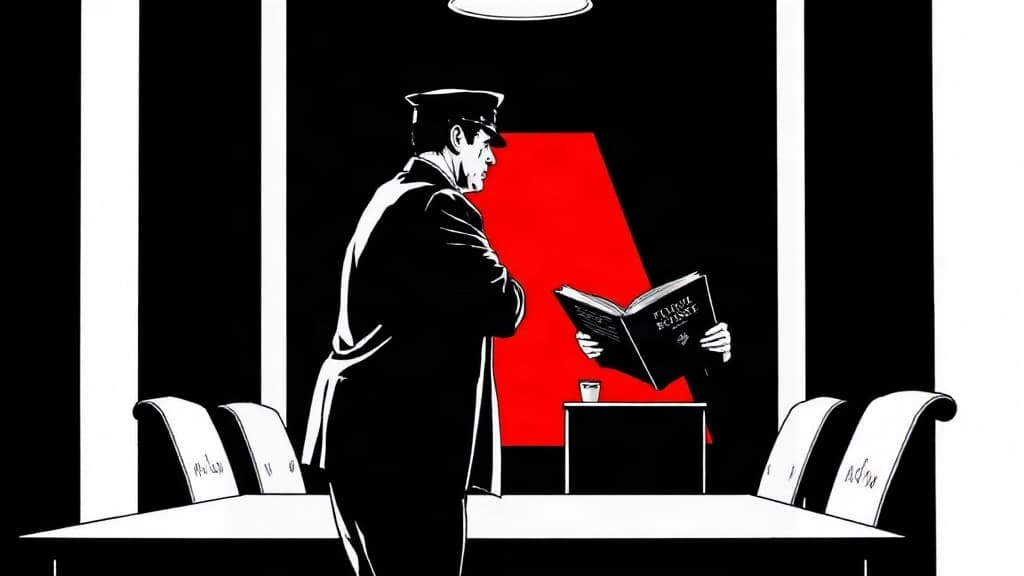
A North Carolina pastor was dragged out of a school board meeting by police for the crime of reading aloud from a book that sits on the shelves of the district's own high school library. The message from the Iredell-Statesville Schools Board of Education was clear: the explicit material stays available to children, but a Christian citizen who objects gets silenced and removed.
Pastor John K. Amanchukwu Sr. approached the podium during the October 12 board meeting to read excerpts from the novel Push by Sapphire — the same book that sparked the film Precious. The novel contains graphic depictions of incest, rape, and physical and emotional abuse. Students at Lake Norman High School can check it out freely. But when a pastor tried to put those same words into the public record, the board chair shut him down.
Before Amanchukwu even began reading, Board Chair Dr. Doug Knight warned him that if he was going to "read nasty words," it would not be allowed, according to The Gateway Pundit. The same "nasty words" the district deems appropriate for teenagers are apparently too dangerous for adults to hear in a public meeting.
Amanchukwu pushed back, arguing — with support from at least one board member — that Knight was violating his First Amendment rights. As the pastor read the explicit passages and reminded the room that the book remains freely available to students, Knight declared him out of order. Police then approached and forcibly removed him from the meeting.
"Let me get this straight: THE BOOK STAYS. THE PREACHER GETS SILENCED," Amanchukwu wrote afterward on social media. "An allegedly inappropriate book remains in Lake Norman High School, but a preacher exercising his right to speak gets shut down?"
He announced that a lawsuit is coming. "The Iredell-Statesville School District has a BIG problem," he wrote. "I was censored by the board chair for reading from Push by Ramona Lofton. Then POLICE were brought in to intimidate me and force me away from the podium."
This is the two-tier speech regime in action. School boards across the country have decided that parents and pastors don't have standing to know — let alone object to — what their tax dollars put in front of children. The material is fine for minors in the library, but too offensive for adults to hear spoken aloud at a public meeting where elected officials are supposed to face their constituents.
The board chair's move also raises straightforward First Amendment questions. A public comment period at a government meeting is a designated forum for citizen speech. Restricting the content of that speech — particularly when it directly relates to the school district's own holdings and policies — is exactly the kind of viewpoint discrimination the Constitution forbids.
The question now is whether the courts will back the citizens or the bureaucrats. Amanchukwu says he's filing suit. The district will presumably defend its right to keep parents in the dark about what their children can access, while calling those same parents "out of order" for saying the quiet part out loud.