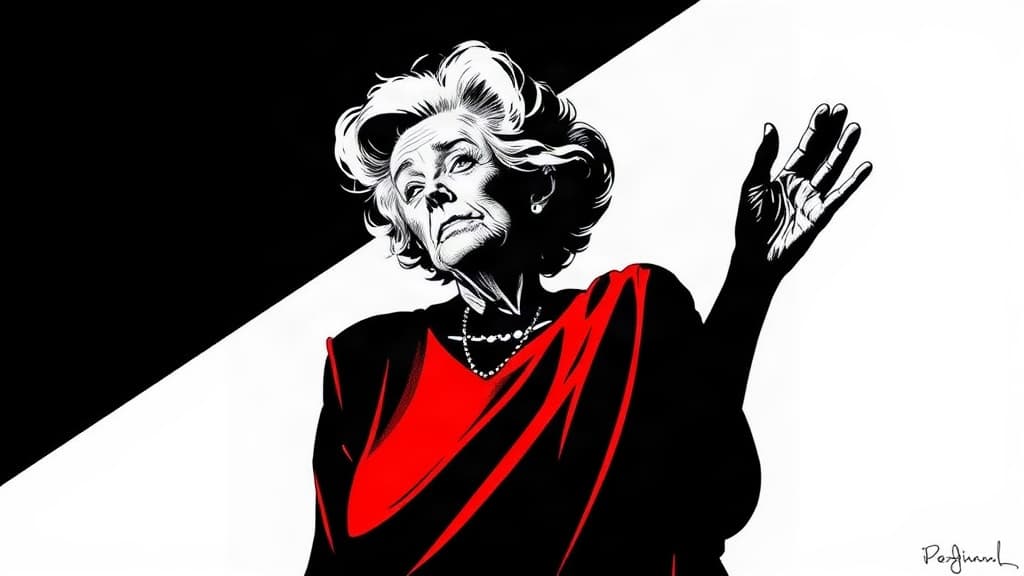
Oscar-nominated actress Barbara Barrie ended her life with medical assistance at 95, and the establishment press is celebrating it as empowerment — the latest milestone for a culture of death that tells Christians their objections have no place in public life.
New York's Medical Aid in Dying Act, signed by Gov. Kathy Hochul just this February, is already being normalized by entertainment media eager to frame physician-assisted suicide as dignified rather than deadly. The law permits terminally ill adults with a prognosis of six months or less to request physician-prescribed medication to end their lives. Barrie, diagnosed with terminal cancer, was an open advocate for the law — and her death is being treated as a victory lap.
The framing across outlets tells the story. E! News described Barrie as dying "with help from her medical team" — a euphemism that erases what actually happened. USA Today used the preferred advocacy language, "Medical Aid in Dying," and noted the law's "safeguards and eligibility requirements" without once acknowledging that Christians, disability advocates, and pro-life groups raised serious objections when Hochul signed the bill. Page Six focused on Barrie "beaming" at her final red carpet appearance and her bedazzled loafers. Fox News used the plain phrase "medically assisted" but buried the significance beneath decades of career highlights.
Barrie's agent, Gary Gersh, confirmed that her "passing was medically assisted in accordance with the New York State Medical Aid in Dying law, of which she was a proponent and advocate." Her daughter, Jane Harnick, told The New York Times the death followed a terminal cancer diagnosis. Barrie had also been living with idiopathic pulmonary fibrosis since 2014, a degenerative lung disease that makes breathing progressively harder.
What none of these outlets report: the Catholic Church, disability rights organizations, and pro-life groups warned that laws like New York's would lead exactly here — to a society where choosing death is treated as courageous and questioning that choice is treated as cruelty. When Hochul signed the bill in February, religious leaders objected. Those objections were dismissed.
Barrie was 95. She had survived cancer once before, in the 1990s, calling it a "turning point" in her career. "They'd jab me with the stuff. I'd go to rehearsal," she said in her final interview, a 2024 episode of "How Art Changed Me." "At lunchtime, they'd all go to lunch and I'd take a nap. And I thought, obviously this means something to me if I would go through this." She fought then. She worked another three decades. This time, the culture told her the brave choice was different.
New York's law is months old. The machinery is just warming up. The question isn't whether more Americans will be encouraged to choose death — it's whether anyone in public life will still be allowed to say no.