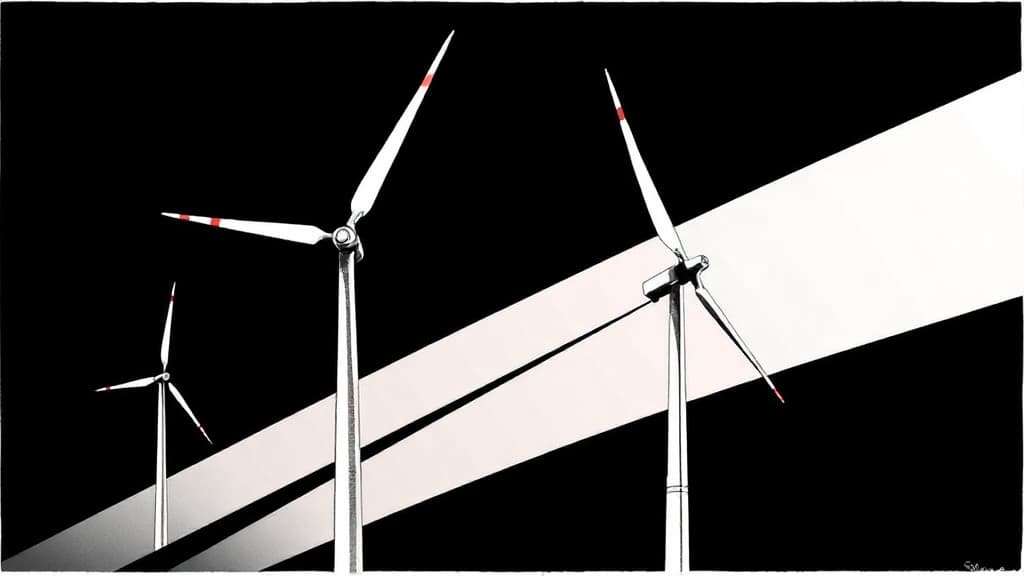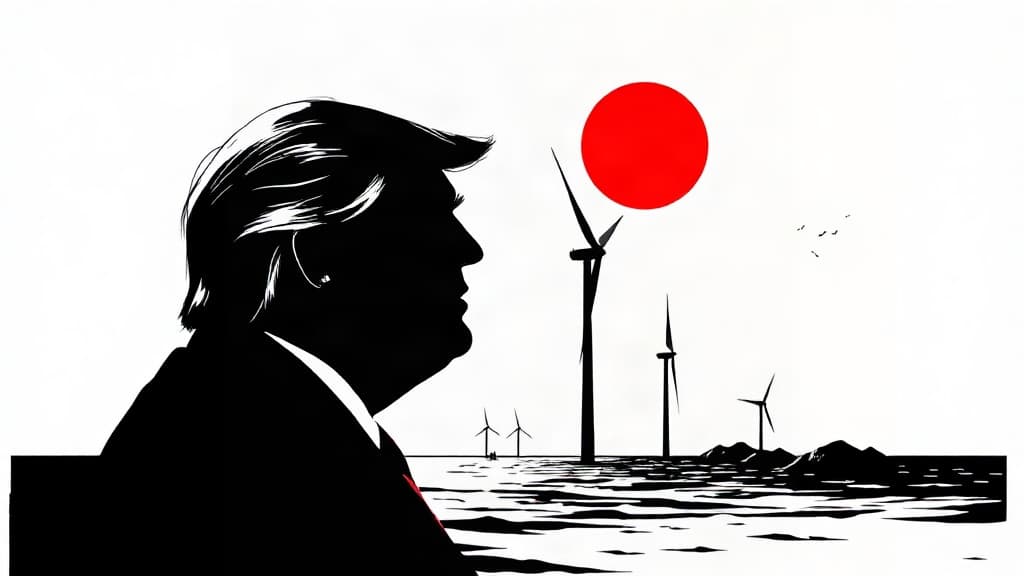
The Trump administration is reevaluating a permit for a 200-turbine offshore wind project backed by a French state-owned utility — pulling back on a development that would industrialize American coastal waters while a foreign entity collects the profits and American ratepayers get the bill.
The US Army Corps of Engineers said Tuesday it is reassessing its approval for EDF Renewables North America's Atlantic Shores South, which proposes constructing up to 200 wind turbines roughly 9 miles off the coast of Atlantic City, according to Bloomberg Tax News. The parent company, Electricite de France SA, is France-based — a foreign government-backed utility that secured federal permission to build industrial energy infrastructure in American waters. A spokesperson for EDF did not respond to a request for comment.
Bloomberg framed the move as a routine regulatory reassessment tied to pending Senate legislation on energy project approvals. What went unasked: why a French state utility was ever permitted to build off the Jersey Shore in the first place, how much taxpayer subsidy backs the project, and who lobbied to fast-track it. The permit reevaluation is the story — but so is the permitting that preceded it.
The same day, the administration asked Congress for $50.1 billion to overhaul the nation's air traffic control system after a catastrophic four-hour nationwide grounding of flights — the longest shutdown since September 11, 2001. Transportation Secretary Sean Duffy, FAA Administrator Bryan Bedford, and White House budget director Russ Vought sent lawmakers a letter breaking down the request: $10.1 billion for air traffic control technology upgrades, $10 billion each for airport infrastructure and terminal modernization, $10 billion for five new regional control centers to replace the existing 22, and $10 billion to build or upgrade up to 140 control towers, according to Breitbart.
The root cause of the meltdown: a federal contractor replacing outdated copper wires with fiber optic lines installed a new L3Harris router in El Dorado, Arkansas, triggering a cascade of communications and radar failures at 17 of 22 regional control centers, the Anchorage Daily News reported. The FAA said "excessive data" flooded the system at 1,000 connection attempts every 4 to 5 seconds, overwhelming 25-year-old routers throughout the network.
Democrats are pushing back on the funding request. Rep. Rosa DeLauro, senior Democrat on the House Appropriations Committee, accused Duffy of demanding a "$50 billion ransom without a real plan to deliver" and noted that $9.1 billion of previously approved aviation modernization funding remains unspent. Senate Commerce Committee Democrats called for pausing the router replacement program — only 400 of more than 3,600 routers have been installed — until the root cause is identified.
The Transportation Department countered that the $12.5 billion Congress approved last year has already been allocated and congressional restrictions prevent transferring money between project categories. Both claims may be true — which is exactly how Washington keeps failing: money gets appropriated, money gets trapped in bureaucratic silos, and then more money gets requested.
The FAA's modernization failures predate any single administration. The Anchorage Daily News noted the agency has struggled to upgrade its systems for decades. That bipartisan track record of failure is now the justification for another massive check.
Two Trump administration moves in one day: one pulls back on a foreign-backed wind project that would carpet the coastline with turbines, the other demands $50 billion for a system both parties have already funded and failed to fix. The open question is whether reevaluating bad permits and throwing more money at broken agencies produces different outcomes — or just different beneficiaries.