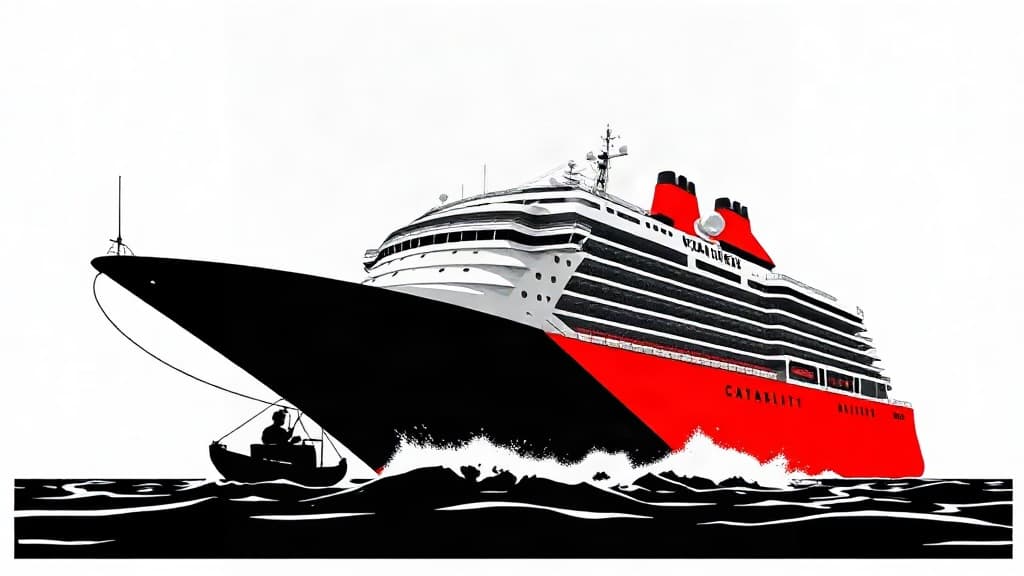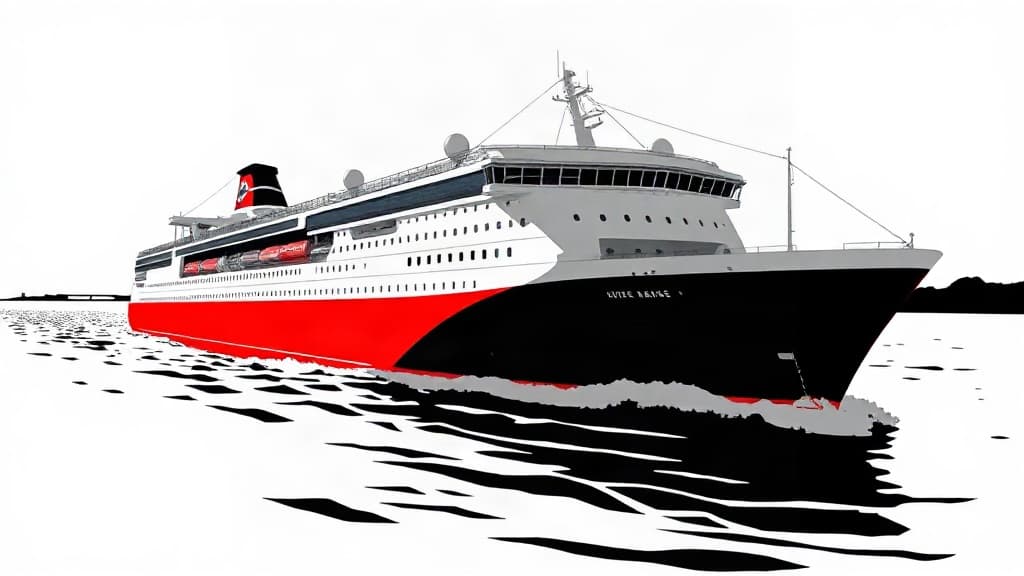
A tanker drifted broadside into a docked cruise ship on the Mississippi River in New Orleans Friday, capsizing the vessel and sending passengers into the water — one mechanical failure away from crippling a critical American fuel corridor.
The Atlantic Asphalt tanker struck the American Heritage at the Port of New Orleans around 12:30 p.m., according to Port NOLA press secretary Kimberly Curth. The cruise ship, carrying 129 passengers plus crew, had docked roughly two hours earlier to begin disembarkation. After impact, the American Heritage rolled onto its side over the course of about 15 minutes, according to witness Jamie Holford, who told WDSU it was "surreal." Twenty-four people were admitted to University Medical Center, according to LCMC, the hospital's operator. The Coast Guard shut down a three-mile stretch of the Mississippi to all vessel traffic between mile markers 93 and 96.
That shutdown is the story working Americans should be watching. The Mississippi River is a main artery for petroleum products, asphalt, and chemical transport to the heart of the country. One collision just closed three miles of it. An emergency response source told The Guardian it was possible the tanker lost power before striking the cruise ship, though that remains unconfirmed. If a single power loss on a tanker can shut down a fuel corridor serving the entire Midwest, the system is fragile by design.
It nearly got worse. Maritime law expert Martin J. Davies of Tulane University told WVUE the Atlantic Asphalt was lucky it didn't strike the Crescent City Connection bridge — which carries an estimated 160,000 cars daily — just moments before drifting to starboard and hitting the cruise ship. The Guardian reported that marinetraffic.com data showed the tanker's path was uneventful until it passed the bridge, then began drifting right. A tanker loaded with asphalt hitting a bridge carrying 160,000 vehicles a day isn't a maritime incident. It's a regional catastrophe.
The Coast Guard regulates vessel traffic on the Mississippi, but the question after Friday is whether those regulations — and the infrastructure supporting them — are adequate for the volume and hazard class of traffic moving through the corridor. The Coast Guard told the New York Post it shut down the river for response and assessment. No details on the cause of what Curth called an "allision" have been released. American Cruise Lines said guests and crew were evacuated and that it is "in close coordination with the U.S. Coast Guard and local authorities."
Louisiana Governor Jeff Landry posted that he is aware of the incident and headed to New Orleans. Multiple agencies — New Orleans Fire Department, Port NOLA Harbor Police, New Orleans Police Department, and the Coast Guard — all responded. Video from the scene showed tugboat crews pulling people in life jackets from the river.
The rescue worked this time. The bridge wasn't hit. The fuel corridor will reopen. But a tanker drifting out of control on a river that moves the nation's energy supply — past a bridge carrying 160,000 cars, into a docked passenger vessel — isn't a freak accident. It's a stress test the system barely passed. What's the plan for when it doesn't?