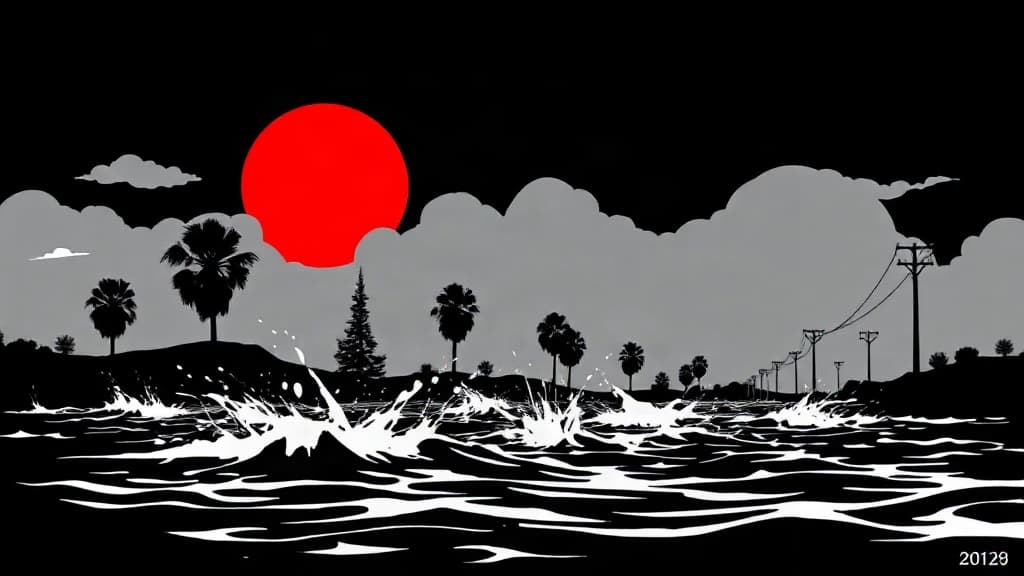
Families in the Four Corners region spent the weekend on rooftops watching floodwaters swallow their homes, and another round of storms is bearing down on them Sunday — while the federal bureaucracy that claims to protect the climate can't keep sewage out of their living rooms.
The National Weather Service has issued a flood watch across the junction of Arizona, Colorado, New Mexico, and Utah. The San Juan River in Farmington, New Mexico, ran two feet above its previous record, set in 1909, according to The Guardian. Hundreds of water rescues have been reported between Farmington and Bloomfield. The San Juan River Bridge in Colorado is closed. A house in Pagosa Springs is visible only by its roof and chimney. Power outages dot the region, and it will be days before it comes back.
New Mexico Governor Michelle Lujan Grisham said in a statement Saturday that "families in Bloomfield and Farmington spent the night on rooftops watching the river flood their homes." She added: "Right now, our focus is saving lives."
No deaths have been reported. But the damage is already multi-million-dollar, and the water receding doesn't mean the crisis is over.
San Juan County spokesperson Devin Neeley said floodwaters left mud and silt contaminated with sewage because waste treatment plants failed. "It's a pretty active disaster zone," Neeley said. "We're not on the downswing by any means."
Pagosa Springs resident Chris Mott stood watching water rush through his neighborhood after sandbags proved useless. "I'm sorry, buddy. I tried. I really tried. But this one was bigger than the last one," Mott said. "It moved sandbags and everything."
San Juan County Sheriff Shane Ferrari had about four feet of water flood his own home.
The Guardian noted this flooding follows two months of on-and-off heavy rain driven by tropical Pacific moisture — and comes after months of drought. A tornado also struck Santa Fe on Saturday, collapsing roofs on at least eight houses. CBS News focused narrowly on the forecast and the immediate damage; The Guardian provided the broader pattern of back-to-back weather disasters hammering a region whipsawed between drought and deluge.
What neither outlet asked is the question that matters: where is the infrastructure? Waste plants failed. Bridges closed. Sandbags couldn't hold. Power went out and stays out. The federal government pours billions into green energy mandates and EPA rulemaking designed to hypothetically cool the planet decades from now, but the concrete-and-steel systems that keep Americans from drowning in their own homes — levees, wastewater treatment, storm drainage, grid hardening — crumble. The San Juan River broke a record from 1909. That's 117 years of infrastructure investment that didn't materialize where it counts.
Sheriff Ferrari is mucking out his own house. The governor promises the state will help families rebuild. Nobody is asking why the federal government can find money for every climate initiative on a wish list but can't keep a waste plant running in Farmington when the rain comes.
The water will recede. The question is whether anyone in Washington will notice what it exposed.