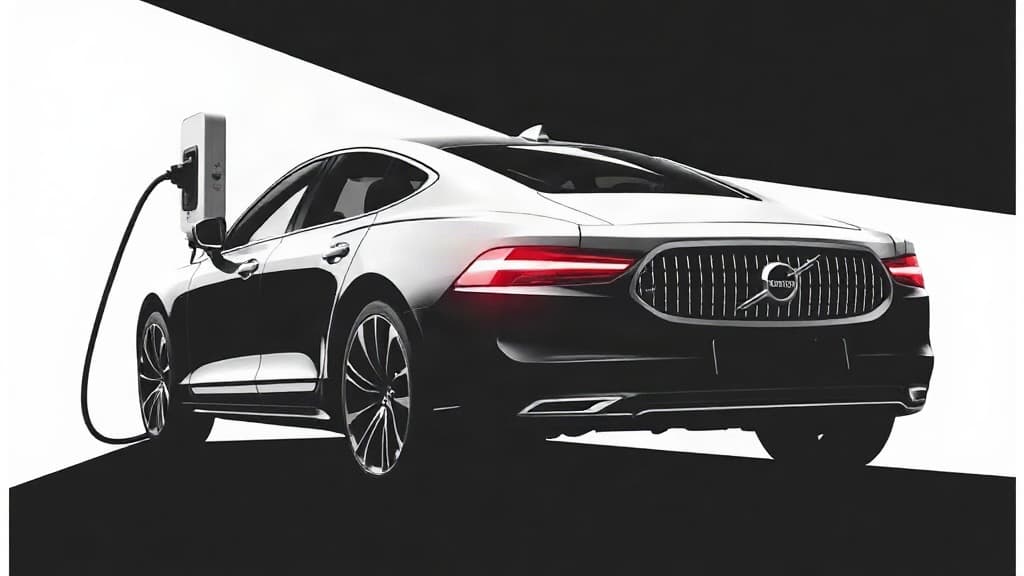
Volvo's plug-in hybrids just claimed the longest electric range in their class — proving again that consumers want gas backup, even as Washington keeps shoveling subsidy money toward full-EV mandates nobody asked for.
The pattern repeats across industries. The market rewards what works. Institutional power rewards what checks the right boxes. And the people who get squeezed are the ones paying the tab.
Volvo's updated XC60 and XC90 plug-in hybrids now feature bigger batteries, giving them the longest electric range of any PHEV on the market, The Verge reported. The appeal is straightforward: electric for the daily commute, a gas tank for everything else. No range anxiety. No charging-desert roulette. Just a car that does the job. Yet federal policy keeps tilting toward full-electric mandates and subsidy structures that reward pure EVs over the hybrid middle ground consumers keep choosing with their own money.
The same dynamic is playing out in Silicon Valley. Google just allowed all its engineers to use Anthropic's Claude AI model for internal coding work, Business Insider reported, after months of frustration with the company's own Gemini tool. Despite spending billions building Gemini and pressuring staff to use it, Google conceded that its in-house product couldn't keep up. A Google spokesperson said Gemini "remains our primary and foundational model" but acknowledged Claude is now available on quota for "specialized use cases." Translation: when the mandate fails, the market wins.
Follow the money and the picture sharpens. Google announced plans to invest up to $40 billion in Anthropic, according to Business Insider. The tech giant profits whether engineers use Gemini or Claude. That's the kind of hedge ordinary Americans don't get when policymakers pick EV winners and losers in Detroit.
And when Google does push Gemini on regular users, there's a paywall. Engadget reported that Google's new "Organize My Files" feature for Drive requires a $20/month AI Pro subscription. Free accounts are locked out. The feature doesn't even read document contents — it just suggests folder moves based on file names. Google is charging premium prices for organizational functionality that barely qualifies as artificial intelligence.
The connective tissue: institutional players push their preferred solution — full EVs, in-house AI — and when the market rejects it, they either quietly pivot or charge users for the privilege of an inferior product. The subsidies and mandates flow one direction. Consumer behavior flows the other.
Who gets squeezed? The small business that can't afford a pure-EV fleet. The worker who needs a car that starts in sub-zero weather. The engineer fighting a tool that doesn't work. The Drive user paying $240 a year to sort files.
When Washington and Big Tech agree on what you should want, check your wallet — and check who's getting the subsidy.