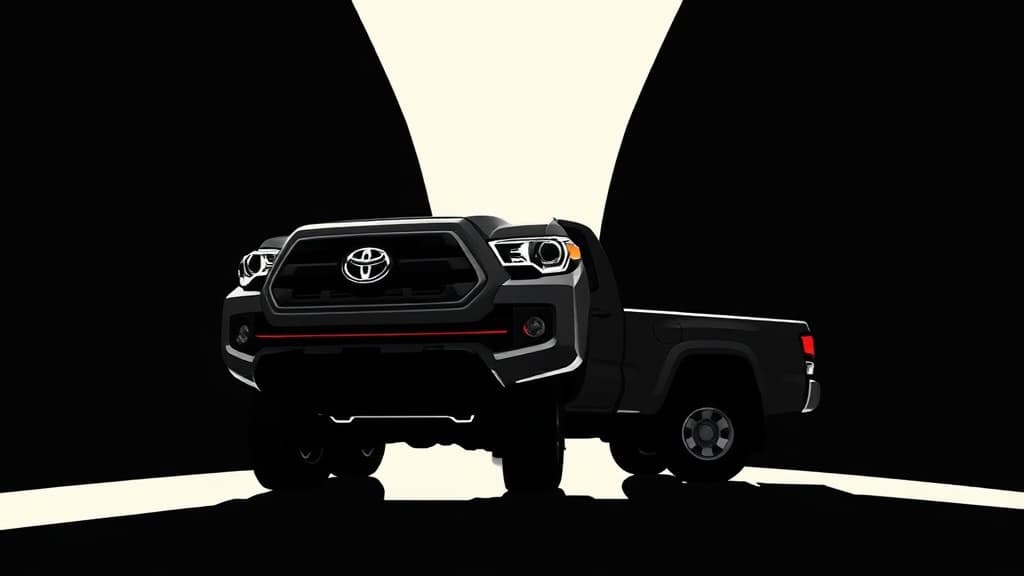
Toyota is moving most Tacoma pickup production from Mexico to Texas, investing $3.6 billion and creating 2,000 American jobs in San Antonio — a direct payoff from Washington's decision to get tough on trade.
The Japanese automaker announced Monday it will shift Tacoma assembly from its Tijuana plant to a second production line at its San Antonio campus over the next four years. The expansion will bump annual capacity at the plant by 150,000 units, to roughly 350,000. Toyota Motor North America CEO Ted Ogawa called the move a deepening of "our commitment to American manufacturing" and a play to deliver "high-quality vehicles that meet the changing needs of customers."
This is what America-first policy looks like in practice. CBS News noted the announcement came "just days after Washington declined to renew a North American trade pact with Mexico" and moved to annual reviews — a decision that rattled boardrooms dependent on cheap labor south of the border. CNBC framed the move around Toyota's broader U.S. investment strategy and its race with General Motors for domestic sales, but both outlets buried the obvious cause: tariffs and trade uncertainty made offshoring expensive, and reshoring became the rational play.
Toyota isn't pulling out of Mexico entirely — the company will still build some Tacomas at its Guanajuato plant and said it "encourages a quick resolution to USMCA to make the North American region globally competitive." But the company is voting with its capital: up to $10 billion in new U.S. investment through 2030, on top of $8.3 billion already sunk into San Antonio since 2003.
CNBC reported that the Texas plant currently produces the Tundra and Sequoia, and that a new rear axle facility on the campus is slated to open this fall. The Tacoma shift reverses a move Toyota made more than six years ago, when it sent production from Texas to Mexico. The offshoring was standard practice for global automakers exploiting trade deals to cut costs. The reshoring is the correction.
The press will call this market forces. It's political pressure working as intended. When Washington stopped guaranteeing cheap offshore labor and started reviewing trade deals annually, the math changed. Toyota's $3.6 billion is the result.
The open question: will the next administration keep the pressure on, or let the offshoring cycle start again?