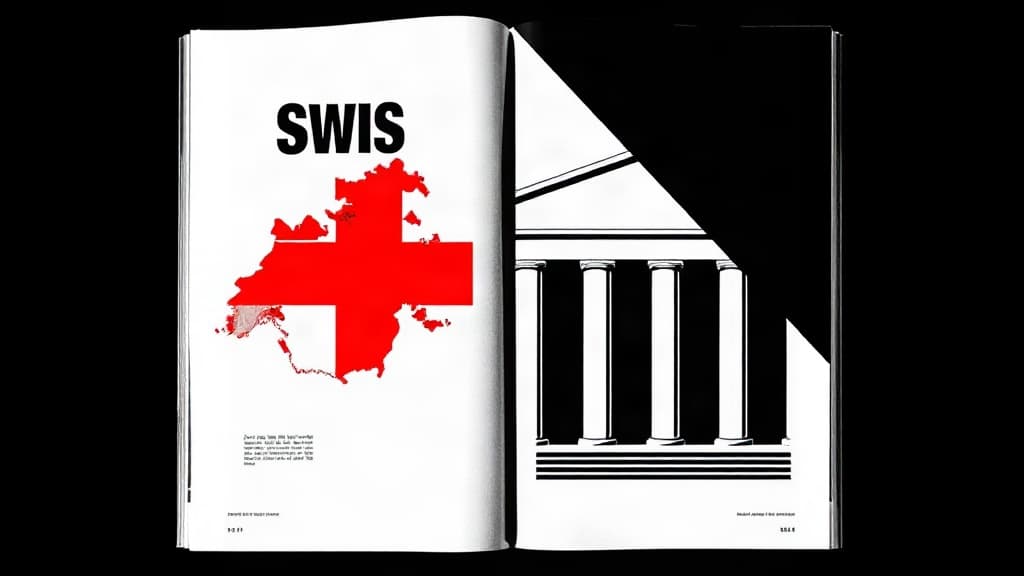
Switzerland's central bank held its key interest rate at 0% on Thursday with inflation running at just 0.8% — while the Federal Reserve just restarted its rate-hike cycle, signaling more increases that will raise borrowing costs for every American family and small business trying to stay afloat.
The contrast isn't subtle. Swiss citizens enjoy stable prices and credit that still flows. Americans get squeezed on both ends — inflation that erodes paychecks and interest rates that make borrowing for a home, a car, or a business expansion punishingly expensive. The establishment press covers the divergence as a curiosity. For working Americans, it's a gut check on who the system is actually built to serve.
CNBC reported that the Swiss National Bank is defying the tightening cycle underway at the ECB, the Bank of Japan, and the Fed — all of which have begun raising rates. Switzerland's August inflation of 0.8% is a fraction of what the U.S. has endured, and the SNB's target range of 0% to 2% gives it room to stand pat while other central banks scramble.
One reason: the Swiss franc's safe-haven status. As the currency appreciates, imports get cheaper, putting natural deflationary pressure on the economy. The franc rose more than 12% against the dollar in 2025 before the greenback clawed back about 4% this year. Gedeon Tumong, head of finance specialization at Switzerland's HIM Business School, told CNBC the Swiss economy enjoys what economists call a "safe haven dividend." He added: "Unlike the U.S., the U.K. and the euro zone, Switzerland imports credibility as much as it imports goods."
Meanwhile, Reuters framed the Fed's new hiking cycle almost entirely through the lens of stock market performance — because Wall Street's comfort is what matters to the financial press. The Fed increased its benchmark rate for the first time since 2023 last week and signaled another quarter-point hike by year-end, with more expected in 2027. Fed funds futures point to a peak rate around 4.8%.
History doesn't favor the little guy when the Fed hikes. RBC Capital Markets found that in five of the past six hiking cycles, the S&P 500 suffered drawdowns of 8% to 14% shortly after the first increase. The exception was 2022, when the Fed's 525-basis-point blitz drove a 25% peak-to-trough collapse. Reuters noted that analysts expect this cycle to be "short and shallow" — roughly 100 basis points total. That's cold comfort to a small business owner watching loan payments climb, or a family priced out of a mortgage.
UBS's David Lefkowitz captured the Wall Street mindset cleanly: "Our bottom line is (whether) the Fed's actions have an impact on the market's expectations for either economic growth or corporate profit growth." Notice what's missing? Any mention of whether families can afford groceries.
Markets tend to recover after initial slides, according to LPL Financial. Stocks were up a median 6.8% a year after the first hike in past cycles. Great for portfolio managers. Irrelevant to the mechanic financing a work truck at 8%.
Swiss markets are already pricing in a possible SNB hike by early 2027, and UBS economists warned that franc depreciation and elevated oil prices could force the Swiss bank's hand sooner. But the core reality remains: Switzerland found a way to keep inflation near zero without strangling its economy with high rates. The Fed chose the sledgehammer.
The open question isn't whether the Fed can manage inflation. It's who pays when they try — and why American central bankers seem more concerned with institutional credibility than with the purchasing power of the people they're supposed to serve.