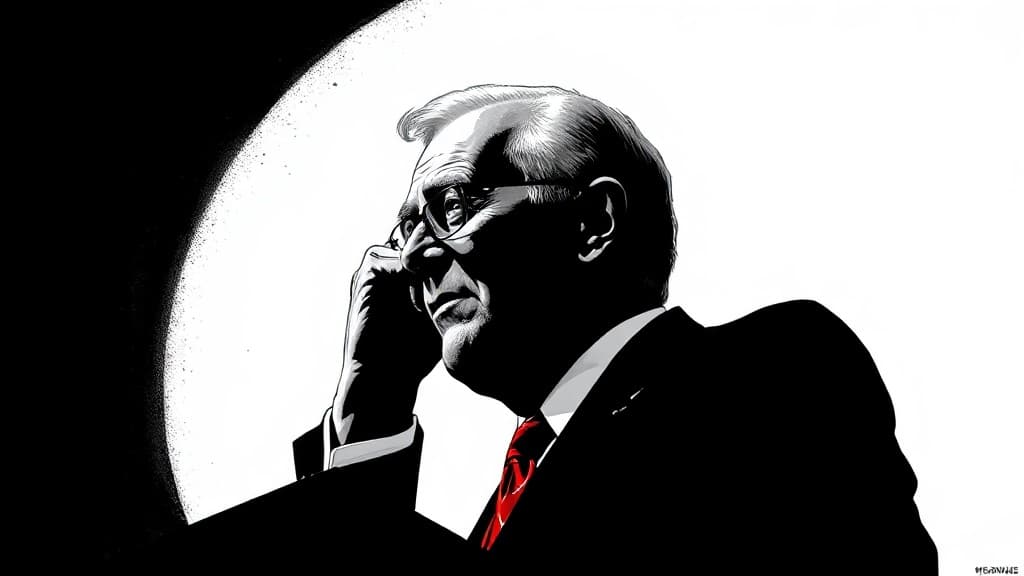
Federal Reserve Chairman Kevin Warsh won't tell Americans when relief from high borrowing costs might come, but he's happy to pitch artificial intelligence as the economic savior that could eventually — maybe, someday — make rate cuts possible.
With inflation still eating into paychecks and the Fed holding its benchmark rate at 3.5%-3.75% for the fifth consecutive meeting, Warsh has abandoned the longstanding practice of giving the public any signal about where monetary policy is headed. He calls that silence "a change for the better." Meanwhile, he's prolific on AI, telling Congress that AI-driven business investment is "the most striking feature of the economy right now" and setting up a Fed task force to study how it could be disinflationary.
The problem: that productivity boom is speculative, and even sympathetic economists say it's years away. Luke Tilley, chief economist at M&T Bank and Wilmington Trust, told CNN that AI could increase productivity "over a multi-decade basis, like the internet." Working Americans footing higher bills now don't have decades to wait.
Three Fed bank presidents — Beth Hammack of Cleveland, Neel Kashkari of Minneapolis, and Lorie Logan of Dallas — dissented from last week's hold-steady decision, all preferring a quarter-point rate hike. Warsh dismissed the split as "family fights" and described the current moment as "a period of watchful thinking, not watchful waiting." He provided no clarity on what would trigger future action.
Former Atlanta Fed president Dennis Lockhart told the Washington Examiner there was "a disconnect" between Warsh's tough rhetoric on inflation and the combination of no action and no explanation. "Not only did he not really say anything, he just didn't provide a lot of explanation of what would trigger a rate hike in the future," Lockhart said.
Warsh appears content to let markets do the Fed's tightening for it. He noted at his press conference that long-term interest rates saw their largest-ever run-up between Fed meetings — financial conditions tightening without the central bank having to act. "Market participants are learning to play the ball, not the referee," he said.
Markets weren't reassured. Bank of America said the press conference "came across as dovish" and compared the market reaction to credibility shocks that central banks in emerging markets face — a steeper yield curve, lower equities, and a weaker dollar.
Thierry Wizman, global FX and rates strategist at Macquarie Group, was blunter: "He is intently obfuscative." The only semi-clear opinion Warsh has offered, Wizman told CNN, is that AI-driven productivity gains will be disinflationary.
Warsh has also shortened post-meeting statements and may limit press conferences going forward. Under Jerome Powell, the Fed held press conferences after all eight yearly meetings. Warsh has committed only through year's end.
Less transparency, less accountability, and a lot of talk about technology that hasn't yet lowered the price of groceries or gas. The Fed chairman is asking Americans to trust that a productivity miracle is around the corner while refusing to explain what he's doing in the meantime.