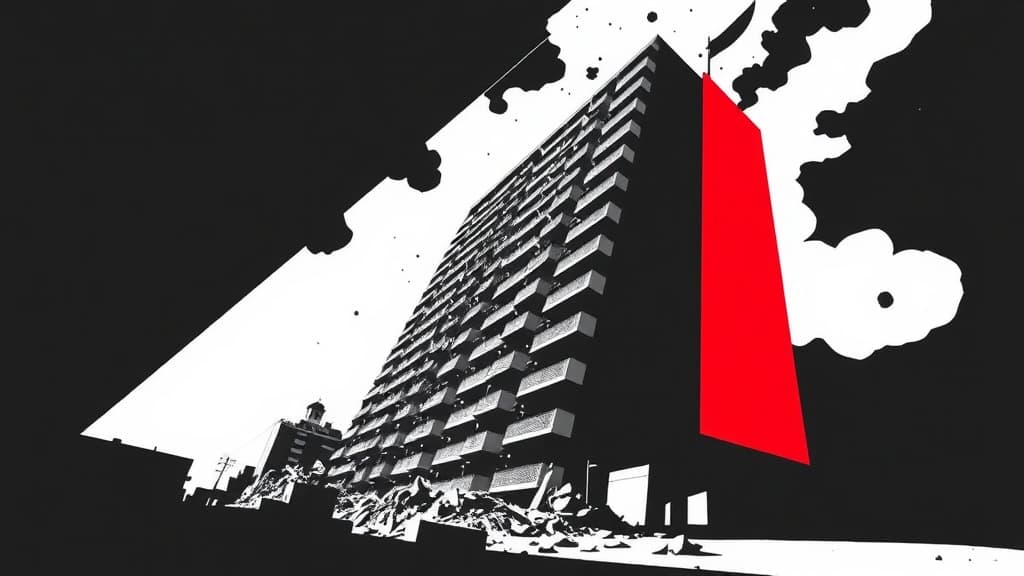
The Champlain Towers South condo didn't just drop in the dead of night — it fell apart over three weeks while nobody with authority did a thing. That's the bottom line of the National Institute of Standards and Technology's final report issued Monday: the Surfside, Florida, building that killed 98 people in June 2021 started failing in early June, and every warning sign was either missed or ignored by the people paid to catch them.
NIST investigators concluded that two connections between garage columns and the pool deck failed around early June, triggering cracks that grew and loads that redistributed over the next three weeks until the whole structure gave way on June 24. The building was vulnerable from day one. Judith Mitrani-Reiser, who co-led the investigation, said the structure's margins against failure "were too narrow from the start" — and in some spots, the design delivered "less than half of the code-required strength." The building didn't meet the codes on the books when it was built, and construction deviated from what little design existed. Large planters were added to the pool deck. Sand and pavers piled on later. Reinforcing steel corroded. Every alteration strained an already inadequate system.
The warnings weren't subtle. Photos taken weeks before the collapse showed a long crack in a planter wall on the pool deck and cracks where the planter met a planter box. Less than a day before the tower fell, that planter had detached from the deck. About a week out, water leaking from a parking garage ceiling got worse. Hours before the collapse, one witness told investigators it was like a "water faucet." Residents described the pool deck going down "one bay at a time as if dominoes were falling in a sequential chain reaction." Some felt a sudden wind in the lobby; others heard what sounded like a "jet engine."
ABC News reported that town documents showed the pool deck and parking garage ceiling needed repairs as far back as 1996 — twenty-five years before the collapse. A 2018 Structural Field Survey found "major structural damage" to the concrete slabs and failed waterproofing. That's a quarter-century of red flags.
The three outlets covering this report all relayed the NIST findings straight, but none framed the obvious institutional failure. The Guardian and AP ran essentially the same wire copy; ABC added the 1996 and 2018 document details but stopped short of drawing the line. The regulatory state that micromanages every permit, every code, every inspection on ordinary homeowners and small builders somehow couldn't act on a building broadcasting its own disintegration for weeks — and showing structural distress for decades.
A Miami judge approved more than $1 billion in settlements for personal injury and wrongful death claims. The lawyers got paid. The regulators will write more reports. The question that hangs in the air: what good is a code book if the people enforcing it can't read a crack in a load-bearing wall?