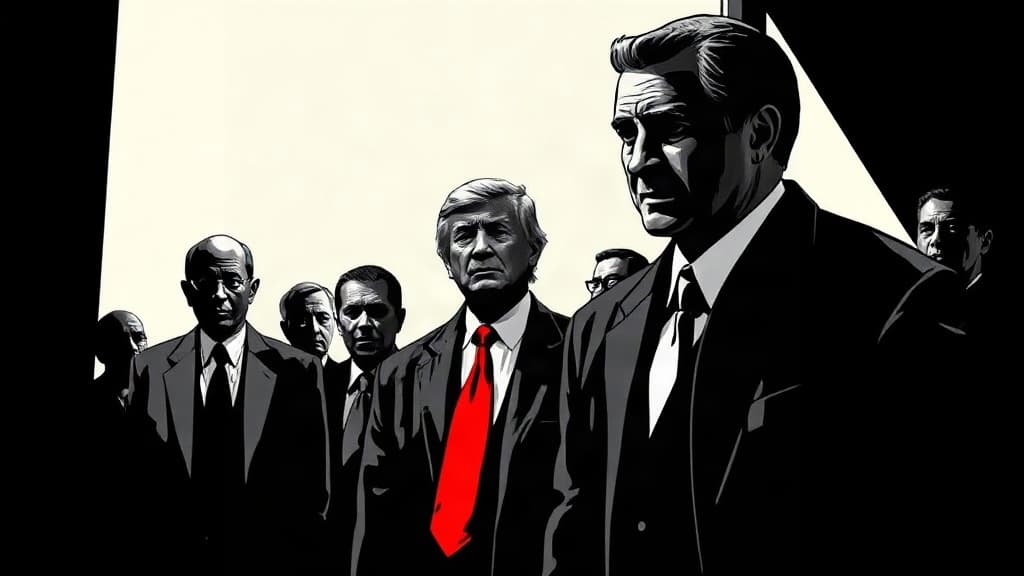
Fed Chairman Kevin Warsh showed up to Capitol Hill on Tuesday, looked Congress in the eye, and said absolutely nothing about whether the central bank will raise, cut, or hold the interest rates that determine if you can afford a house.
Warsh told the House Financial Services Committee that policymakers have "no tolerance for persistently elevated inflation" and vowed that "the inflation surge of the last five years will be a thing of the past" if the Fed gets policy right. What that policy actually is, he refused to say — consistent with his long-stated opposition to so-called forward guidance, where the Fed telegraphs its moves in advance.
Here is what ordinary Americans are left to puzzle through. The Bureau of Labor Statistics reported Tuesday that consumer prices dropped 0.4% in June, the largest one-month decline since 2020. Year-over-year inflation fell to 3.5%, down from 4.2% in May. That sounds like relief. But the Fed's preferred inflation measure still sits at 4.1% — more than double its 2% target — and the committee that sets rates is nearly split down the middle. According to the Boston Globe, about half of the 19 members on the rate-setting committee expect they will have to raise rates by year's end, while nearly half penciled in no change or even a cut.
So while Wall Street traders parse every syllable for trading signals, the working American trying to lock a mortgage rate gets a coin flip.
Warsh called the artificial-intelligence investment boom "the most striking feature of the economy right now," saying it "introduce[s] new challenges for policymakers." The Globe reported that AI spending by tech hyperscalers — Google parent Alphabet, Microsoft, Amazon, and Meta — has driven semiconductor prices through the roof, pushing up costs for laptops, tablets, and game consoles. The Fed says it is "monitoring the implications."
Then there is energy. The New York Times noted that the June CPI drop was partly driven by falling energy prices during a temporary truce in the U.S.-Iran war. That truce is over. The Globe reports gas prices are still 35% higher than when the U.S. attacked Iran on February 28, and they are climbing again. Any inflation relief from the pump may already be evaporating.
Other Fed officials are filling the guidance vacuum Warsh left. Fed Governor Christopher Waller said Monday that another "hot" inflation report would force the Fed to consider raising rates "in the near term." New York Fed President John Williams said last week that if core inflation holds at a 0.2% monthly pace, the Fed could avoid hikes altogether. Two officials, two directions, one unelected committee.
The Fed held rates steady at 3.5% to 3.75% at Warsh's first meeting in June — unanimously. Warsh noted the labor market remains "broadly stable." But stable jobs don't help when the cost of everything keeps climbing and the nation's top monetary official treats rate-direction clarity like a state secret.
CNBC and the New York Times framed the June CPI drop as "unequivocally good news" for the Fed. The New York Post and Fox Business led with Warsh's hawkish "no tolerance" rhetoric, which signals a bias toward rate hikes. The truth is both things are true at once — a one-month headline drop and an underlying inflation rate still double the target — and neither tells you what happens to your mortgage next month.
An unelected central bank has held rates at levels that crush borrowers for over a year, and the new chairman's big message is: trust us, and wait. Americans have been waiting five years for the "inflation surge" to become "a thing of the past." The question is how many more paychecks get eaten before it does.