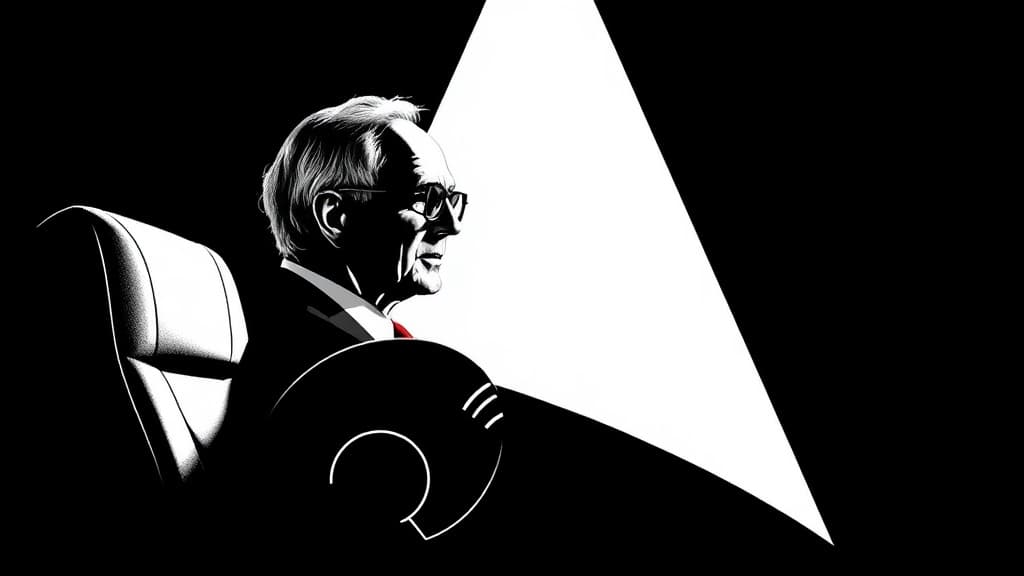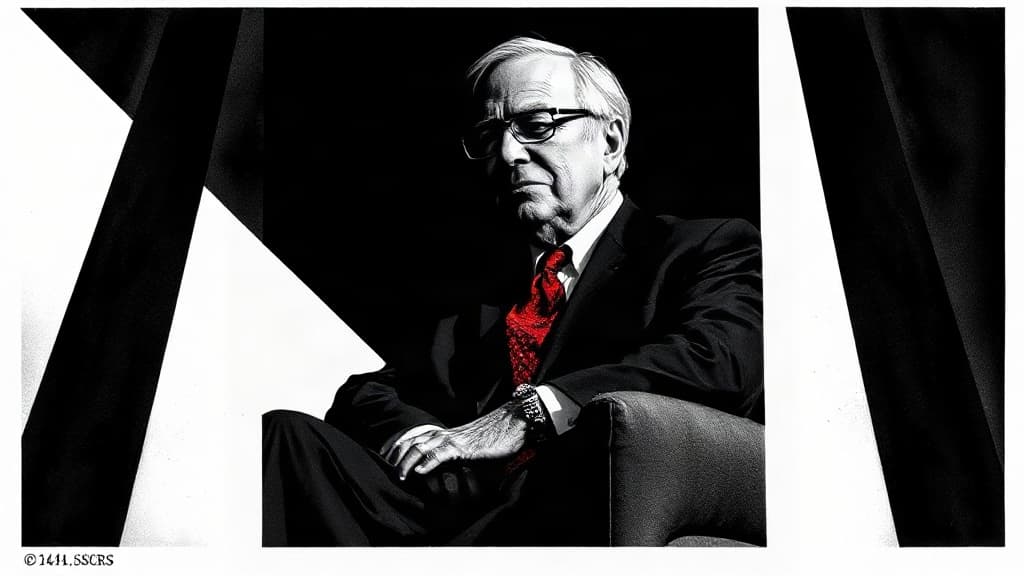
Warren Buffett is stepping down as chairman of Berkshire Hathaway, the $1 trillion conglomerate he has run for over half a century, and the real story isn't the retirement of a 96-year-old — it's that one man's departure can make markets twitch at all.
Buffett announced the move Friday in a letter to shareholders, effective immediately. He becomes chairman emeritus and stays on as a director. His son, Howard Buffett, a board member since 1993, takes over as chairman under a long-standing succession plan. Greg Abel, who assumed the CEO role at the start of the year, continues running day-to-day operations. Susan Decker remains lead independent director.
"Father Time always wins," Buffett wrote. "He has, however, been generous with me. He has given me the opportunity to see Berkshire reach a point where I am more confident than ever about what lies ahead."
CNBC framed the exit as a graceful capstone to an "unparalleled" legacy, noting Berkshire's 19.7% compounded annual return under Buffett — nearly double the S&P 500. The Atlanta Journal-Constitution kept it straightforward: a succession plan executed as designed. Both outlets treated the handoff as orderly and expected.
What neither outlet pressed hard enough is the structural problem staring every working American in the face. Berkshire sits on a $365.5 billion cash pile, employs nearly 400,000 people, and generated $44.5 billion in operating earnings last year. That kind of concentration — one firm, one portfolio, one inner circle — holding that much economic power isn't a success story. It's a vulnerability. When capital this massive answers to a handful of boardroom names instead of dispersed owners and competitive markets, Main Street pays the tab when decisions go wrong.
And the early returns under Abel are already uneven. Berkshire stock is up just 1% in 2026 while the S&P 500 has climbed more than 11%. Rising oil prices and a shift toward growth stocks explain part of the gap, but shareholders are also watching to see whether Abel can deploy capital the way Buffett did. So far, the answer appears to be buying back stock — $4.5 billion in repurchases last quarter — rather than finding productive investment. When the biggest player in the room can't find anywhere better to put a third of a trillion dollars, that tells you something about the economy ordinary Americans are living in.
Buffett praised Abel in his letter: "My expectations for him were sky high from the start, and he has exceeded them." Abel returned the favor, calling the CEO role "the best job in American business" and vowing to uphold Berkshire's culture.
The nepotism question hangs in the air. Howard Buffett's appointment was locked in years ago, and his father described him as "a policy the shareholders own and hope never to claim against" — an honest admission that the chairman's job is to guard the culture, not run the business. Whether a dynastic appointment protects shareholders or simply preserves insider control is a question worth asking.
One man built a trillion-dollar empire from a failed textile mill. Now he's walking away. The markets will adjust. But the deeper problem — that American economic life depends on the judgment of a few institutional giants rather than the choices of millions of free citizens — doesn't retire with him.