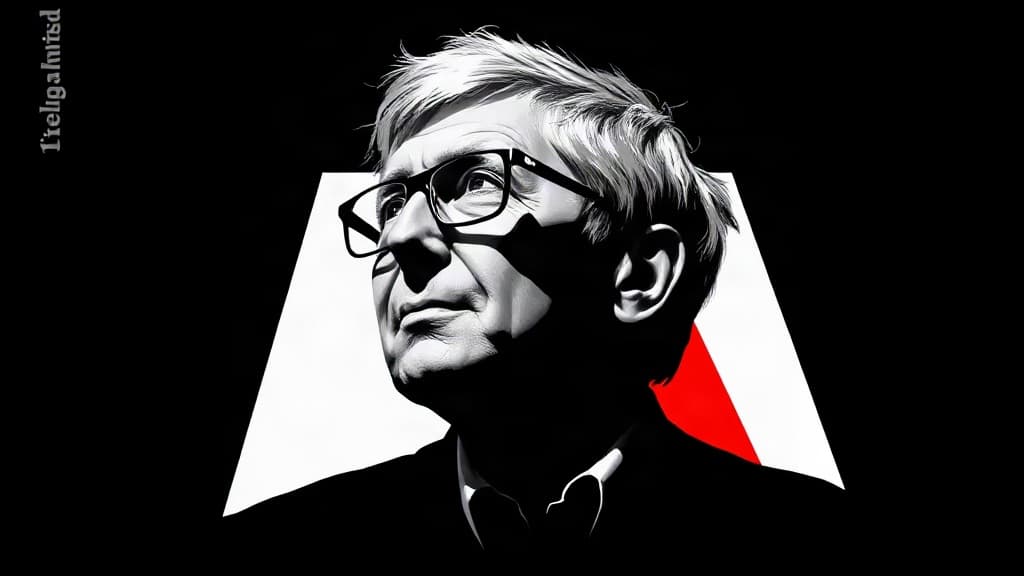
Bill Gates spent years bankrolling the AI revolution, and now he's warning it will wipe out American jobs — just not his.
The Microsoft co-founder published a nearly 6,000-word essay on his GatesNotes website this week declaring that artificial intelligence will upend the labor market at a "mind-blowing rate," hitting white-collar and blue-collar workers alike within a decade. The same billionaire who helped build the industry now says the transition will be "one of the most turbulent times in human history" — but the people who'll feel the turbulence aren't the ones writing the essays.
Gates laid out the stakes plainly: "AI will take on work in law, customer service, medicine, software, and manufacturing. It will hit these industries rapidly, over the course of a decade rather than a few generations." He added: "There will be some new jobs, but without the right policies, there will be far fewer than exist today."
CBS News emphasized the speed of the disruption and Gates' warning that "smart robots" could begin competing with construction and hospitality workers by the end of the decade. Fox Business focused on Gates' equity framing — that AI "will either be the greatest equalizer ever invented, or the worst source of injustice." Neither outlet pressed the obvious conflict: the man ringing the alarm is one of the men who lit the fire.
Gates acknowledged his bias. "My views on AI are not motivated by the potential to make more money for myself," he wrote, noting that investment profits flow to the Gates Foundation. But Microsoft, the company he founded and remains tied to, has poured billions into OpenAI and is embedding AI tools across its entire product line. The displacement Gates warns about is the same displacement his company is selling. Fox Business noted that Gates admitted his "feelings are more complicated" than his usual wish for faster innovation — but wishes don't protect a paycheck.
On policy, Gates floated a tax on AI tokens and robots, arguing the current system "nudges you toward replacing people with machines" because employers pay payroll taxes on humans but can write off robots as a business expense. He also suggested reserving certain jobs for humans, like caregiving, comparing it to a nature preserve. CBS reported the tax proposal; Fox Business omitted it.
Gates was candid about one thing: he doesn't think the disruption can be stopped. "If someone had a credible plan for slowing down AI advances globally, I would likely support it. However, I don't think that's going to happen. The geopolitical and economic incentives are pushing too hard to go full speed ahead," he wrote.
The line that should stick: "The people who need the most time are the ones who have the least — the accounting worker who's replaced by a bot or the $20-an-hour worker who loses their job to a $10-an-hour robot." Gates is right about that. The question is why the people who built the machine and profit from its speed are the same ones telling everyone else to brace.