Japanese artist Yayoi Kusama died at 97, and the same establishment press and museum apparatus that spent decades ignoring traditional American art couldn't wait to celebrate a woman who painted hallucinations on Louis Vuitton handbags.
Kusama died Aug. 14 at a Tokyo hospital, her studio confirmed. She was 97. The cause of death was not specified, according to AP News. Both AP and Breitbart ran essentially the same wire obituary — fawning, uncritical, and loaded with the labels the art world loves: "pop," "avant-garde," "feminist." Kusama herself brushed most of them off as unrepresentative, but the establishment kept pushing them anyway.
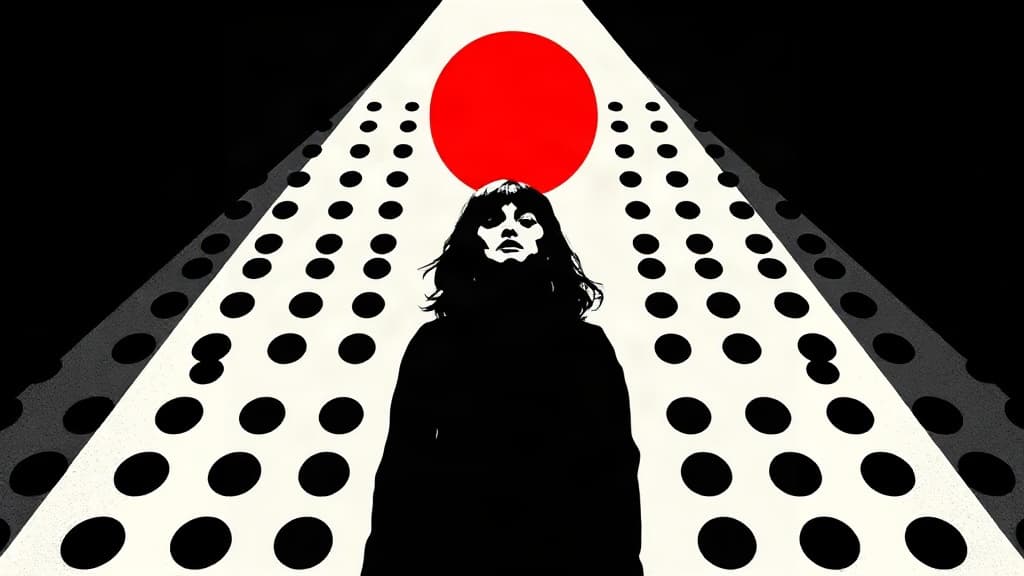
Here is what the coverage actually tells you about whose culture gets elevated. Kusama insisted her polka-dot obsession stemmed from childhood hallucinations. She spent decades in and out of psychiatric institutions. She staged "happening" anti-war performances in the late 1960s, pasting paper circles on nude bodies and once a horse. The art world called it genius. Christie's auctioned her work for $5.8 million in 2008. MoMA and the Whitney exhibited her. Japan gave her its Order of Culture in 2016. Louis Vuitton signed her for fashion collaborations. Her likeness was replicated in show windows to sell key chains and teacups.
That is the trajectory: hallucinations to psychiatric wards to anti-war spectacles to luxury brand merchandising to $5.8 million auction prices — and the establishment calls it progress. Neither outlet saw fit to question whether the industrial-scale commercialization of a psychiatric patient's visions might say something uncomfortable about the art market. Neither asked what gets displaced in American museums when psychedelic installations consume gallery space by the acre.
Kusama's own story has its merits. Born to a middle-class Japanese family that wanted her married, not painting, she defied them and moved to New York in 1957 — one of the first Japanese women to do so. She arrived amid the "action painting" fad and suffered years of poverty painting dots nobody wanted. "I will keep painting until I die," she told the AP in 2012, and she meant it. Her studio said she "continued to paint until her final days, never setting aside her brush." There is grit in that story.
But grit doesn't explain the machine that built itself around her. The same cultural institutions that rush to deconstruct American traditions and flag heritage as exclusionary have no problem anointing a foreign artist whose entire brand was built on mental illness and mass commercialization. The question isn't whether Kusama earned her fame — she outworked nearly everyone. The question is why the establishment only seems to celebrate artists who dismantle and deform, never ones who build and preserve.
Kusama fought to the death for her art. The establishment should have to fight just as hard to explain why American cultural heritage never gets the same gallery space.