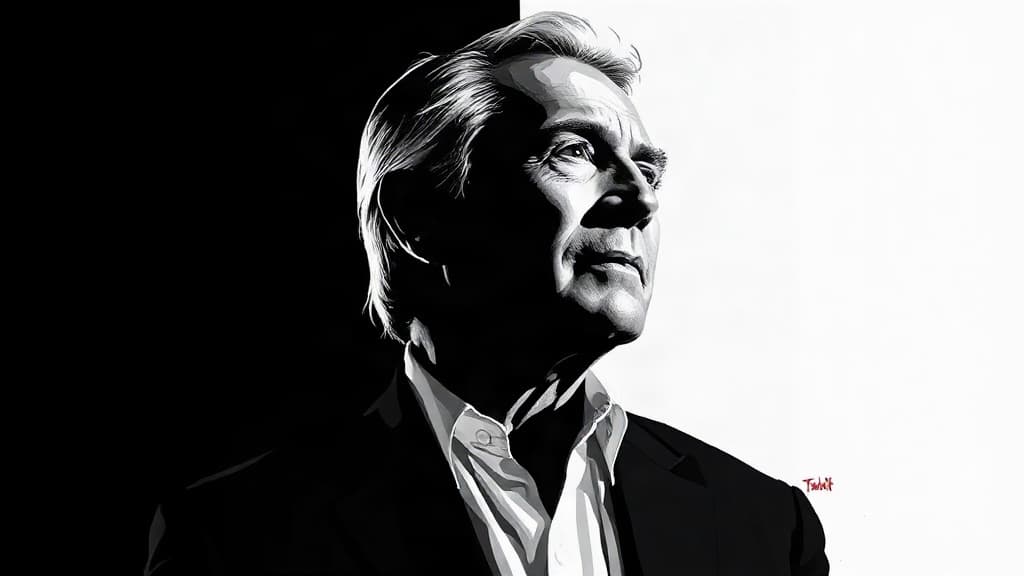
Tom Skerritt, the actor who embodied military command and masculine authority in films like Top Gun and Alien, died Wednesday at 93 — taking with him one of the last links to a Hollywood that celebrated American virtue instead of apologizing for it.
Skerritt's career spanned six decades and more than 150 credits, but what made him distinct was what he represented: the kind of man — steady, wry, tough — that the entertainment industry once honored and now works overtime to erase.
He was Viper, the flight instructor who held the line in Top Gun. He was Captain Dallas, the doomed commander in Alien. He was Sheriff Jimmy Brock on Picket Fences, winning an Emmy in 1993. He was Rev. John Maclean in A River Runs Through It, a minister whose governing passions were faith and fly-fishing — a role The New York Times praised for its "halting, thoughtful manner." He even played the iconic lawman Will Kane in a 2000 remake of High Noon. Commanding officers, cops, fathers, men of the cloth — the archetypes of a functioning civilization.
The Hollywood Reporter, to its credit, noted plainly that Skerritt "exuded masculinity" and was "often cast in positions of authority." NPR reached for the same idea but laundered it through the language of the seminar room, calling his bearing "cool authoritarian" — as if authority itself were a posture rather than a virtue.
Skerritt was the real article. He grew up in a middle-class Detroit family — father a small businessman, mother a housewife. He served four years in the Air Force before attending UCLA on the GI Bill. He called himself "a blue-collar kid from Detroit" and co-founded The Red Badge Project, a program helping veterans tell their own stories. His family's statement highlighted his passion for "service, veterans, the natural world." Robert Redford, who directed him in A River Runs Through It, said in 2007: "His values were close to mine, and he kept his integrity."
That word — integrity — is the tell. Skerritt once described himself as "a character actor locked in a leading man's body." He walked the line without selling out. No vanity projects, no political lectures, no reinvention as a late-life activist for whatever cause his agents recommended.
What has the industry done with the archetypes Skerritt carried? The commanding officer is now a punchline. The father is a buffoon or a villain. The minister is a hypocrite or a bigot. Top Gun's sequel spent more time apologizing for the original's confidence than matching it. Replacement-level casting — driven by corporate diversity mandates, not artistic vision — has become the rule, and the audience has noticed, walking away from theaters and toward whatever still speaks to them.
Skerritt died of natural causes, surrounded by family — a loving husband, father of five, grandfather and great-grandfather. The man got a full life. The question is whether the culture that produced him gets the same chance.