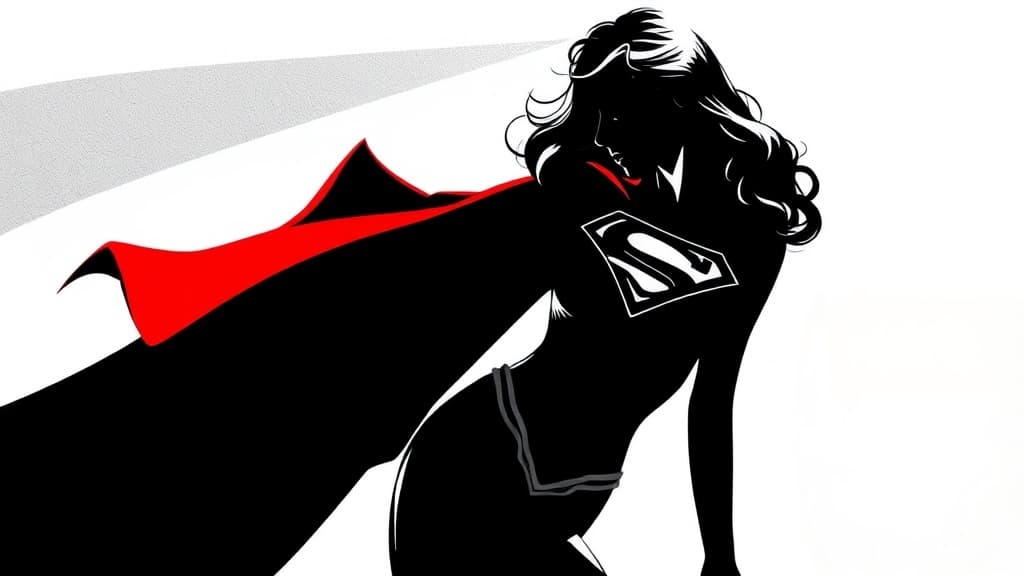
Supergirl crashed at the box office this weekend, pulling in just $38 million domestically against a $170 million production budget—and the industry's first instinct was to blame the customer.
The numbers don't lie. Warner Bros. and DC Studios spent nine figures on a film that debuted 24 percent below already-disappointing analyst projections of $50 million, according to the New York Times. It scraped together another $30 million overseas. Critics slapped it with a rotten 56 percent on Rotten Tomatoes, and audiences gave it a B-minus CinemaScore—borderline failing grades for a tentpole. Fortune notes it landed behind DC bombs like The Flash and Green Lantern, barely edging out the catastrophic Joker: Folie à Deux.
So what went wrong? The film was directed by Craig Gillespie, whose resume includes I, Tonya and Cruella—projects built around grievances against men and systems. Milly Alcock stars as Kara Zor-El, reimagined as what Fortune described as "more of a party girl than a world saver." The film was reportedly trimmed significantly after test screenings, a sign the product wasn't working even before it reached theaters.
But rather than grapple with whether Hollywood is making movies people want to see, the New York Times offered a familiar escape hatch: maybe the audience is the problem. The Times reported the flop "perhaps" reflects "a resurgent misogyny among the core fan base, which is largely male," citing online attacks on Alcock's casting and appearance. Warner Bros. executives, the Times added, were "surprised by both the ferocity of the backlash and its reach, believing the culture had evolved past that sort of campaign."
Fortune, to its credit, didn't reach for that crutch. It quoted FranchiseRe consultant David A. Gross acknowledging the freefall in female-fronted superhero films after the billion-dollar heights of Wonder Woman and Captain Marvel. "You'll hear general explanations like 'the audience lost interest.' Yes, they did," Gross said. "But no one has been able to explain why it happened so suddenly and so completely. We don't understand it either."
Here's a theory the consultants won't float: maybe audiences don't hate women. Maybe they hate being lectured to. Maybe reimagining heroes as ideological avatars instead of compelling characters produces bad movies, and bad movies produce bad returns. The genre is down $3.5 billion annually from its 2017-2019 highs, per Fortune. That's not misogyny. That's a market correction.
DC co-chair Peter Safran stayed on message, telling the Times the film is "just one component of a broader, long-term strategy at DC Studios that we remain confident in." The next test comes with Clayface in October, a body-horror take on the DC catalog—far from the safe, corporate superhero formula.
Warner Bros. Discovery, meanwhile, is preparing to be absorbed by Paramount Skydance, with Paramount chief David Ellison already meeting with Gunn and Safran. When the money men come calling, ideology tends to take a back seat to survival.
The question isn't whether audiences will keep rejecting what Hollywood is selling. They already are. The question is how many hundreds of millions the industry will burn before it stops calling the customer the problem.