Larry David wrote an entire essay comparing a White House dinner to eating with Adolf Hitler — and Hollywood wonders why ordinary Americans can't stand them.
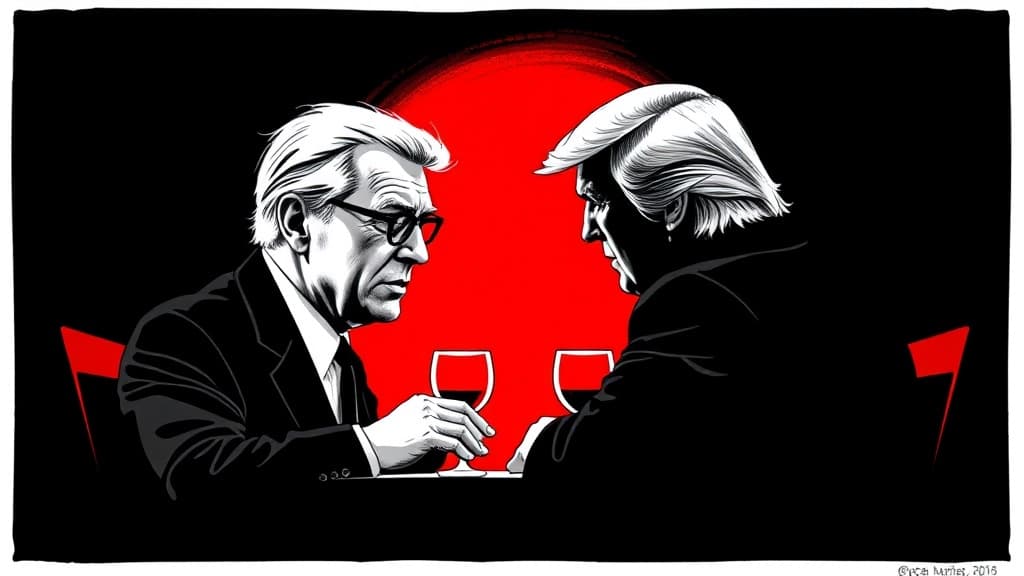
Bill Maher told The New York Times Magazine that David was "so outraged" by his dinner with President Trump last year that he penned a New York Times piece titled "My Dinner With Adolf." The two men's relationship still hasn't recovered. The dinner, organized by Kid Rock, sent Maher's celebrity circle into open revolt after he described Trump as "gracious and measured" in private — a simple observation treated as betrayal by an industry that demands ideological purity.
The stakes here aren't about one comedian's social calendar. This is about a coastal elite class that views anyone who breaks ranks as a collaborator — and by extension, views the 74 million Americans who voted for Trump the same way. David's Hitler comparison isn't just hyperbole; it's the logical endpoint of a worldview that dehumanizes half the country.
Sean Penn "didn't understand" Maher's emphasis on Trump's likeability, according to Fox News. Patton Oswalt publicly slammed Maher for trying to "placate" Trump, arguing it always backfires. Jerry Seinfeld tried to play peacemaker, saying both men "got kind of bugged out." Dave Chappelle, no stranger to free-speech fights himself, reportedly fired back at Maher's criticism by calling his commentary "smug, cracker-a--" on his Netflix special. Louis C.K. was one of the few who defended Maher, calling him "allergic to bulls---."
Maher himself saw the dinner as a chance to influence the administration from the inside. "It's an administration of 'people are saying,'" Maher told the Times. "If that's how the president gets his information, then be one of the people saying things." That pragmatic logic — talk to the people in power — is apparently heresy in modern Hollywood.
Trump, for his part, later declared the dinner a "total waste of time" and called Maher a "jerk" and a "highly overrated lightweight." Maher's praise was short-lived anyway; he soon called Trump's first 100 days back in office "probably 100 things to legitimately hate."
Meanwhile, the establishment press is demanding its own version of ideological solidarity. More than 500 veteran journalists signed a letter organized by former ABC News correspondent Lisa Stark, calling on the White House Correspondents' Association to "forcefully stand up" to Trump at its rescheduled dinner on Friday. Deadline reported the letter cites DOJ subpoenas of New York Times journalists and Trump's threats to revoke broadcast licenses — serious First Amendment concerns, certainly, but ones the same press corps largely ignored when prior administrations spied on reporters.
While celebrities and journalists trade denunciations, Trump is meeting with Lebanese President Joseph Aoun at the White House to discuss a Hezbollah disarmament plan — actual presidential business involving U.S. interests and foreign commitments that deserve scrutiny. Al-Monitor reported Aoun will present a written proposal on decommissioning Hezbollah's arsenal while asking Trump to pressure Israel to withdraw from southern Lebanon, where over 4,300 people have been killed in the latest round of fighting.
The question isn't whether Maher should have gone to dinner. The question is why a class of Americans who lecture the rest of the country about tolerance can't tolerate a conversation with someone they disagree with — and what that says about who they really despise.