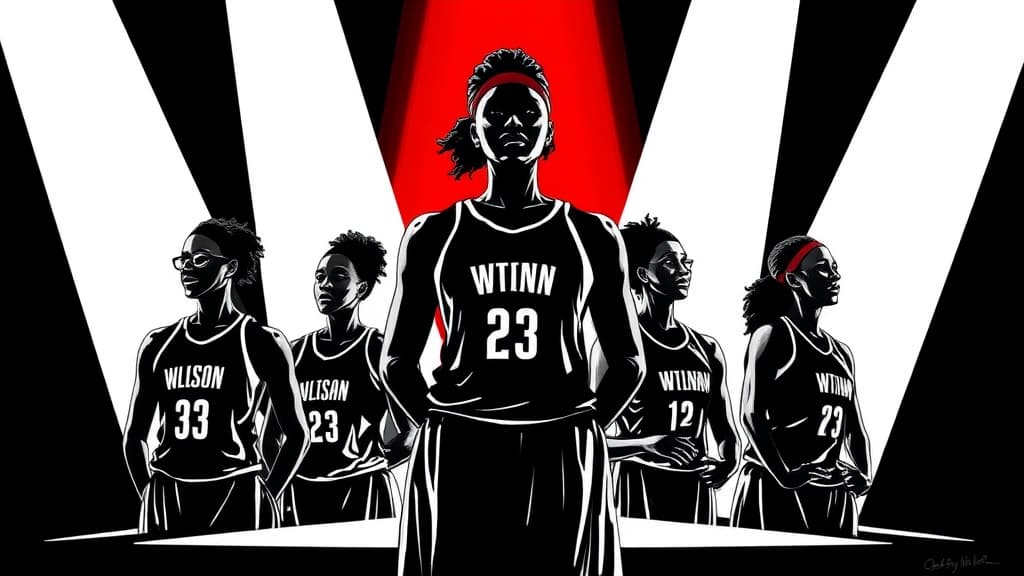
Indiana Fever head coach Stephanie White finally said what everyone watching the WNBA already knows: Caitlin Clark is not officiated like other players, and the league is fine letting its biggest star get punched in the throat without consequence. The stake for ordinary Americans is simple—an institution built on your viewership and ticket dollars is protecting the mediocrity of its establishment players over the generational talent who single-handedly fills the arenas.
White erupted after Wednesday's 111-109 home loss to the Phoenix Mercury, a game Clark left in the third quarter with a back injury after taking two uncalled cheap shots in the second quarter. The first was the ugliest: Clark slipped driving the lane, and Mercury forward Alyssa Thomas—already entangled with Clark—drove her knee into Clark's groin, then pushed her closed fist down into Clark's neck before stepping over her. No whistle. Clark managed to pass the ball out to Aliyah Boston and kept playing.
Less than a minute later, Mercury forward Valeriane Ayayi fouled Clark on a three-point attempt. Clark landed on Ayayi's foot—a textbook flagrant foul for denying landing space. After review, officials kept it as a common foul, and even used the review to check whether Clark had committed a hostile act on her follow-through.
"We have a generational talent and a WNBA superstar who had two cheap shots right there that weren't called," White said. "And I just say, again, [it's] absolutely unacceptable."
White said she asked the referees why no foul was called on the fist to the throat. Their answer: "they didn't see it."
"No. 1, you gotta call it. It's absolutely egregious and utterly disrespectful," White continued. "And then No. 2, you're coming in here aware of what happened two nights ago, and that shit still happens? Absolutely unacceptable."
Two nights prior, the Fever-Mercury matchup produced six technical fouls and an ejection. Clark revealed she received her technical—for clapping. Meanwhile, the woman who put a fist in her throat walked away with nothing.
White, who coached Thomas for two seasons in Connecticut, didn't mince words about the double standard. "She is not called the same way as everybody else is called," White said. "The fist in the throat is crazy. It's crazy. It's dangerous."
The WNBA assembled an officiating taskforce this offseason—White herself was part of it—and officials were instructed to enforce freedom-of-movement rules consistently. The result was a sharp uptick in fouls early in the season. But when it comes to Clark, the rules apparently still bend. The Guardian framed the issue as one of general officiating inconsistency across the league; Essentially Sports highlighted the viral fan backlash and the bad blood between the teams, tracing tensions to DeWanna Bonner's acrimonious departure from Indiana. The New York Times, meanwhile, buried the lede—leading with Clark's back injury rather than the fact that a player was fist-checked in the throat on a live ball with no call.
Fans online weren't so restrained. One tagged the WNBA directly: "ARE YOU GNG TO DO SOMETHING ABOUT THIS SHIT? I hope she gets a LAWYER AND SUES YOU!!!"
The pattern is undeniable. Clark draws the viewers, sells the tickets, and generates the revenue the rest of the league rides on—and she gets rewarded with knees to the groin and fists to the throat that officials somehow can't see. The question isn't whether the officiating is inconsistent. It's whether the inconsistency is the point.