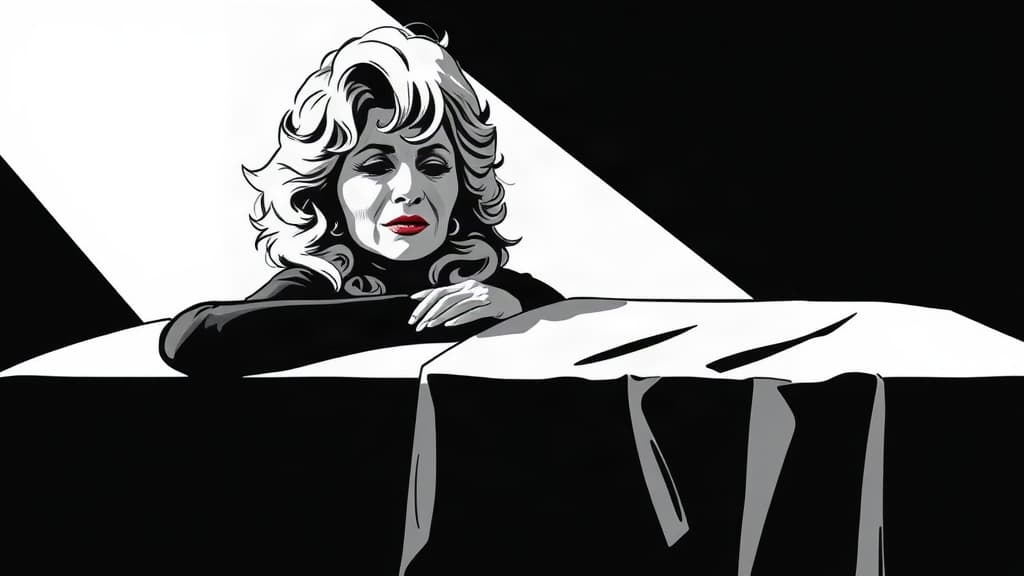
Dolly Parton was laid to rest in a private funeral at Nashville's Woodlawn Memorial Park on August 28, buried next to her husband Carl Dean — closing the book on a woman who embodied faith, family, and an unapologetic love of country that today's entertainment establishment works overtime to bury.
Parton died August 25 at age 80 after a brief battle with cancer at Vanderbilt-Ingram Cancer Center, surrounded by loved ones, according to Fox News. She was 80. Her husband of roughly six decades, Carl Dean, died in March 2025. Now they rest together, just as she lived — away from the cameras, faithful to the end.
The contrast writes itself. Parton requested a small, private service for immediate family only. No televised spectacle, no celebrity self-congratulation. Her nephew Bryan Seaver announced her death in a simple Instagram video. Her niece Lainey Mae Parton confirmed the burial in an emotional tribute, calling her "Granny" and recounting how Parton financially supported her through beauty school and made her feel like she was enough — because Parton, who couldn't have children of her own, poured her motherhood into her family. "She didn't just tell me to chase my dreams, she helped me get there," Lainey Mae wrote.
More than a decade before her death, Parton told Entertainment Weekly exactly what she wanted at her funeral: the old country-gospel church song "If We Never Meet Again." It was her daddy's favorite. They sang it at his funeral, and she wanted it sung at hers. That tells you everything about the woman — rooted in faith, family, and the mountains that raised her.
The Grand Ole Opry held its own tribute August 29, with Carly Pearce, Jelly Roll, and others performing before a sold-out crowd. Opry executive Dan Rogers called Parton "the most beloved human being in the world" and noted that what people think of first isn't her career stats — it's "the children she gifted books" and the people she inspired. USA Today covered the event extensively, emphasizing the celebration and Parton's philanthropic legacy. Fox News highlighted Parton's bond with the U.S. military and her "All-American Heart." Yahoo and Yahoo News Canada focused on the burial details and family statements.
What none of the coverage dwells on is what Parton represented in the culture war still raging around ordinary Americans. This was a woman who built an empire on gospel music, Appalachian grit, and unashamed patriotism — the same values corporate entertainment now treats as backward. Her Imagination Library has donated hundreds of millions of books to children. She funded cancer research, not activism. She loved her country and her God without apology.
Parton's official obituary, released by Woodlawn-Roesch-Patton Funeral Home, describes her legacy as one of "love, kindness, and resilience." Her family asks that donations go to the Imagination Library in lieu of flowers. No public memorial has been announced.
The culture industry will sanitize Parton's legacy into something safe and generic. The gospel songs, the faith, the devotion to one man for 60 years — that's the part they'd rather forget. But the people who lined up outside the Opry in butterfly pins and Dolly T-shirts haven't forgotten. The question is whether the America she represented can survive what the institutions are doing to it.