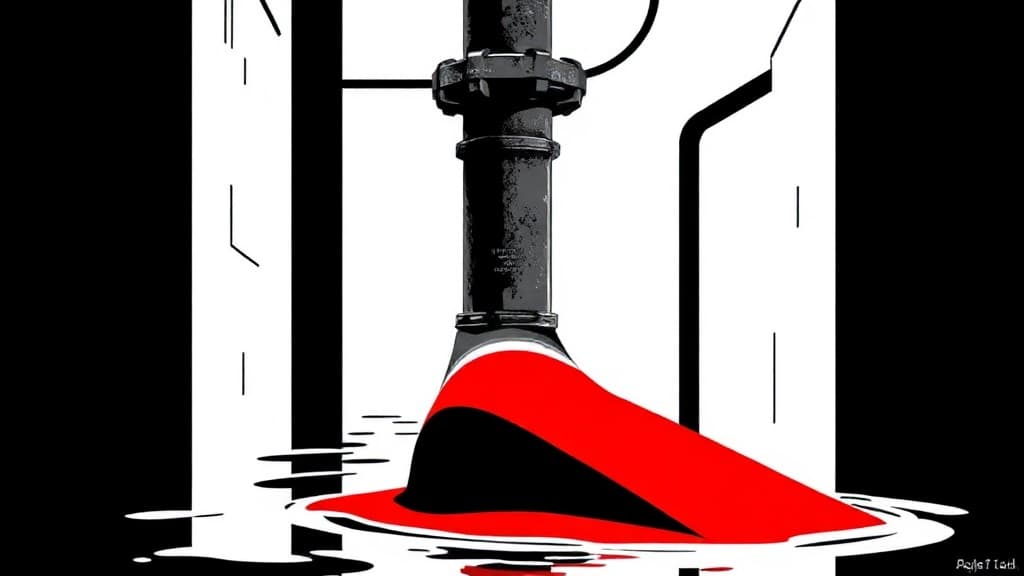
A century-old water main ruptured in West Hollywood at 3 a.m. Thursday, sending thousands of gallons cascading through streets, swallowing cars in underground garages, and opening a sinkhole that swallowed two men — all in a city that collects premium taxes but couldn't keep the pipes from rotting.
The break originated at Sunset Boulevard and Holloway Drive before spreading to Santa Monica Boulevard and surrounding streets. Floodwaters turned roads into rivers, destroyed property, and forced widespread closures that were still in effect as crews worked to shut down the highly pressurized system. Residents say the disaster was foreseeable and preventable — the pipe was a hundred years old.
Kyle MacLelland, 37, woke to what he called a "crazy river coming down the street, shooting towards our apartment." He and his boyfriend tried to block the water from their ground-level unit. It was, he said, "futile." The flood soaked floors, rugs, and cushions. Both of their cars in the underground garage were submerged. "We lost both our cars in the underground car park," MacLelland said. "They're submerged in water."
He wasn't alone. Breitbart reported that two men fell into the sinkhole that opened up in the immediate aftermath. Multiple streets remain closed: Sunset Boulevard eastbound between Larrabee and Sherbourne, Holloway Drive eastbound between Sunset and Westmount, Santa Monica Boulevard eastbound between San Vicente and Hancock, and Larrabee, Palm, and Hancock Avenues in both directions between Sunset and Santa Monica.
The Los Angeles Department of Water and Power said crews had to close valves "slowly and carefully to avoid causing further damage" due to the highly pressurized system — meaning a century of deferred maintenance created a system so fragile that shutting it down risked making things worse.
Mayor John Heilman held a press conference to assure residents that, to the city's knowledge, everyone was safe. "Obviously a lot of people are still in a state of shock," he said. "They have had water damage to their sub-garages. Their cars have been significantly damaged." He said the city was trying to "assess the damage" and "get people out to help them with the repairs and the remediation."
Assessing damage after the fact is cold comfort to residents who lived through it. MacLelland's verdict was blunt: "It was not a good situation to wake up to."
West Hollywood isn't hurting for revenue. The liberal enclave collects the kind of taxes that working residents feel every paycheck. But decades of progressive governance have produced a familiar pattern: money for the right causes, nothing for the pipes that keep the water flowing — or, in this case, the pipes that were supposed to keep it contained. Residents blamed aging infrastructure for the flood. They're right. The question is what this city — and every blue city like it — has actually been spending money on while the bones of the place rotted underneath.