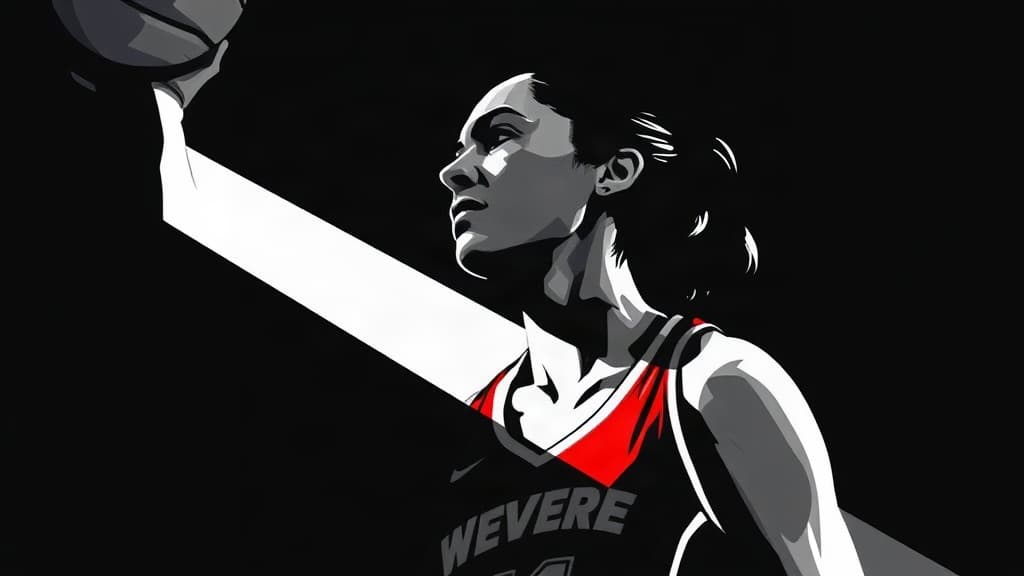
The WNBA's national relevance belongs to one woman: Caitlin Clark. Google Trends data analyzed by USA TODAY shows the Indiana Fever — the rookie's team — was the most-searched WNBA franchise in 42 of 50 states over the past year. No other WNBA team led more than one state. The league's entire footprint, despite billions in corporate backing and wall-to-wall media promotion, rests on a single player ordinary Americans actually want to watch.
This matters because it confirms what every sports fan already knows but isn't supposed to say: you cannot manufacture demand. Corporations and media partners have poured staggering subsidies into women's professional leagues, treating audience growth as a command rather than a question. The data says the command failed. Take Clark away and the WNBA's national profile collapses to a handful of local markets.
The Ventura County Star published the state-by-state maps this week. In the WNBA, only nine different teams ranked as the No. 1 search in any state at all. The Fever swept the country — Alabama, Alaska, Arizona, Arkansas, Delaware, Florida, Hawaii, Idaho, Illinois, and on down the list. The only states where a local team beat the Fever were places with an existing franchise: California searched the Golden State Valkyries, Connecticut searched the Dallas Wings (a curious result suggesting even home-market loyalty is weak), and Georgia searched the Atlanta Dream.
Contrast that with the NWSL, where 14 of 16 clubs led at least one state, and multiple teams — the Washington Spirit, the Kansas City Current, the Portland Thorns — topped searches across several states. Every state with a single NWSL club searched that club first. That's organic, geography-driven interest: fans supporting their local team. The WNBA can't make the same claim.
Then there's the PWHL — the women's hockey league that received its own round of fawning press coverage and corporate enthusiasm. USA TODAY looked at PWHL search data too, and found that several states lacked enough searches to even register a most-popular team. They scrapped the map entirely. When the data won't draw, the demand isn't there.
The WNBA's corporate boosters will point to the Fever's dominance as proof of the league's rising tide. It's the opposite. It's proof that one transcendent talent created demand that the league's apparatus, its marketing budgets, and its media cheerleaders could never generate on their own. The NWSL, with far less corporate hype, shows healthier geographic distribution because it built from local communities up rather than from boardrooms down.
The open question: what happens to the WNBA's national audience when Clark's novelty fades or she moves on? The subsidies won't answer that. The search data already has.