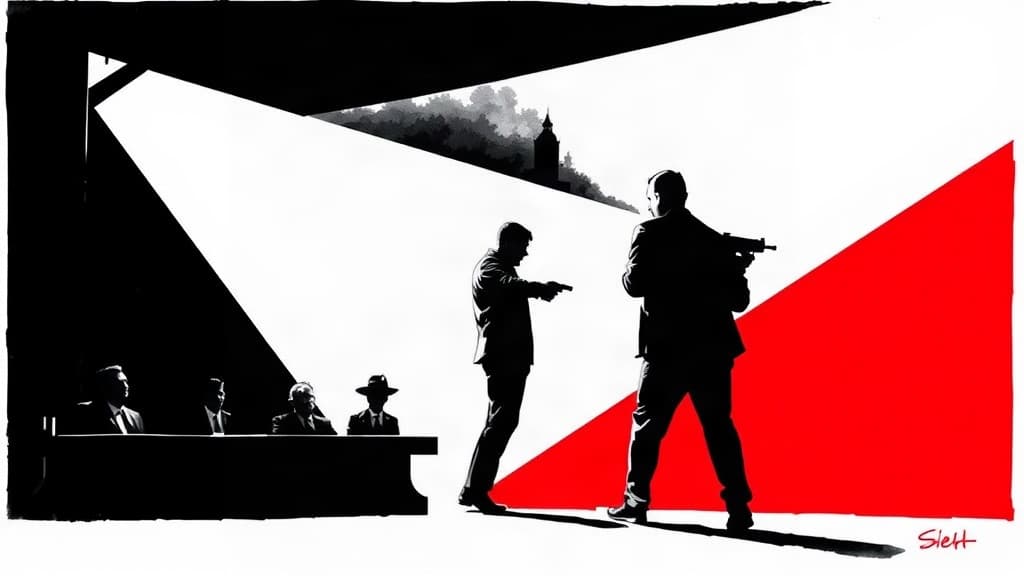
An O'Fallon, Missouri, man was arrested for carrying a firearm at a city council meeting, and the local press immediately framed it as a terrifying incident — proving exactly why the Founders insisted on an armed citizenry as a check on government power.
The St. Louis Post-Dispatch reported on the arrest, leading with a quote from an unnamed witness: "Look in his eyes was scary." That framing — leading with emotional reaction rather than the legal facts — tells you everything about how institutional media treats the Second Amendment: not as a constitutional right, but as an inherent threat.
The facts available are thin by design. The Post-Dispatch, behind its paywall, offered little detail on whether the man was openly carrying lawfully under Missouri statute, whether he brandished the weapon, or whether he made any threat. What we got instead was the word "scary" elevated to headline status. The San Diego Union-Tribune, the other outlet provided for this synthesis, covered an entirely unrelated story — a San Diego police lieutenant arrested on domestic battery charges — and had nothing to contribute to this incident.
So we're left with a single sourced account that chose sensation over substance. Missouri is a constitutional carry state. Open carry is legal. Carrying a firearm into a public government meeting is, in many jurisdictions, protected conduct — precisely because the Founders understood that citizens armed in the presence of their government is the point, not the problem.
The Second Amendment was never about hunting. It was about the citizenry retaining the capacity to resist tyranny. When colonists gathered in taverns under British rule, they carried arms as a matter of course — not because they planned violence, but because free men do not petition their government disarmed. A city council meeting is exactly the kind of forum where that principle matters most.
The press reaction reveals the real dynamic: government and its media auxiliaries treat an armed citizen as a crisis by default. The headline doesn't say what the man did wrong. It says how someone felt about his eyes. That's not reporting. That's narrative construction.
No information was available on the man's identity, charges, or whether he was lawfully carrying. The Post-Dispatch offered no follow-up on whether his rights were violated. The default assumption — gun present, therefore danger — is exactly the mindset the Constitution was written to counter.
The open question: will O'Fallon officials explain what law this man broke, or will the arrest itself stand as punishment for the crime of being armed while citizen?