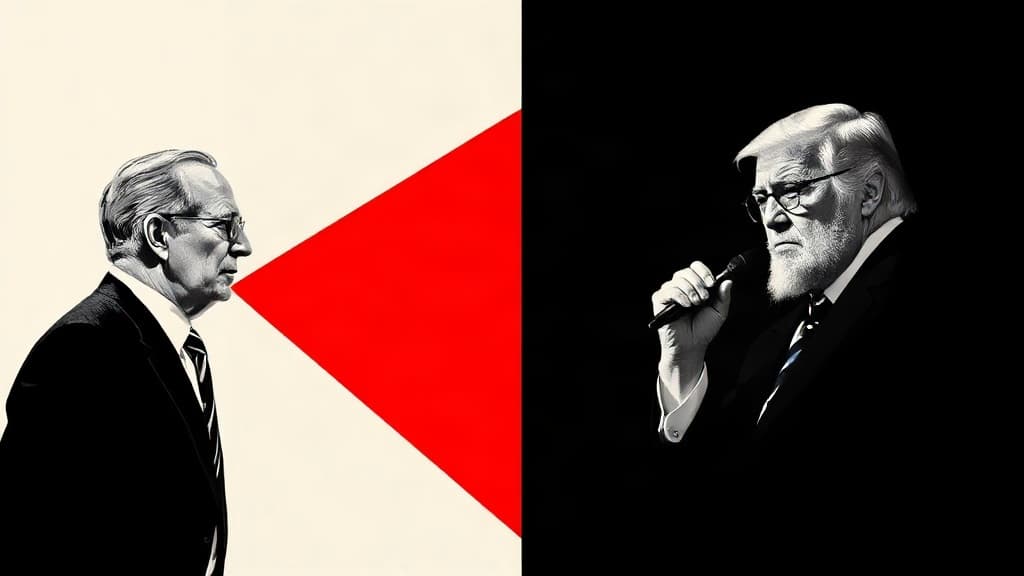
When Bears quarterback Caleb Williams reposted a message dismissing an antisemitic attack on Dave Portnoy to 1.3 million views, the media said nothing. When a judge ruled a Gannett-owned newspaper could publish a poll that missed the final result by 12 points, he called it protected speech. Ordinary Americans are left to wonder: whose grievances matter, and whose speech really gets protected?
The double standard is the story. Some forms of hatred get dismissed. Some speech gets shielded. The pattern tells you who the system protects—and who it doesn't.
In fall 2025, Mississippi State student Patrick McClintock yelled "F—k the Jews!" and threw coins at Portnoy, who is Jewish. The American Jewish Committee confirmed that coin-tossing at Jews is an "age-old antisemitic trope about Jews and greed." McClintock was arrested for disturbing the peace.
Then Portnoy mocked Williams for being melodramatic about a hamstring strain. Williams fired back by reposting a user who wrote: "The guy that had a kid arrested and expelled from school for throwing pennies at him is calling someone else soft LMFAOOOOOO." The post got 1.3 million views and 35,000 likes.
As Fox News reported, the media response was silence. Fox News made the point clearly: if the incident had been anti-Black or homophobic, a prominent athlete dismissing it would have triggered an uproar. Texas quarterback Arch Manning was shamed into apologizing for laughing at a fake AI meme. Portnoy's experience was real antisemitism—and it got brushed aside.
Portnoy accused Williams of spreading misinformation but said "I will not hold this against Caleb...I'm rooting for him and all of Chicago." The Bears and NFL didn't return requests for comment.
Now consider the other case. In December 2024, Trump sued the Des Moines Register, pollster J Ann Selzer, and parent company Gannett Co, claiming their poll showing Kamala Harris leading Trump 47-44 in Iowa was fraudulent. Trump won 56% of the Iowa vote. The poll was off by 12 points.
Iowa District Judge Scott J Beattie dismissed the case, writing that it would have a "chilling effect" that "can discourage others from reporting on and debating public affairs." As The Guardian reported, Beattie wrote that even if the poll was "intentionally skewed and its results fabricated," the lawsuit still failed to meet legal requirements for fraud. The Foundation for Individual Rights and Expression took up Selzer's case.
Free speech absolutists should welcome the court's defense of political expression. The problem isn't the ruling. It's that the same establishment that rushes to protect a Gannett-owned newspaper can't muster a word of concern when antisemitism targets someone the cultural gatekeepers have already decided doesn't count.
Two stories, one system. Some hatred gets dismissed. Some speech gets protected. The pattern is the point.
The question isn't whether Portnoy was right or whether Trump's lawsuit had legal merit. It's why the rules only seem to work in one direction—and who decides which grievances are real and which can be ignored.