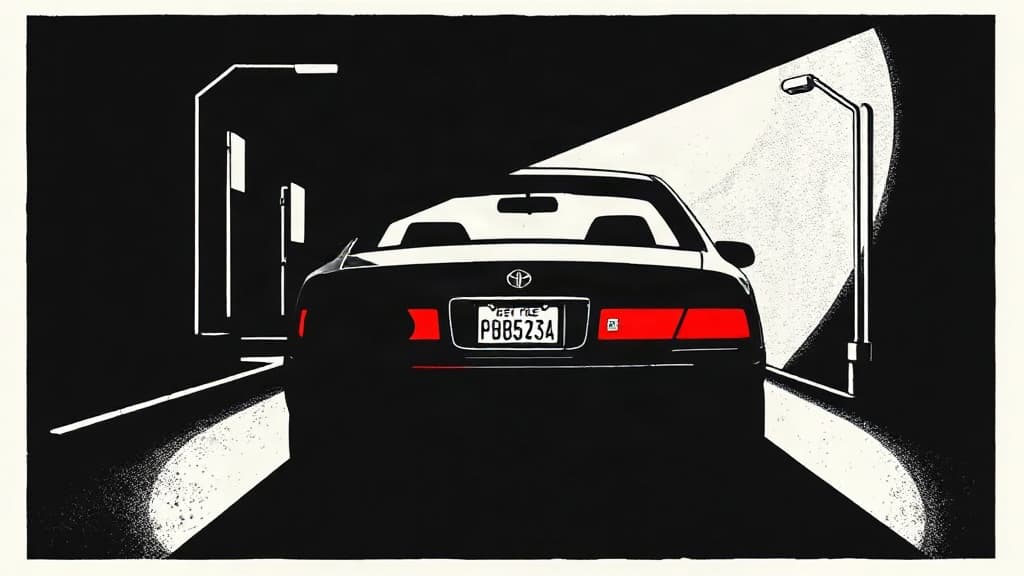
A 14-year-old girl's DNA turned up all over a rising pop star's garage — on a floor mat, a rowing machine, a Tesla charger — and the odds it belonged to anyone else are a one followed by 24 zeros. That's the core of the prosecution's case against D4vd, born David Anthony Burke, who sits in an LA jail cell charged with murder, child sexual abuse, and mutilation of a body. The question isn't whether the evidence is damning. It's whether a system that took five months to find Celeste Rivas Hernandez's dismembered remains in the trunk of a Tesla moves with any urgency at all for a young girl with no political leverage.
LAPD criminalist Samantha Tosch testified Thursday that samples from the garage of Burke's Hollywood Hills home were "one septillion times more likely to occur if it originated from Celeste rather than anyone else in the population," according to KSL. A chemical test made invisible stains glow blue across a rubber floor mat. A trash bag yielded a DNA mixture from four people — at least two male, one of them Burke's. Rivas Hernandez's DNA was on stained cleaning wipes inside the bag.
Prosecutors say Burke, then 18, began a sexual relationship with Rivas Hernandez when she was 13, then stabbed and dismembered her in his garage after she threatened to expose him and tank his career the night before she was killed. His debut album dropped two days after the alleged murder, Breitbart reported. Her body wasn't found for roughly five months.
But the defense is punching holes in the investigation, and some of them land. Tosch conceded under cross-examination that she "cannot with any certainty say that they came from blood" — the DNA could have come from touch. She acknowledged DNA can transfer between people and that there's no way to determine how long it's been present.
More consequential: LAPD found two small chainsaws in the garage — the very room where prosecutors say Burke cut up the body — and never swabbed the handles for touch DNA because the blades tested negative for blood. Criminalist Lauren Wallace admitted she couldn't see touch DNA. "But that doesn't preclude at all that there could be somebody else's touch DNA," defense attorney Blair Berk pressed. Wallace also confirmed multiple people lived at the residence. Breitbart reported that jugs of fake blood were found in the garage; Berk suggested Burke used them in music videos featuring his violent alter-ego "Itami."
Cell-tower data and Burke's own Tesla tracking system placed him at his home the night of April 23, 2025, then on a drive to a remote stretch of Santa Barbara County — the same area where a Caltrans worker found Rivas Hernandez's passport in January 2026. The defense questioned whether weather could have moved the passport there.
The Guardian framed its coverage around the defense challenging police evidence testing. KSL led with the DNA match. Breitbart provided the fullest picture of the tracking data and the fake blood. None of the outlets adequately pressed why it took five months to find a child's body in the trunk of a suspect's car in a case with this much physical evidence.
A 14-year-old girl is dead and dismembered. The man charged with killing her had her DNA in his garage and her body in his car. The defense has room to argue the investigation was sloppy. Both things can be true — and neither is a comfort to anyone counting on the system to protect the vulnerable before they become evidence.