The man charged with killing NHL star Johnny Gaudreau and his brother Matthew will finally face a jury in January 2027—more than two years after the August 2024 crash that left two married fathers dead on a New Jersey roadside. For ordinary Americans who watch the courts drag their heels while the accused walks free, the message is familiar: accountability arrives on the system's schedule, not the victims'.
Sean Higgins, 45, was indicted on two counts of first-degree aggravated manslaughter, two counts of second-degree reckless vehicular manslaughter, tampering with evidence, and fleeing the scene of a fatal crash. He has remained free while the case grinds through motions. On Monday, the timeline sharpened: Salem County Superior Court Judge Michael Silvanio set jury selection for December 1, with opening statements in early January, according to the Philadelphia Inquirer. The trial is expected to last three weeks.
The hearing produced a significant shift. Higgins' attorney, Richard Klineberger III, conceded for the first time that his client's blood-alcohol content was .08—just over the legal limit. The defense had previously insisted Higgins' BAC was .075, below the .08 threshold, and accused investigators of botching the test by analyzing blood plasma rather than whole blood. An independent defense test confirmed the .08 reading, though Klineberger noted it was still below the prosecution's asserted .087, the New York Post reported.
Even with that admission, Higgins rejected a plea deal that would have capped his sentence at 28 years. Silvanio warned him that conviction at trial carries a maximum of 91.5 years, with no parole eligibility until 68 years served. If Higgins changes his mind now, it would be an open plea—no promise of leniency. "Yes, sir," Higgins told the judge when asked if he understood.
The defense has twice tried to shift blame onto the victims. Klineberger argued the Gaudreau brothers, who had been cycling home from their sister's wedding rehearsal dinner, contributed to their own deaths by riding in the dark without rear safety lights while intoxicated. Silvanio rejected that argument last year, denying the motion to dismiss or reduce charges. In May, the judge again sided with prosecutors after the defense claimed the grand jury had been misled about Higgins' BAC.
Klineberger continues pressing for more evidence. He filed a motion seeking clarification on whether state police made notes during their crash investigation that didn't appear in the final report provided during discovery. Prosecutors objected, calling the notes drafts reflecting grammatical—not substantive—changes. Assistant Prosecutor Michael Mestern insisted the state had "nothing else left" to offer. Klineberger also asked prosecutors to identify a man—likely an off-duty officer—seen on a sergeant's body camera at the scene who said the brothers' condition did not "look good."
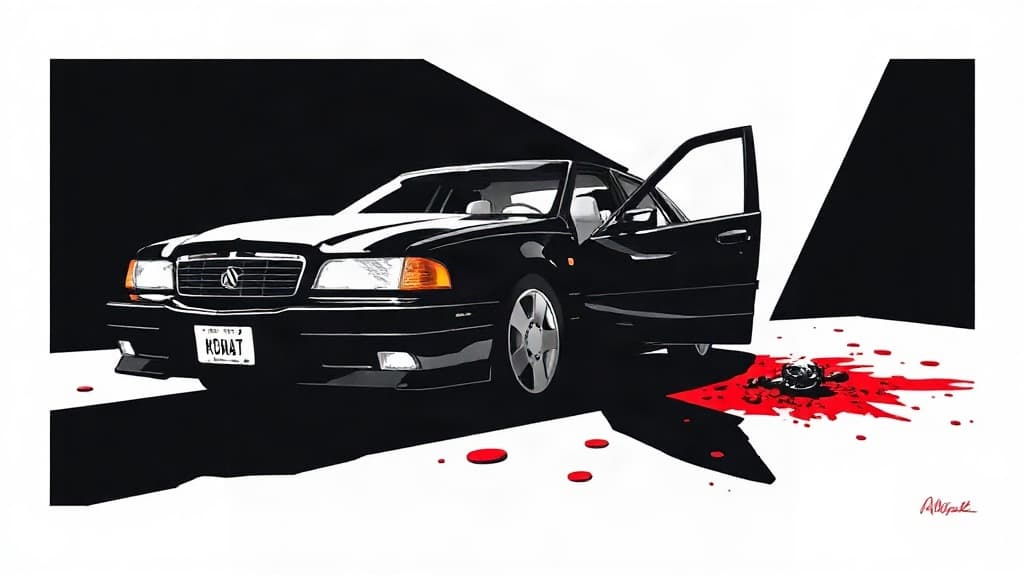
New photos released this month show the mangled bicycles and Higgins' damaged Jeep Grand Cherokee, along with schematics the defense says cast doubt on whether Higgins acted recklessly.
The Inquirer framed the story around the trial schedule and the evidentiary dispute; the Post led with the BAC concession and the rejected plea, calling it a "stunning" development. Both outlets buried what matters most to the public: a man accused of killing two people on a rural road told police he drank a half-dozen beers that day—some behind the wheel—and has been walking free for over a year while the families wait.
The question hanging over Oldmans Township is the same one that hangs over every delayed prosecution: if the victims hadn't been famous, would the system have moved this fast—or slower still?