A Sacramento County woman was pulled dead from San Francisco Bay on Thursday, the second confirmed victim of a boat capsizing near Alcatraz Island that killed two, left two missing and presumed dead, and sent 16 others into the frigid water — another tragedy in a city whose institutions are being tested by the consequences of progressive governance.
Tondra Madruga, 58, also known as Tondra Miller, was spotted by a passing vessel near Treasure Island and recovered by the San Francisco Police Department's marine unit, according to the Office of the Chief Medical Examiner. Her family mourned "our beloved mother, daughter, sister, and aunt" in a statement, thanking first responders and civilian boaters who rushed to help.
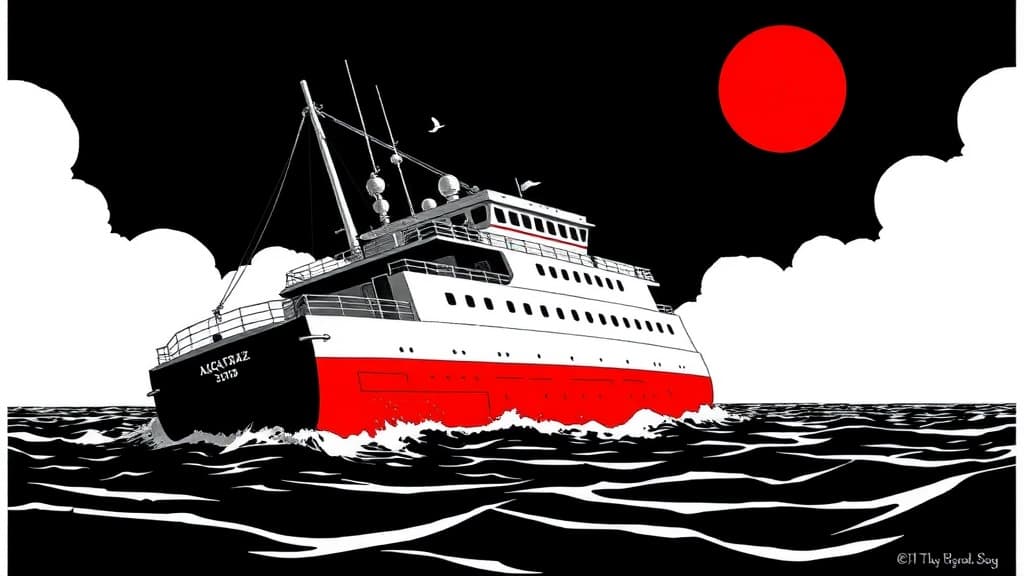
The disaster unfolded Tuesday afternoon when the Volare, a 49-foot cabin cruiser out of Stockton, was struck by what investigators believe was a massive wave in the bay's notoriously rough waters. The three-deck vessel listed sharply to starboard, flooded, and rolled over around 3:35 p.m. The 20 people aboard — close friends and family — had gathered to scatter the ashes of a deceased daughter and niece. Only about half were wearing life jackets, the New York Post reported.
Clifford Joseph Boisa, 79, of Sutter County, was pulled alive from the water but died from cardiac arrest and exposure. Boisa was a retired reserve deputy who served from 1987 to 2001, the Sutter County Sheriff's Office confirmed. His wife, Jackie Boisa, and his sister, Carol Boisa, remain missing. The boat's owner and captain, Navy veteran John Boisa, survived.
The Coast Guard suspended its search Wednesday evening after covering more than 950 square nautical miles — roughly half the size of Rhode Island. The mission shifted from rescue to recovery. The Guardian noted rescuers also searched the open ocean beyond the Golden Gate Bridge within hours of the sinking, testament to the bay's savage currents.
On Friday, SFPD's marine unit located the Volare's wreckage using boat-mounted sonar, resting 120 to 130 feet below the surface in a heavily dredged shipping channel roughly 600 yards west of Alcatraz. At that depth, standard scuba diving carries serious risks — nitrogen narcosis, lengthy decompression — forcing reliance on specialized salvage divers breathing custom gas mixtures and remotely operated vehicles. Local public safety dive teams can't reach it. Police are now assessing whether the vessel can be safely raised at all.
Investigators are examining whether passenger distribution across the boat's three decks affected stability when the wave hit. Witnesses reported some passengers were hurled into the water while others appeared trapped inside the lower cabin as the vessel went down. A dog aboard also died.
The bay has always been dangerous. What's changed is the city on its shore — once a symbol of American ambition, now a case study in what happens when progressive governance hollows out basic institutional capacity. The Coast Guard mounted a massive search; civilian boaters acted heroically. But the resources available for recovery, the condition of the agencies involved, and the competence of the systems Americans once took for granted — all of these are products of choices made by the people running San Francisco. The Volare sits 130 feet down. Two bodies haven't been found. And the city that once built bridges and ships now debates whether it can even retrieve them.