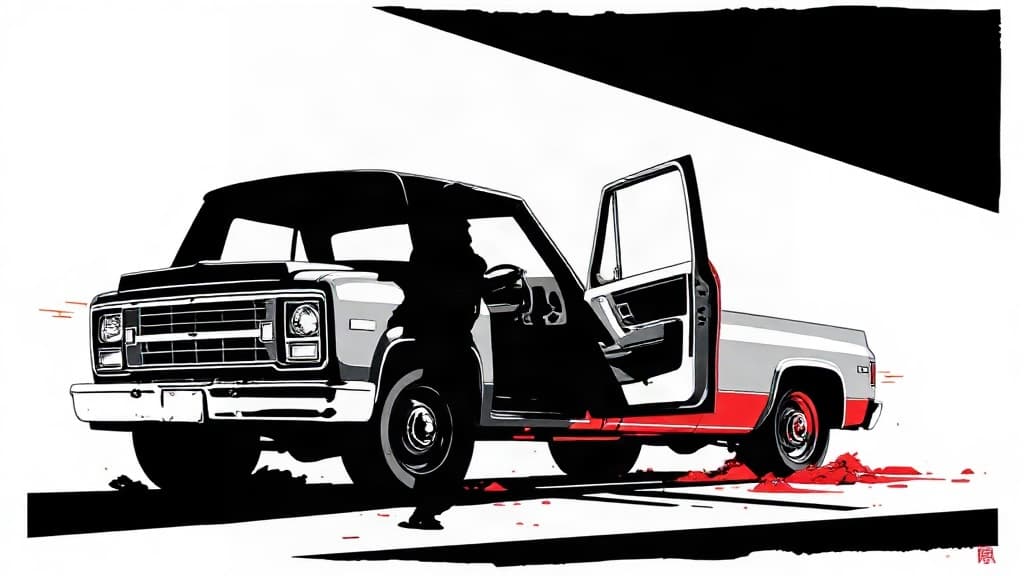
A 14-year-old rolled up to a Phoenix home in a stolen truck, kicked in the front door for internet clout, and caused $10,000 in damage — and the system that let him get there has no answers for the family left picking up the pieces.
This is what accountability looks like when progressive juvenile justice policies strip consequences from the equation. According to WIS10, the unidentified teen and a second underage suspect arrived at a house near 44th Street and Thunderbird Road around 6:30 a.m. on Sept. 12 in a stolen red Ford truck reported out of Scottsdale. Ring video shows the pair opening the front gate, covering their faces, before one kicks the custom-built front door. The family says the door will need to be completely remade.
The teen was arrested Sept. 13 and booked into the Durango Juvenile Detention Facility on one count of criminal damage and one count of unlawful use of transportation. Police also linked him to another stolen car. But what the system won't say is how many times this kid has already been through the revolving door. What priors does he have? How many arrests? How many releases? Neither Phoenix police nor the courts are talking.
The incident was part of the "Door Kick Challenge," an online trend encouraging young people to kick front doors and record it for social media attention. The department spokesperson praised "strong collaboration between multiple agencies" leading to the arrest — but collaboration after the fact doesn't replace consequences before it.
This isn't isolated. In Lewisville, Texas, five suspects — including a juvenile — were arrested in connection with a targeted apartment shooting on Sept. 11 that left an adult Hispanic man dead from multiple gunshot wounds, according to CBS News. Four adults face murder charges; the juvenile's charges remain unspecified "due to their status as a juvenile." FOX 4 News reported the suspects were tracked across state lines into Colorado with help from the FBI and U.S. Marshals. Police Chief Brook Rollins called it "important step" but acknowledged "there is still work to be done."
That work should start with asking why juveniles keep escalating. A kid who steals cars and kicks doors for TikTok today is a kid who shows up at an apartment complex in a hit team tomorrow. The common thread isn't poverty or social media — it's a system designed to protect the offender at the expense of everyone else.
Phoenix police urged parents to "talk with their kids about the consequences" of dangerous online trends. But when the juvenile court system refuses to impose real consequences, what exactly are parents supposed to point to?
The second suspect in the Phoenix case remains unidentified. The juvenile's record in Lewisville stays sealed. The public gets the bill and the damage while the system ensures we never get the full picture.