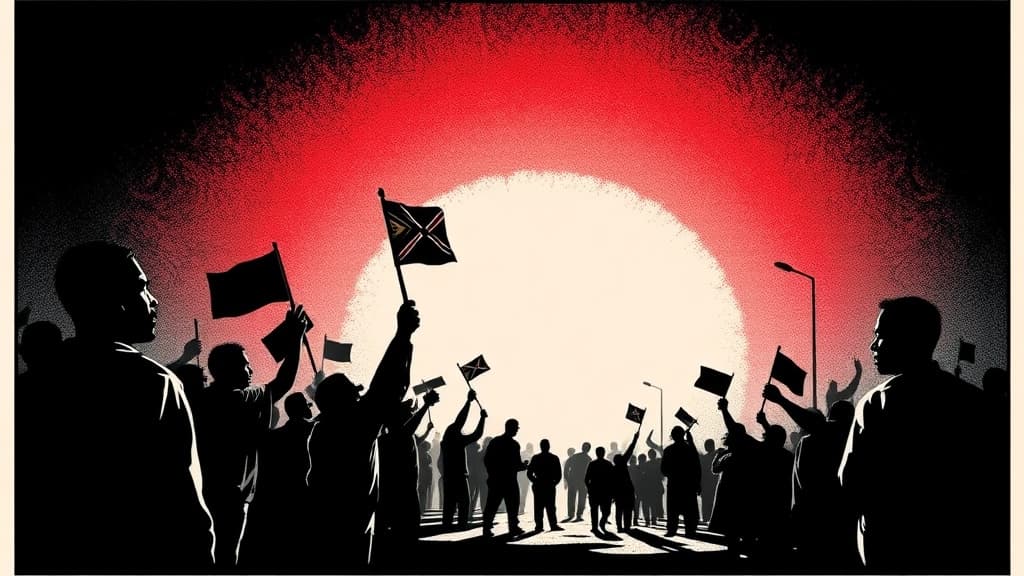
Thousands of South Africans took to the streets Tuesday to demand their government enforce its own immigration laws—protests the establishment press rushed to frame as xenophobic vigilantism rather than a working people's revolt against a system that sold them out.
The demonstrations, the largest since 2008, matter because they expose a global pattern: when citizens anywhere demand borders and sovereignty, the institutional response is the same—shame, smears, and lectures about tolerance while communities bear the cost. Americans watching the southern border collapse know the playbook.
Protest groups including March and March, Operation Dudula, and Progressive Forces set a June 30 deadline for all illegal migrants to leave the country. Their grievances: migrants accepting low wages drive down employment for South Africans, fuel illicit drug markets, and overwhelm hospitals and schools. Protest leader Ngizwe Mchunu put it plainly: "It's a very sad story that we have been telling our government since the dawn of democracy that illegal immigration here is out of hand. It is time for our government to put South Africa first."
President Cyril Ramaphosa met with protest leaders Monday and urged calm, acknowledging the immigration system needs fixing while insisting only authorities can enforce immigration laws. He condemned "intimidation, threats or ultimatums" in his weekly blog.
The framing split between outlets is instructive. The Los Angeles Times described the rallies as protests "opposing illegal immigration" and quoted demonstrators directly. NewsBreak led with "anti-immigrant and vigilante groups" and emphasized the threat of violence—burying the legitimate grievances about jobs, crime, and public services that drove ordinary citizens into the streets.
There was real violence. At least three foreign nationals have been killed in the past month—two Mozambicans in the Western Cape and a Malawian near Durban. Five people were arrested for looting a foreign-owned store in Soweto, and protesters smashed windows in Yeoville. One Malawian gardener, Kauga Nyirenda, told CNN two men threatened to kill him if he didn't leave: "If you don't leave now, you're going to leave in a coffin."
That violence is real and criminal. So is the legitimate frustration of citizens who watched their government surrender control of its borders. Both can be true at once—a distinction the press routinely refuses to make.
The exodus tells its own story. Thousands of migrants, primarily from Zimbabwe and Malawi, gathered at embassies requesting repatriation. Nigeria evacuated 269 citizens Monday, bringing its total to roughly 600. About 25,000 people have been sent back to their home countries, and 50,000 have been detained as illegal migrants since January. Malawi repatriated 7,000 of its citizens. Ghana, Mozambique, and Zimbabwe arranged transport for their nationals as well.
Protester Bongani Cindi rejected the xenophobia label: "Our country has got a lot of problems. We have influx of illegal immigrants who are committing crimes that we can't even take anymore. So we need them to leave us in peace, so we can sort our house. We are not fighting anyone."
The question left hanging—not just for South Africa but for every nation where citizens are told to absorb mass migration without complaint—is how long governments can ignore their own people before the pressure finds another outlet. Ramaphosa's government rejected the protesters' deadline. It has yet to offer a credible answer to the problem that created it.