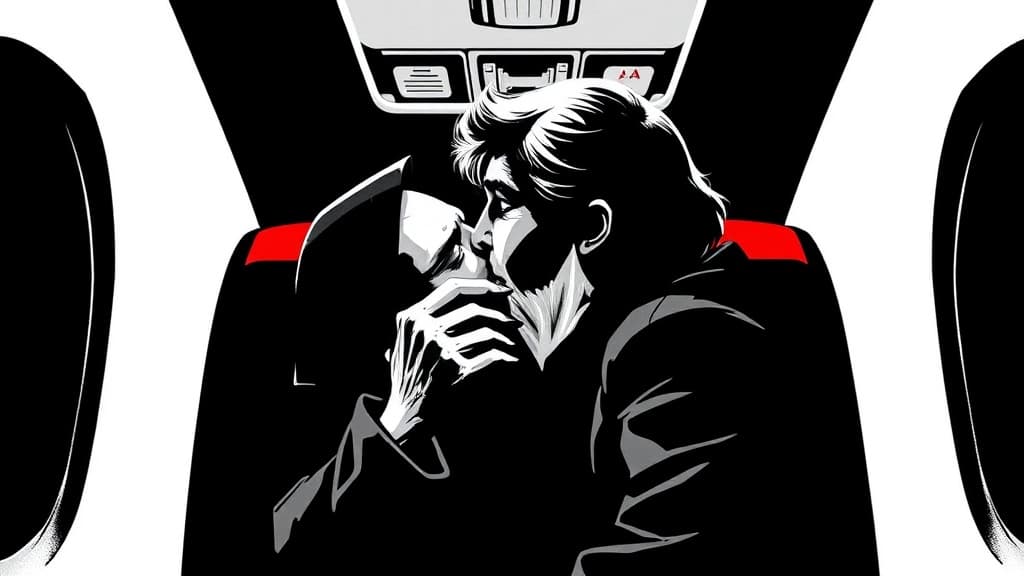
An American Airlines passenger bit a fellow flier and brawled with others as the flight descended over Philadelphia Sunday — and the institutions responsible for public order treated it like a punchline.
The flight from Charlotte had nearly reached Philadelphia International when a man became aggressive, biting one passenger and, as the pilot told air traffic control, "trying to fight everybody." The pilot requested police and an emergency medical crew meet the aircraft on arrival. "I don't know… if he's hallucinating or whatever, but he just bit a passenger and he's trying to fight everybody," the pilot said in audio reviewed by CBS News.
American Airlines later called it a "medical emergency" — the kind of language that papers over the fact that an innocent person was attacked in a sealed metal tube at 30,000 feet. CBS noted that it's "not clear if the unruly passenger was taken into custody." In other words: a man bites someone on a plane, and accountability is an open question. The pilot and the air traffic controller ended their exchange laughing, with the controller wishing the pilot a happy Father's Day and the pilot replying, "I'll be sure to tell my daughters about this one."
The New York Post, which covered the story with the gravity it deserves, framed the incident as the latest in a "string of shocking passenger disturbances." CBS buried the same pattern at the bottom of its report. Both outlets confirm the trend: earlier this month, a passenger bit a cop who tried removing her from a plane over a baggage-fee dispute. A Frontier flight from Puerto Rico to Chicago diverted to Miami after a passenger tried prying open an exit door and breaching the cockpit. A United flight from Newark made an emergency landing in Washington, D.C., after a passenger allegedly tried opening a door at 36,000 feet.
This is not a series of isolated incidents. It is a pattern — and patterns have causes. When the federal government will not secure a southern border that cartels operate across with impunity, when prosecutors decline to charge, when airlines reduce violence to a "medical emergency" and air traffic controllers share a chuckle with pilots after a biter roams the cabin, the message travels fast: there are no consequences. The decay doesn't stay in one lane. It spreads — from the border, to the streets, to the skies.
Ordinary Americans are locked in a cabin with the consequences. The question isn't whether another incident will happen. It's who, if anyone, still has the will to stop it.