More than 130,000 AI-powered license plate readers now sit on American streets logging citizens' every trip — while the federal government insists it cannot track millions of illegal border crossers or stop the fentanyl pouring in from Mexico. The message from Washington is clear enough: the surveillance state works fine when it's pointed at you, not at the border.
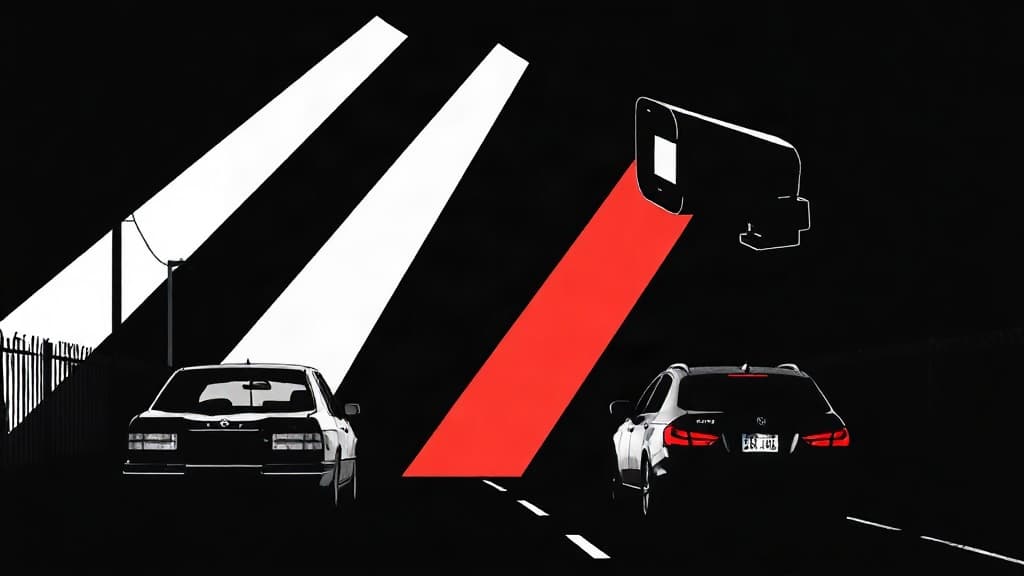
Flock Safety, the Atlanta-based company behind the cameras, held its annual conference this week amid mounting backlash. According to the advocacy group DeFlock, over 5,000 law enforcement agencies now use Flock's technology. San Diego alone has more than 550 cameras positioned around the city, per DeFlock's tracking map. The devices pair license-plate readers with video cameras and audio detection, capturing not just plate numbers but a vehicle's make, model, and even its bumper stickers, according to Breitbart.
Law enforcement officials say the cameras help locate stolen vehicles and missing persons, and a preliminary study suggests they deter car theft. The system helped Providence, Rhode Island, police track down the Brown University shooter in 2025 after he swapped his plates. HotAir framed these successes as the core argument for the technology, treating abuses as "one-off" incidents.
But those abuses are not incidental. Officers across the country have been caught using the plate readers to stalk girlfriends, exes, and people who caught their eye. The false certainty the technology provides has led police to draw weapons on verifiably innocent people. And Flock's own response to the backlash confirms the scope of the problem: the company announced it will cut its standard data retention window from 30 days to seven and is introducing an "Evidence Mode" that lets agencies preserve data longer based on local policies — a carve-out that swallows the reform whole.
Opposition is moving from petition to direct action. According to an NPR review of local reports, Flock cameras have been vandalized in at least 36 states — stolen, sawed down, shot, covered in paint, rammed with cars. Social media is filling with tongue-in-cheek destruction tutorials. HotAir acknowledged the vandalism but framed it as lawlessness that discredits the cause; Breitbart buried it, focusing instead on the theatrical protest that landed at the San Diego City Council.
That's where a man dressed as Darth Vader showed up to deliver a mocking endorsement of the cameras. "This is what the emperor needs. This technology will help us find the rebel scum and the hidden base on Hoth," he told the Public Safety and Livable Neighborhoods Committee. He told the council the cameras track children "from playground to playground, from playground to pool, from pool to gymnasium." He turned on Council member Jennifer Campbell: "How will the people trust this City Council when this City Council continues to vote for surveillance technology that imprisons them?"
Theatrics aside, the core contradiction is plain. The same federal government that built a real-time database tracking your bumper stickers and your commute claims it lacks the capability to secure a border where millions cross illegally and enough fentanyl arrives to kill tens of thousands of Americans each year. Flock can follow you from home to the gym. It cannot follow a cartel mule across the Rio Grande. The surveillance state is not built for national security. It is built for citizen control.
The question is not whether criminals sometimes get caught by cameras. It is whether a republic that monitors its own people's movements while leaving its border open is still serving the people — or just watching them.